Photos from current listings. Actual item, color, and included accessories may vary.
Well Pressure Tank Buying Guide
A well pressure tank is a pre-charged vessel that buffers pump cycling, maintains household water pressure, and protects the pump from short-cycling. The core trade-off is tank construction and bladder quality versus pump-matching: a correctly sized, replaceable-bladder tank in carbon steel or composite delivers decades of service, while undersized or non-replaceable tanks force the pump to cycle rapidly and fail early. The decision rule: match tank drawdown to pump flow and pressure switch settings, and insist on a replaceable bladder and a tank rated for your working pressure.


At a glance
- Category
- Plumbing Tools
- Data updated
- Nov 20, 2026
Current offers
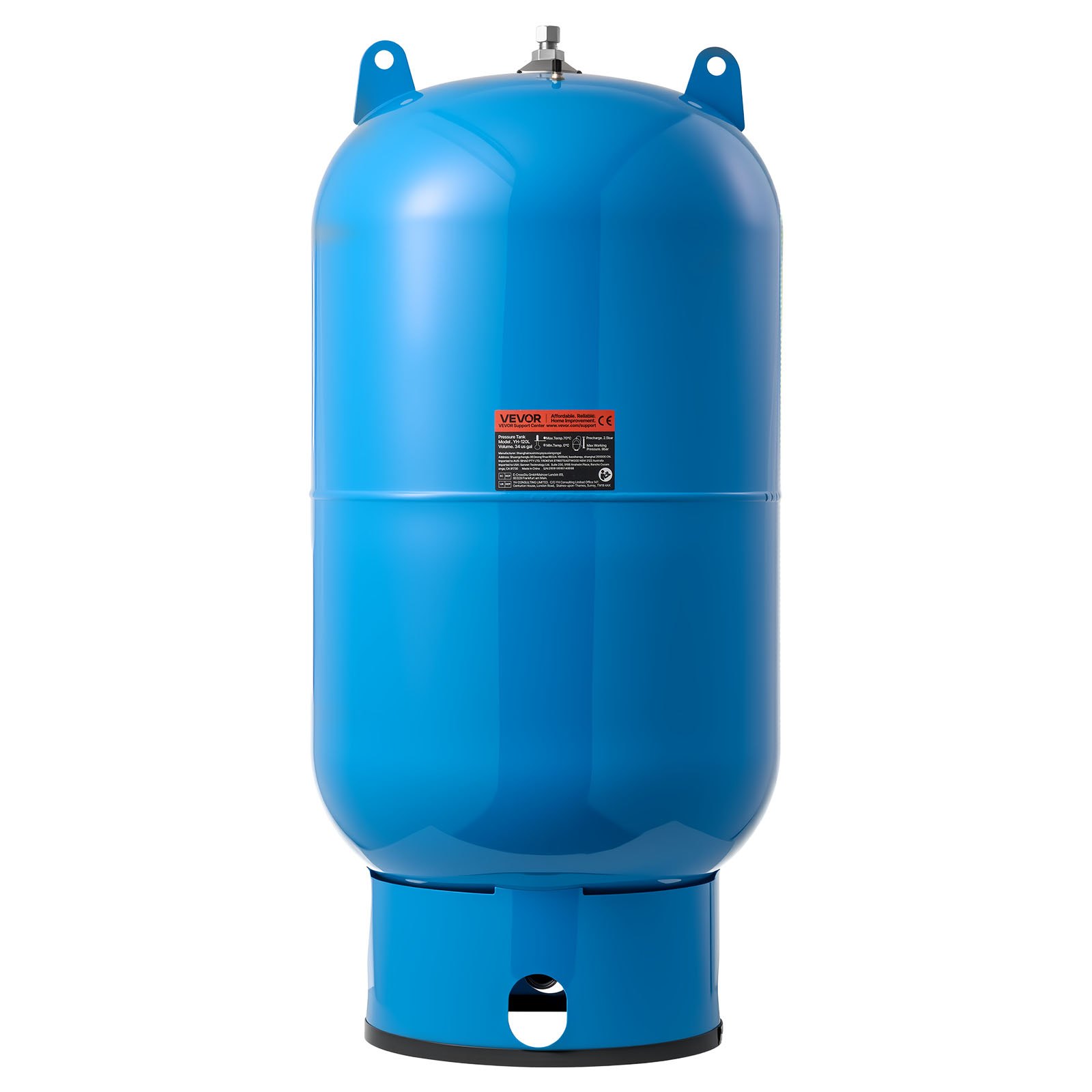 34-Gallon Vertical Well Pressure Tank, Pre-Charged Pressurized Water For Pumps, Heavy-Duty Carbon Steel Storage Container For Home, School, Farm & Irrigation Systems$255.99
 View on Mallflare
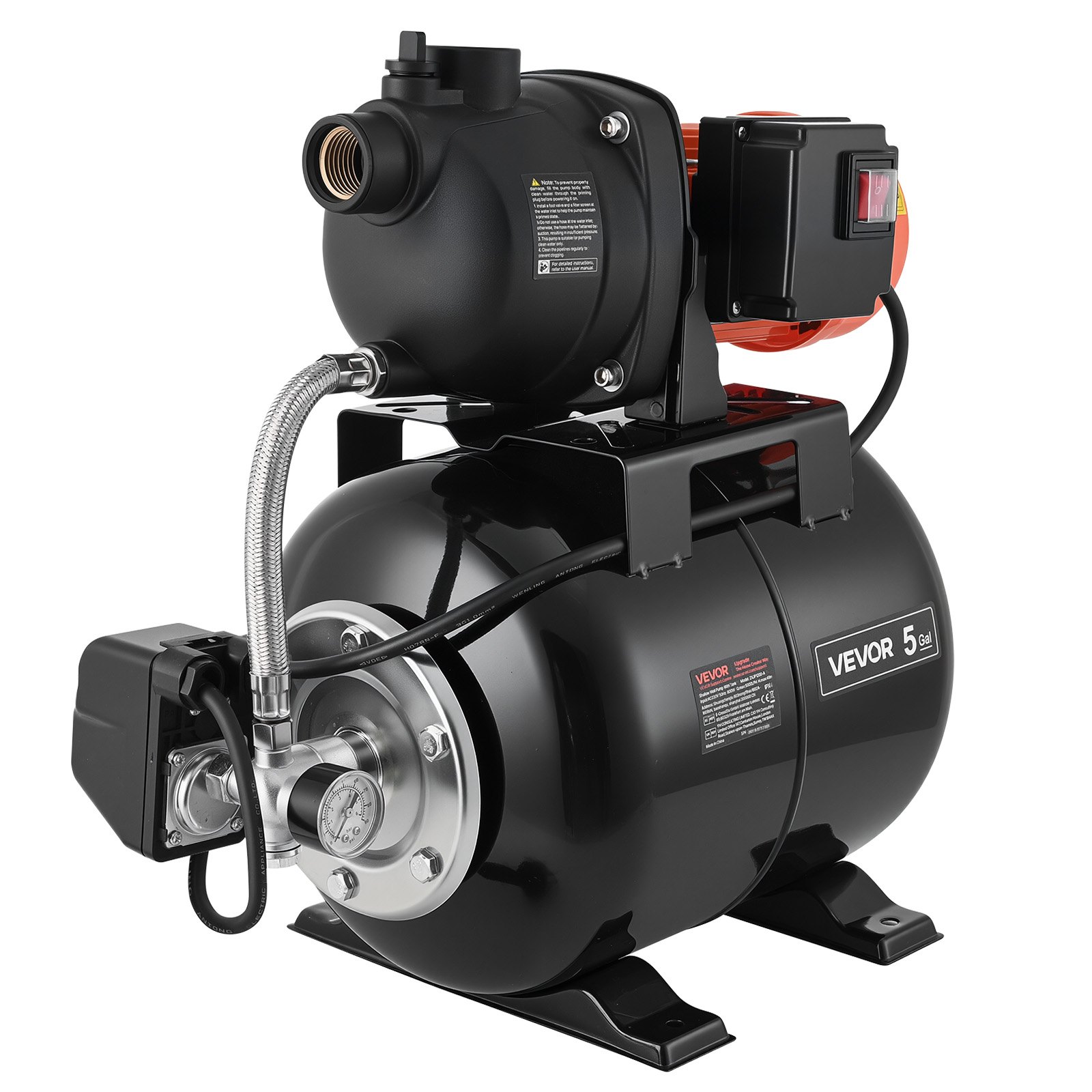 1.1 H P Shallow Well Pump With Pressure Tank, 120V 1320 GPH, Plastic Irrigation Jet 5-Gal Automatic Water Booster Transfer System, 20 40 PSI Switch, For Home Garden Lawn$149.99View on Mallflare
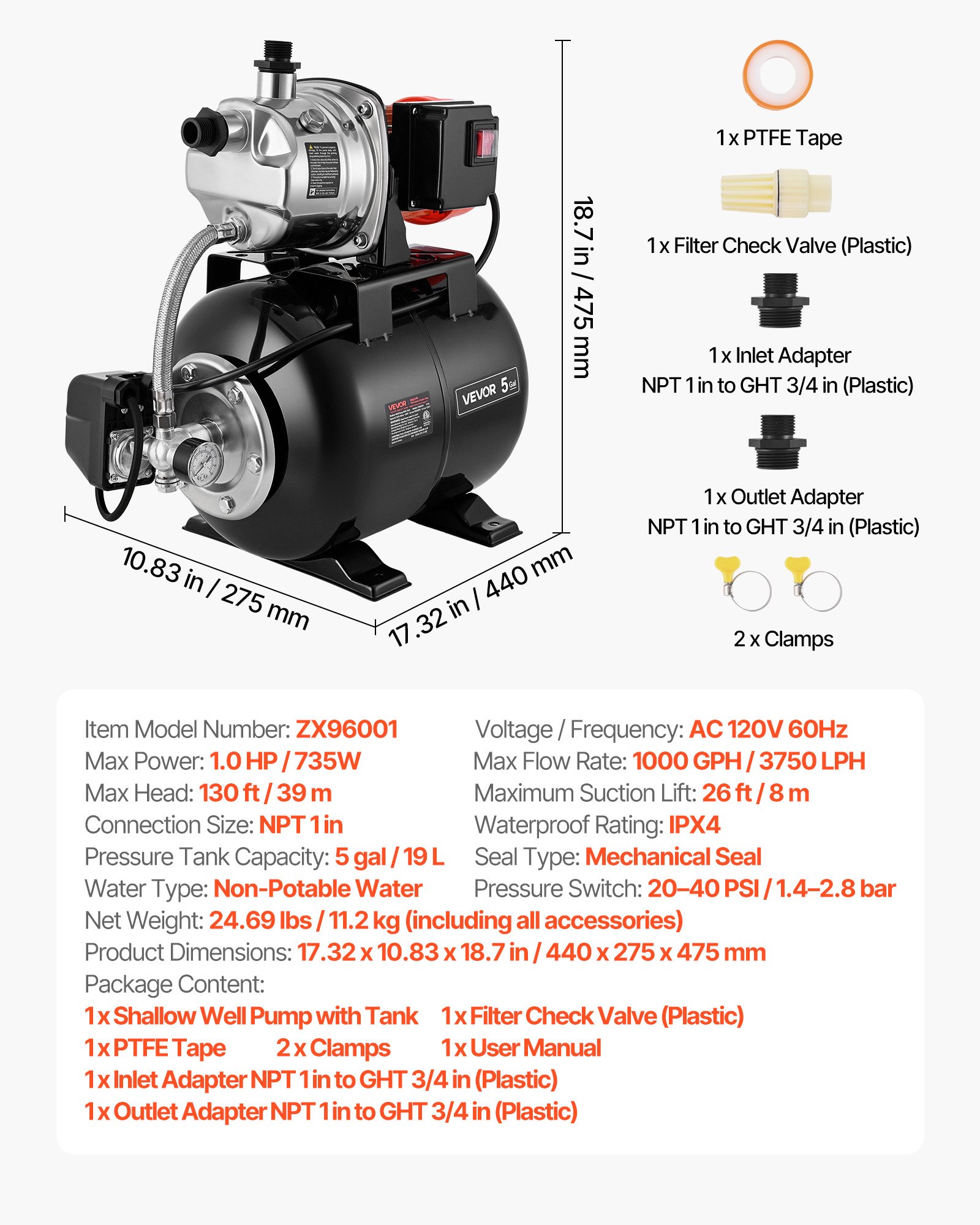 1 HP Shallow Well Pump With Pressure Tank, 120V 1000 GPH, Stainless Steel Irrigation Jet 5-Gal Automatic Water Booster System, 20/40 PSI Switch, For Home Garden Lawn$157.99View on Mallflare
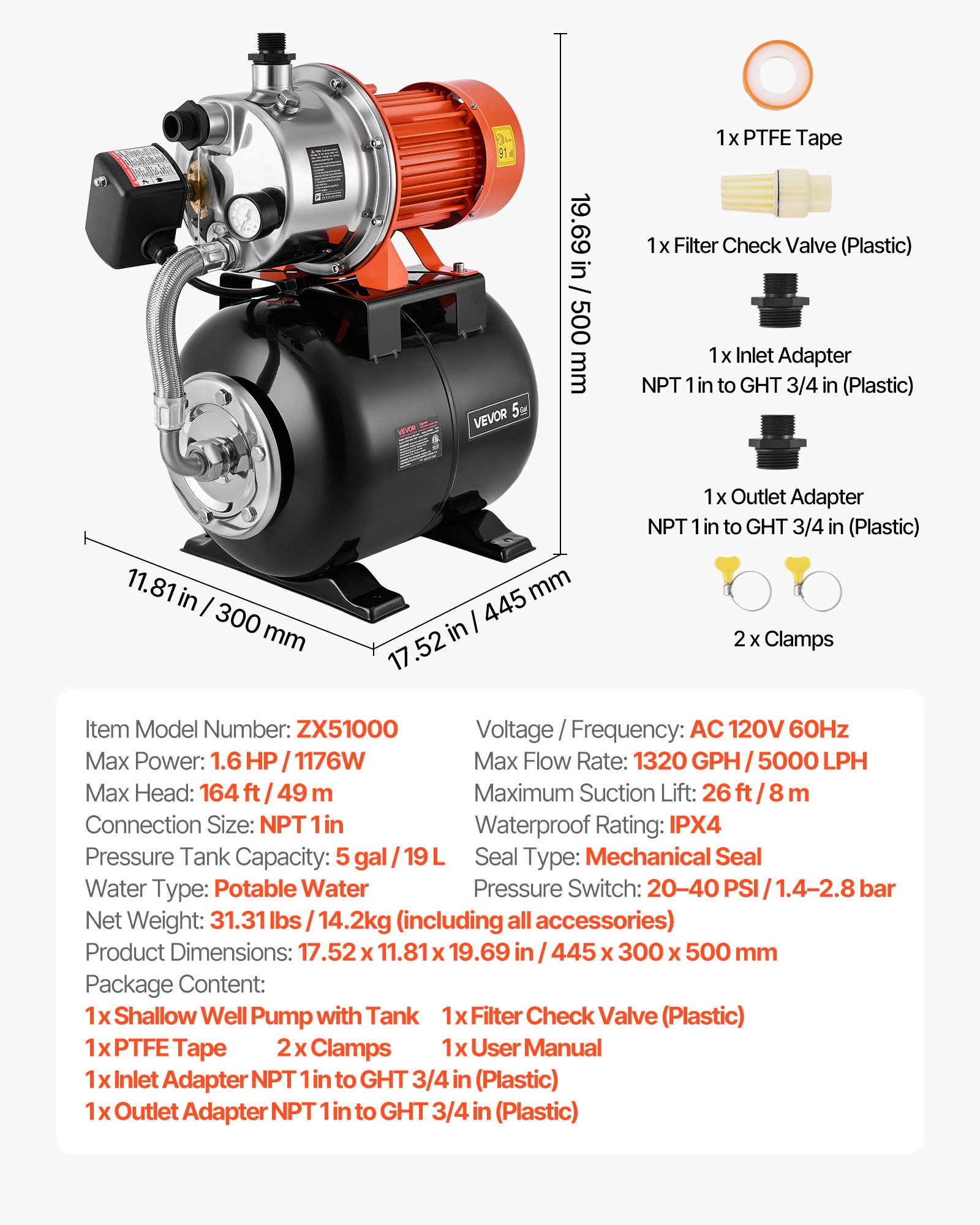 1.6 HP Shallow Well Pump With Pressure Tank, 120V 1320 GPH, Stainless Steel Irrigation Jet 5-Gal Automatic Water Booster System, For Home Garden Lawn, Potable$224.99View on Mallflare
Highlights
- Bladder tanks use a replaceable EPDM or butyl rubber bladder separating air from water; diaphragm tanks use a fixed diaphragm that cannot be replaced and are limited to smaller capacities.
- Vertical tanks save floor space and suit shallow-well or booster setups; horizontal tanks fit low-clearance crawlspaces and are common for 20–44 gallon residential sizes.
- Pre-charge is typically 2 psi below the pump cut-in pressure (e.g., 38 psi pre-charge for a 40/60 switch); wrong pre-charge causes rapid cycling and bladder stress.
- Carbon steel tanks with internal epoxy or polyurethane coatings resist corrosion; composite/fiberglass tanks eliminate internal rust but have lower pressure ratings.
Best use cases
- Best fit: a 20–44 gallon vertical bladder tank for a 1/2–1 HP submersible or jet pump serving a 2–4 bathroom home; skip non-replaceable diaphragm tanks if you want serviceable long-term performance.
- Best fit: a 5–10 gallon tank integrated with a shallow-well jet pump for lawn irrigation or booster duty; skip oversized 44 gallon tanks for single-faucet garden use—they waste space and cost.
- Best fit: a horizontal tank in a crawlspace or under a deck with limited headroom; skip vertical tanks where ceiling clearance is under the tank height plus piping.
- Wrong fit: using a small 2–5 gallon tank on a whole-house submersible pump—it will short-cycle and burn the motor; step up to at least 20 gallons for typical household demand.
Buying tips
- Size by pump flow: tank drawdown should equal 1–2 minutes of pump output. A 10 GPM pump needs roughly 10–20 gallons of drawdown, which maps to a 32–44 gallon bladder tank.
- Match pre-charge to the pressure switch: set tank pre-charge to 2 psi below cut-in (e.g., 28 psi for a 30/50 switch, 38 psi for 40/60) using a standard tire gauge.
- Choose replaceable-bladder over diaphragm for any tank above 10 gallons; bladders extend tank life and are field-replaceable without cutting plumbing.
- Verify the tank's maximum working pressure (typically 100–150 psi) exceeds your pump's shut-off pressure plus safety margin; composite tanks often cap at 100 psi.
Specs
| Tank Type | Bladder vs diaphragm; vertical vs horizontal |
|---|---|
| Capacity Range | 2–44 gal residential; 5–10 gal booster |
| Working Pressure | 100–150 psi max; pre-charge 28–38 psi |
| Body Material | Epoxy-lined carbon steel vs composite |
Related searches
What to check before buying
- Measure available floor space and ceiling height—vertical tanks need clearance for the tank plus air valve and piping; horizontal tanks need length plus end clearance.
- Confirm your pressure switch setting (30/50, 40/60, or 20/40) and set tank pre-charge accordingly before installation.
- Check pump flow rate (GPM) from the pump curve or nameplate to calculate required drawdown and select tank gallon size.
- Verify inlet/outlet thread size (commonly 1-inch NPT on residential tanks) matches your plumbing and that a tank tee with drain and relief valve is included or planned.
FAQ
Data sources: eBay / Amazon listings and product attribute feeds Data updated Nov 20, 2026.
Some links on this page are affiliate links. If you buy after clicking one, we may earn a commission at no extra cost to you. This does not change which products appear here or their order. Affiliate disclosure.