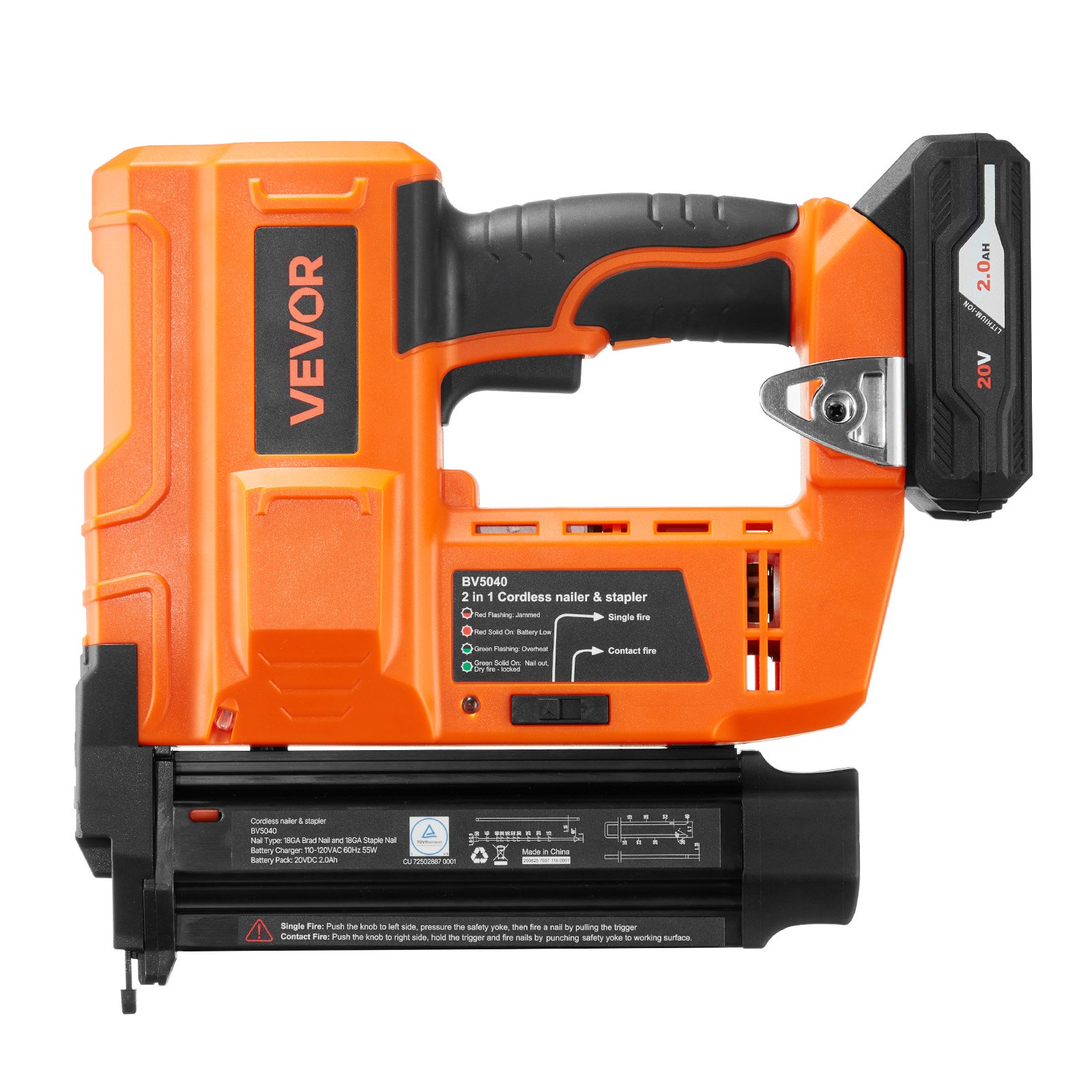

Photos from current listings. Actual item, color, and included accessories may vary.
Battery Powered Brad Nailer Buying Guide
A battery-powered brad nailer is a cordless finish tool that drives 18-gauge nails (typically 5/8" to 2") for trim, casing, and light assembly without a compressor or hose. The core trade-off is between a solenoid/spring-driven mechanism (lighter, slower, limited nail length) and a flywheel-driven mechanism (faster, drives longer nails, heavier, higher cost). Choose a flywheel or premium solenoid model if you need consistent flush drives in hardwood and daily productivity; accept a basic solenoid only for occasional softwood trim and low-duty tasks.


At a glance
- Category
- Power Tools
- Data updated
- Nov 20, 2026
Current offers
Highlights
- 18-gauge brad nails range from 5/8" to 2" (15–50 mm); most cordless models max out at 2", while compact models stop at 1-1/4".
- Flywheel-driven nailers deliver 2–3 nails per second and maintain driving power in hardwoods; solenoid/spring models are slower and lose force in dense material.
- Battery platforms dictate compatibility: 18V/20V max systems (DeWalt, Milwaukee, Makita, Bosch) vs 12V/10.8V compact lines; never mix voltages across brands without an adapter.
- Magazine angles and nail collation must match: most 18-gauge brad nailers use a straight magazine (0°), but some accept angled nails; always match the nail type to the tool's spec.
Best use cases
- Best fit: installing shoe molding, baseboard caps, and door casing in softwood or MDF — pick a flywheel model with depth adjustment and a 2" max nail length for flush drives.
- Wrong fit: fastening 1/2" plywood or hardwood trim with a compact 12V solenoid nailer — it will leave proud heads and stall; step up to a 18V flywheel or pneumatic unit.
- Best fit: overhead or ladder work where a hose is a hazard — choose a lightweight solenoid model under 6 lb with a belt hook and a battery that fits your existing platform.
- Wrong fit: production trim work exceeding 500 nails per day — a solenoid nailer will overheat and slow; use a flywheel model or a pneumatic brad nailer with a compressor.
Buying tips
- Match the nail length range to your thickest material: for 3/4" trim plus 1/4" reveal, you need at least 1-1/4" nails; for 1" stock, 2" nails are required.
- Battery voltage and platform: 18V/20V max systems offer more power and faster recharge; 12V systems are lighter but limited to shorter nails and softer woods.
- Check the driving mechanism: flywheel models cost more but deliver consistent depth in hardwood; solenoid models are cheaper and lighter but require slower pace and softer materials.
- Depth-of-drive adjustment is critical: tool-free thumb wheel or dial lets you set flush or countersunk heads without changing air pressure (unlike pneumatic).
Specs
| Nail Gauge | 18-gauge brad (1.25 mm) |
|---|---|
| Nail Length Range | 5/8"–2" (15–50 mm) |
| Drive Mechanism | Flywheel vs Solenoid |
| Battery Platform | 18V/20V max or 12V |
Related searches
What to check before buying
- Measure your thickest trim and add 1/4" for the nail length; confirm the tool's max nail length exceeds that total.
- Confirm your existing battery platform (DeWalt 20V MAX, Milwaukee M18, Makita 18V LXT, Bosch 18V) — bare tool vs kit changes total cost and compatibility.
- Check tool weight with battery installed: overhead work favors models under 6 lb; heavier flywheel units are better for bench work.
- Verify magazine capacity and reload style: 100-nail magazines reduce reloads; bottom-load vs side-load affects speed on ladders.
FAQ
Data sources: eBay / Amazon listings and product attribute feeds Data updated Nov 20, 2026.
Some links on this page are affiliate links. If you buy after clicking one, we may earn a commission at no extra cost to you. This does not change which products appear here or their order. Affiliate disclosure.