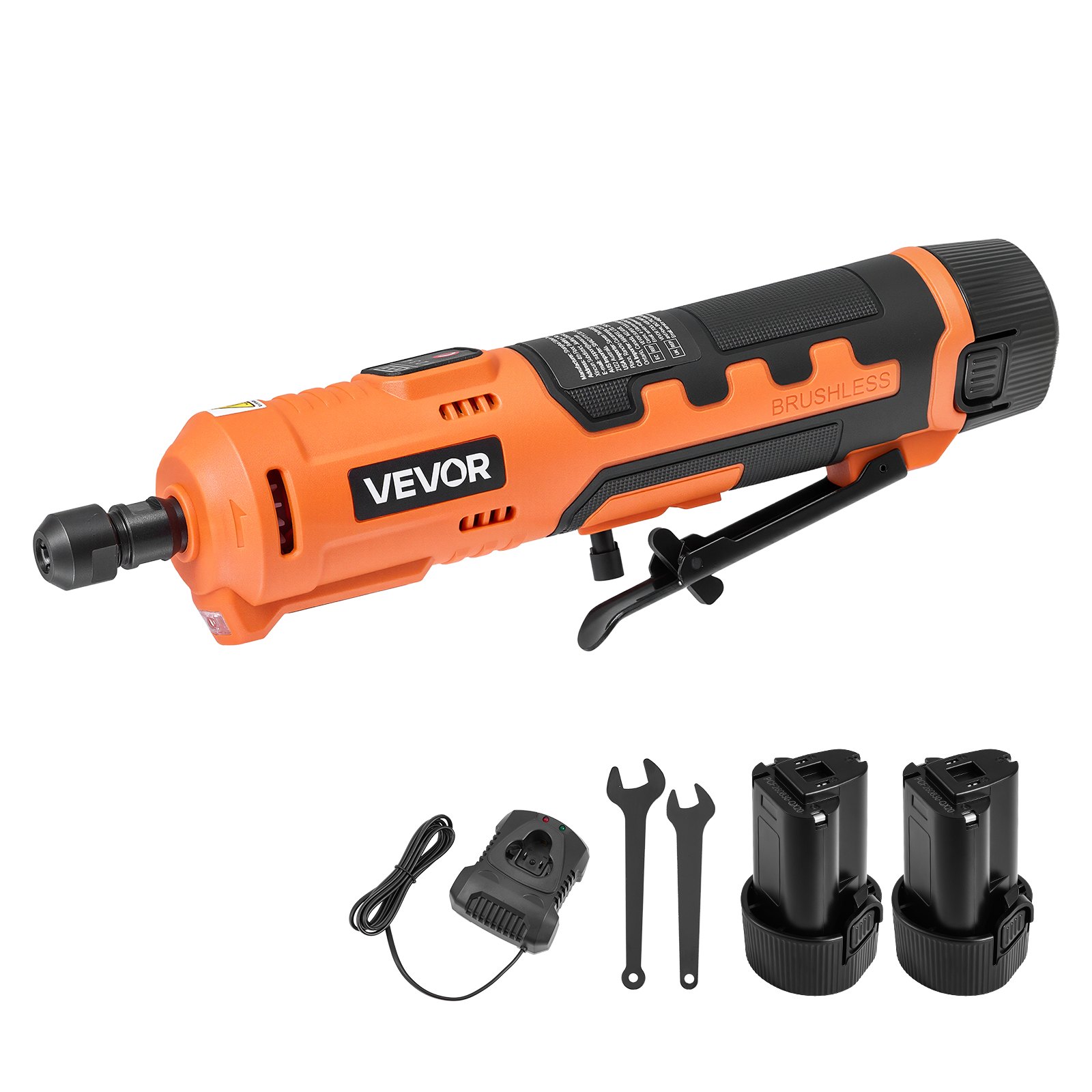

Photos from current listings. Actual item, color, and included accessories may vary.
Cordless Die Grinder Buying Guide
A cordless die grinder is a compact rotary tool for deburring, rust removal, and polishing where portability matters more than sustained torque. The core trade-off is voltage/collet class: 12V 1/4-inch units favor light one-handed work, while 18–20V brushless units deliver sustained RPM under load for heavier metalwork. Buy only brushless motors with a standard 1/4-inch collet and a battery platform you already own; brushed 12V toys and proprietary collet sizes are the compromise tier.


At a glance
- Category
- Power Tools
- Data updated
- Nov 20, 2026
Current offers
Highlights
- Brushless motors sustain 20,000–25,000 RPM under load; brushed motors drop RPM and burn out faster under continuous grinding.
- The 1/4-inch (6.35mm) collet is the global standard for die grinder accessories; 3mm/1/8-inch collets need adapter sleeves.
- 12V-class tools deliver roughly 200–400W peak and suit light deburring; 18–20V brushless units produce 500W+ for sustained metal removal.
- Variable-speed or multi-speed control (4-speed dials) prevents burning delicate work and improves control on plastics and aluminum.
Best use cases
- Best fit: 12V 1/4-inch brushless with 2.0Ah batteries for rust removal, polishing, and light deburring in tight engine bays or on ladders—buy this if portability and one-handed reach matter most.
- Best fit: 18V/20V brushless die grinder for continuous weld dressing, casting cleanup, and porting—pick this tier when the tool runs minutes at a time under load.
- Wrong fit: brushed 12V no-name grinders for production metalwork—motor RPM sags and brushes wear out; skip unless work is intermittent and light.
- Wrong fit: 1/8-inch collet-only rotary tools for 1/4-inch shank accessories—collet adapters slip at high RPM; choose a native 1/4-inch collet.
Buying tips
- Match voltage to duty cycle: 12V for intermittent light tasks under ~1 minute; 18–20V brushless for continuous grinding and weld prep.
- Confirm a native 1/4-inch (6.35mm) collet; 1/8-inch and 3mm shanks require sleeve adapters that reduce grip and can slip.
- Buy into a battery platform you already own—bare tools save cost, and cross-brand adapters add bulk and void ergonomics.
- Choose variable or 4-speed control: lower RPM for polishing and plastics, full RPM for carbide burrs in steel.
Specs
| Motor Type | Brushless (durable) vs Brushed (light duty) |
|---|---|
| Voltage Class | 12V light duty / 18–20V sustained |
| Collet Size | 1/4-inch (6.35mm) standard |
| Speed Control | Variable or 4-speed, 10k–25k RPM |
Related searches
What to check before buying
- Measure your compressor-free workspace: a 12V straight grinder fits 1-inch gaps; right-angle heads need 3–4 inches of clearance.
- Verify your existing battery platform (12V, 18V, or 20V max) before buying bare tool vs kit.
- Check accessory shank diameter: 1/4-inch (6.35mm) is standard; 1/8-inch and 3mm need adapters.
- Confirm collet wrench and spare collet are included; die grinders require periodic collet cleaning for true-running bits.
FAQ
Data sources: eBay / Amazon listings and product attribute feeds Data updated Nov 20, 2026.
Some links on this page are affiliate links. If you buy after clicking one, we may earn a commission at no extra cost to you. This does not change which products appear here or their order. Affiliate disclosure.