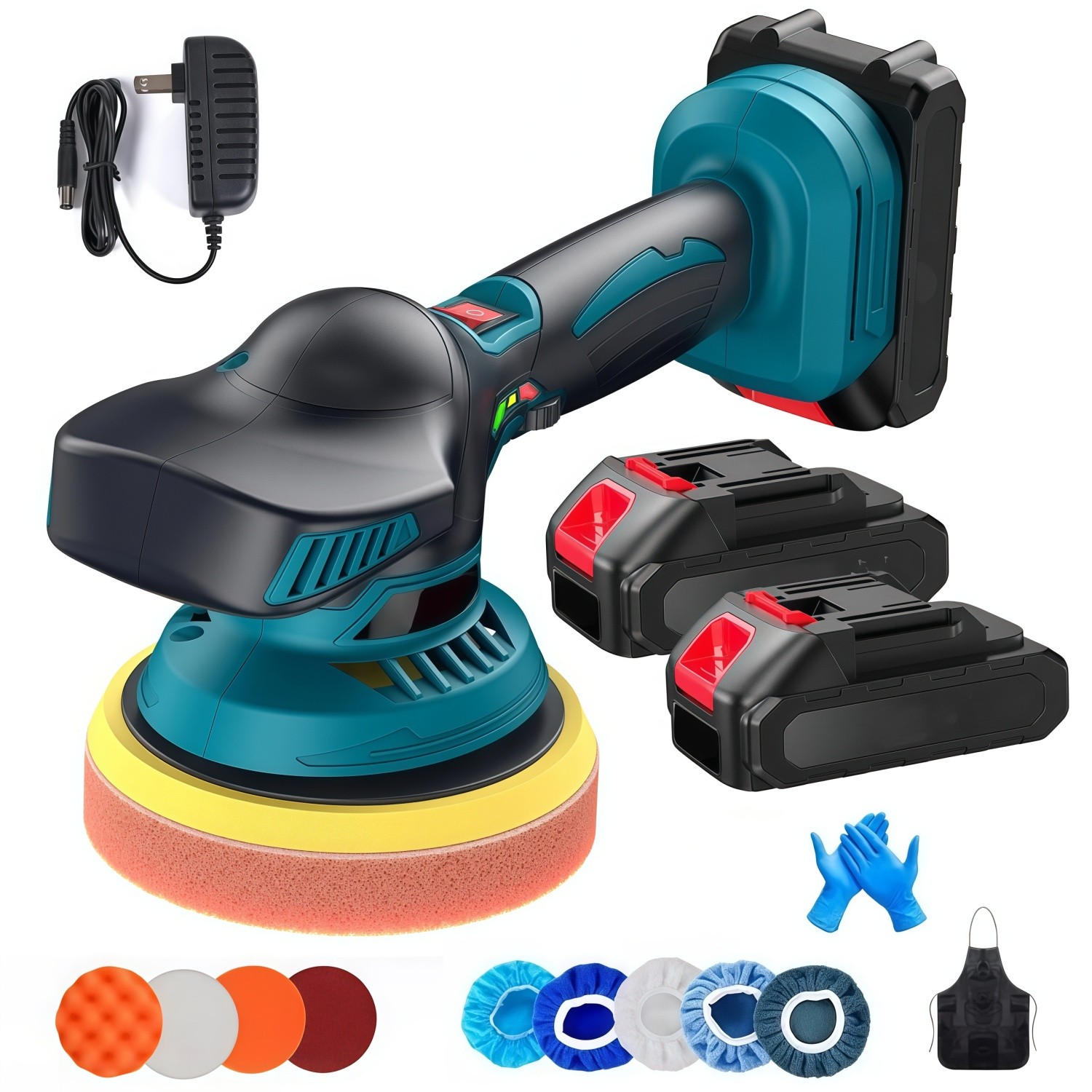

Photos from current listings. Actual item, color, and included accessories may vary.
Cordless Dual Action Polisher Buying Guide
A cordless dual-action (DA) polisher uses a free-spinning offset pad to randomize motion, preventing holograms and burn-through that rotary buffers cause on paint. The core trade-off is battery platform vs. pad throw: 8mm throw is safe for beginners and spot repair, while 15-21mm long-throw units clear full panels faster but demand more technique and torque. Buy into a battery system you already own or commit to a platform with at least 4Ah cells and 5-inch pads; generic single-battery kits with 6-inch pads and unknown cell grades are the compromise tier.


At a glance
- Category
- Power Tools
- Data updated
- Nov 20, 2026
Current offers
Highlights
- Pad throw separates classes: 8mm for controlled spot correction and waxing, 12-15mm for panel work, 21mm for high-productivity full-car compounding that needs technique.
- Battery platform dictates runtime: 18V/20V max 4.0-5.0Ah packs deliver 25-45 minutes of continuous polishing; 2.0Ah compact packs overheat and sag under load.
- Orbit speed is typically 2,000-6,500 OPM; variable-speed dials with soft-start prevent sling and are standard on serious units, absent on bargain fixed-speed models.
- Backing plate size must match pad: 5-inch plates suit 5.5-inch pads for edge safety; 6-inch plates and pads on low-torque motors bog down and stall on curved panels.
Best use cases
- Best fit: 8mm-throw, 5-inch pad, variable-speed unit on an 18V/20V platform you already own for waxing, light swirl removal, and headlight restoration.
- Best fit: 15mm long-throw with 5-inch pads and a 5.0Ah pack for one- to two-step paint correction on daily drivers where speed matters and technique is solid.
- Wrong fit: 6-inch pad kits with a single unbranded battery and no OPM spec — pad stall, short runtime, and no replacement battery path make them disposable.
- Wrong fit: 21mm long-throw for a first-time user on thin factory paint — the larger orbit amplifies tilt errors and heats edges faster than an 8mm unit.
Buying tips
- Match the backing plate to pad: 5-inch plate for 5.5-inch pads keeps a 0.25-inch safety margin; never run a pad smaller than its plate or you will strike the backing plate against paint.
- Budget for cells, not just the tool: two 4.0-5.0Ah batteries plus a rapid charger add substantial cost, but one 2.0Ah pack cannot finish a full-size car.
- Confirm the battery interface: tools using a brand's current slide-pack system accept future higher-capacity packs; older post-style or proprietary connectors lock you out of upgrades.
- Check OPM and throw together: a 15mm throw at 6,000+ OPM corrects noticeably faster than an 8mm at 4,000 OPM; a high OPM number on a small throw is marketing, not capability.
Specs
| Pad Throw | 8mm / 12mm / 15mm / 21mm orbit |
|---|---|
| Backing Plate | 5 in standard / 6 in high-torque |
| Battery Platform | 18V-20V max slide-pack, 4.0-5.0Ah |
| Orbit Speed | 2,000-6,500 OPM variable |
Related searches
What to check before buying
- Measure your working space and cord reach: cordless removes the extension-cord trip hazard, but confirm the tool fits between mirrors, pillars, and garage walls with a 5-inch pad mounted.
- Verify your existing battery platform and charger voltage before buying a bare tool; cross-platform adapters add bulk and can void thermal protection.
- Plan pad and compound inventory: at least two 5.5-inch cutting pads, two polishing pads, and a pad conditioner — one pad per step loads up and stops cutting.
- Check your vehicle's paint condition and panel count: thin or single-stage paint favors an 8mm throw and lower OPM; multi-panel correction favors 15mm and a second battery.
FAQ
Data sources: eBay / Amazon listings and product attribute feeds Data updated Nov 20, 2026.
Some links on this page are affiliate links. If you buy after clicking one, we may earn a commission at no extra cost to you. This does not change which products appear here or their order. Affiliate disclosure.