Photos from current listings. Actual item, color, and included accessories may vary.
Cut Off Saw Blade Buying Guide
Cut-off saw blades are the consumable that defines a metal chop saw's cut quality, speed, and operating cost, and the primary trade-off is abrasive vs. carbide-tipped (dry-cut) technology. Abrasive wheels are cheap and forgiving but generate heat, dust, and a wider kerf; carbide blades cost more upfront yet cut cold, stay dimensionally accurate, and produce chips rather than abrasive dust. The decision rule is simple: choose carbide for repeatable, burr-free cuts in steel, stainless, and aluminum; choose abrasive only for occasional rebar or hardened stock where impact and heat are acceptable.


At a glance
- Category
- Power Tools
- Data updated
- Nov 20, 2026
Current offers
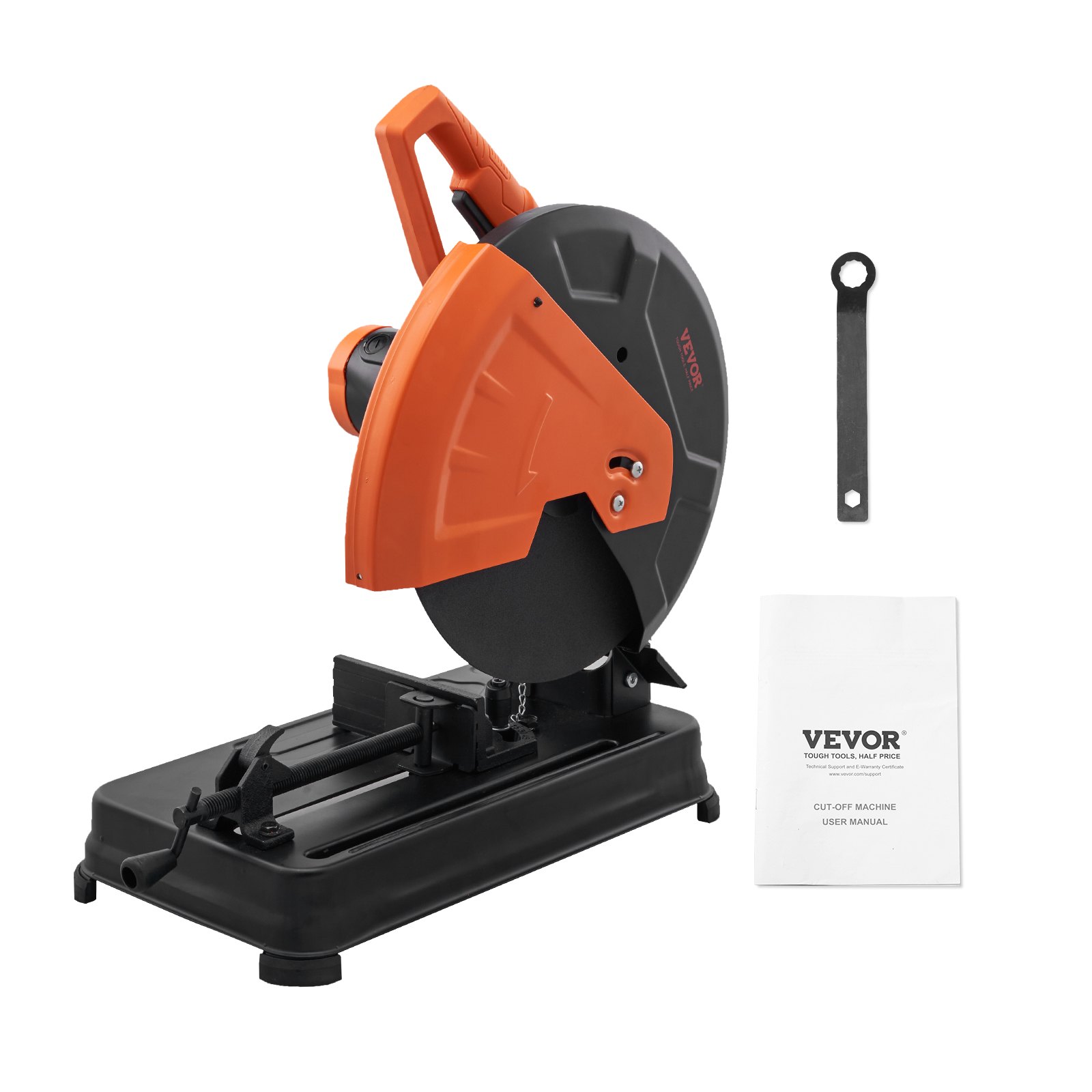 Abrasive Chop Saw, 14'355mm Blade Diameter Cut Off Saw, 2300W 3600RPM Steel Cutting Machine, 0-45' Adjustable Angle Miter Saw For Metal Saw For Steel,Rebar,Iron,Aluminum$145.99
 View on Mallflare
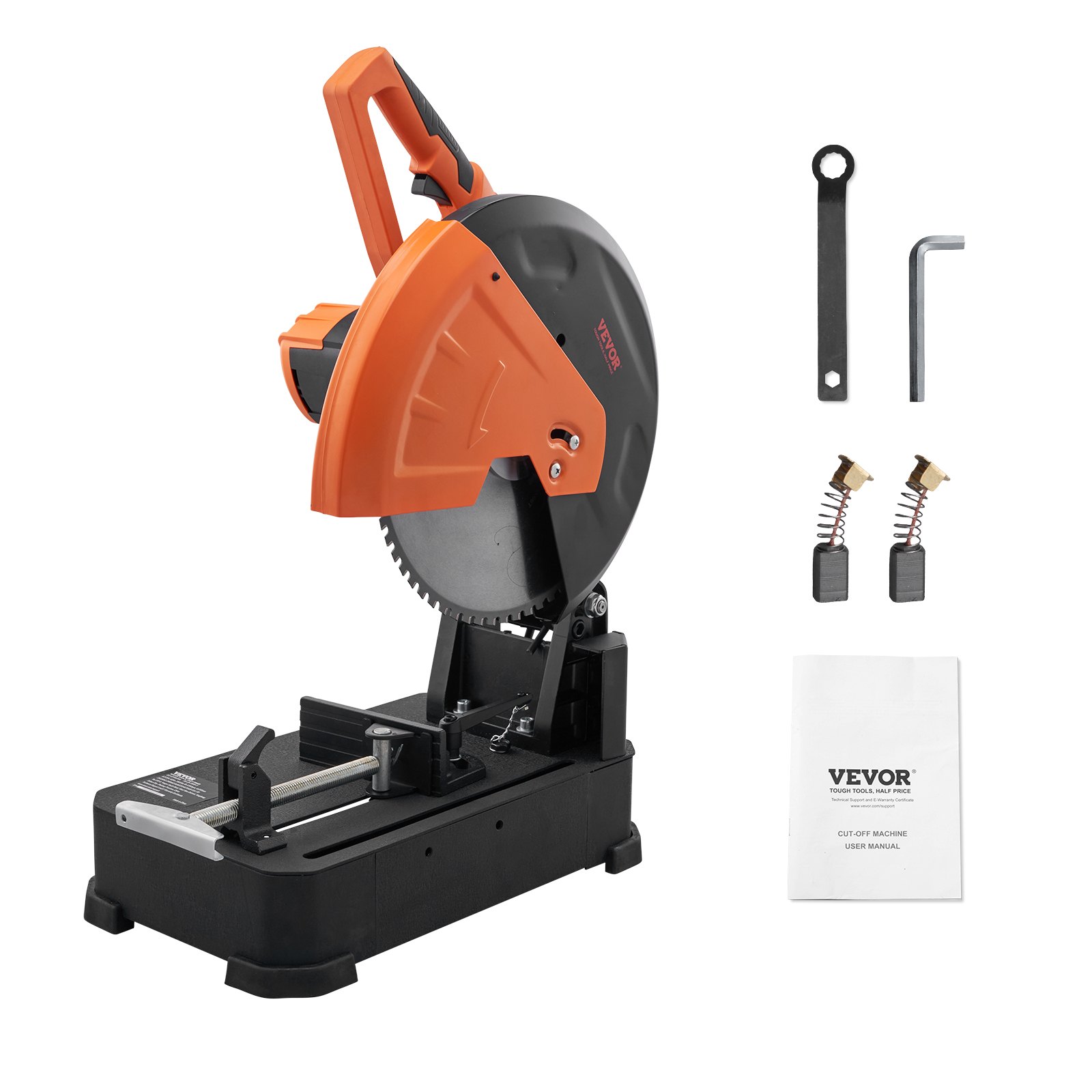 Chop Saw,14'355mm Blade Diameter Cut Off Saw, 2800W 1200RPM Steel Cutting Machine, 0-45' Adjustable Dry Cut Saw, Miter Saw For Metal Cold Cut Saw For Rebar, Iron, Aluminum$314.99View on Mallflare
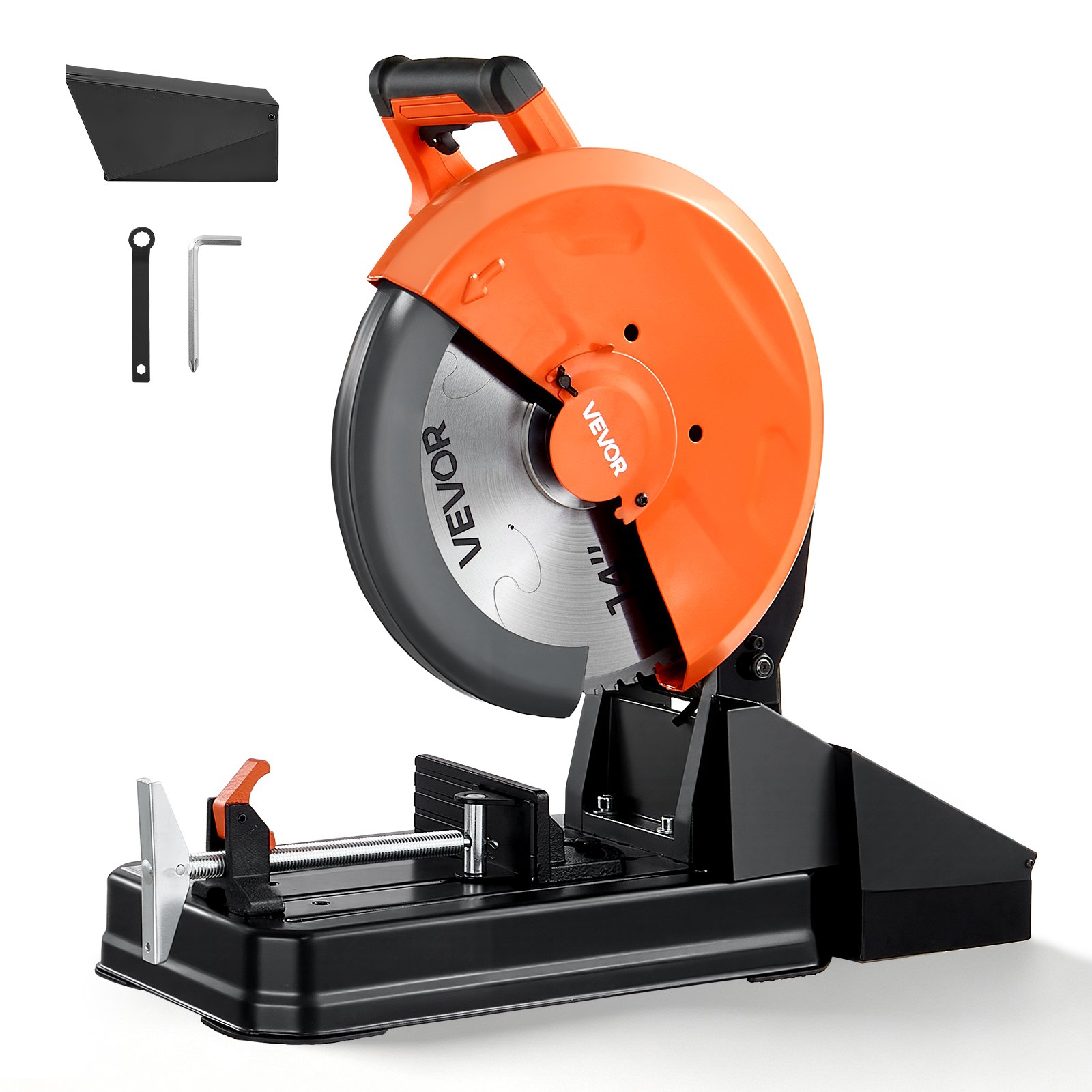 Chop Saw 14-inch Cold Cut Blade 3500 W Brushless Motor Cut Off Saw, For Cutting Metal, -45° to 45° Adjustable Angle, 750-1200 r/min Speed, Dry with Chip Collection Box$377.99View on Mallflare
Highlights
- Abrasive chop-saw wheels are fiberglass-reinforced aluminum-oxide discs rated for the saw's no-load RPM — a 14-inch (355 mm) wheel typically maxes at 4,400 RPM, while larger 16-inch (405 mm) wheels run slower.
- Carbide-tipped dry-cut blades use negative-rake, triple-chip or ATB tooth geometry and are rated for low RPM (typically 1,300–1,800 RPM), so they must never be mounted on a high-speed abrasive saw.
- Blade diameter and arbor bore must match the saw: common bores are 1 inch (25.4 mm) and 20 mm, and most carbide dry-cut blades ship with a reducing bushing to adapt 1-inch arbors to 20 mm spindles.
- Tooth count controls finish and material: low tooth counts (36–48T) clear chips in thick steel and rebar, while higher counts (60–80T) produce smoother cuts in thin-wall tube, aluminum, and stainless.
Best use cases
- Best fit: a 14-inch carbide dry-cut blade (48–66T) on a low-RPM cold-cut saw for fabrication shops cutting steel angle, channel, and tube where square, burr-free cuts and minimal heat-affected zone matter.
- Best fit: a 14-inch abrasive wheel on a 2,300–2,800 W high-RPM chop saw for occasional rebar, hardened bolts, and mixed scrap where lowest consumable cost and impact tolerance beat finish quality.
- Wrong fit: mounting a carbide-tipped blade on a 3,500–3,600 RPM abrasive chop saw — overspeeding destroys teeth and is a safety hazard; skip carbide unless the saw is explicitly rated for dry-cut RPM.
- Wrong fit: using a fine 80T carbide blade to cut thick rebar or hardened stock — teeth chip and the blade overheats; step down to a 36–48T blade or an abrasive wheel for that work.
Buying tips
- Match blade RPM rating to saw no-load RPM: abrasive wheels need a rating at or above the saw's max RPM (e.g., 4,400 RPM for many 14-inch saws), while carbide blades need a saw whose RPM falls within the blade's rated window (commonly 1,300–1,800 RPM).
- Confirm arbor bore and diameter before buying: 14-inch (355 mm) and 16-inch (405 mm) are the dominant sizes, with 1-inch (25.4 mm) and 20 mm bores; a wrong bore means the blade will not center safely even if diameter matches.
- For stainless and aluminum, pick carbide with a dedicated tooth geometry and use a cutting lubricant or wax; abrasive wheels contaminate stainless with iron and cause rust bloom.
- Budget for kerf and consumable life: abrasive wheels wear down and widen the kerf over time, while carbide blades can be resharpened — factor resharpen cost into high-volume cutting.
Specs
| Blade Type | Abrasive wheel vs carbide dry-cut |
|---|---|
| Diameter / Arbor | 14 in (355 mm) / 1 in or 20 mm bore |
| Max RPM Rating | Abrasive 4,400 RPM; carbide 1,300–1,800 RPM |
| Tooth Count | 36–48T thick stock; 60–80T thin stock |
Related searches
What to check before buying
- Measure your saw's blade diameter and arbor bore (14 in/355 mm vs 16 in/405 mm; 1 in/25.4 mm vs 20 mm) and confirm the spindle thread direction for the arbor bolt.
- Read the saw's no-load RPM on its nameplate and verify the blade's max RPM rating exceeds it for abrasive wheels or falls within range for carbide dry-cut blades.
- Confirm the saw's guard and vise capacity accommodate the stock size — a 14-inch saw typically cuts up to about 4–5 inch round or square stock at 90 degrees.
- Check whether your saw is a high-RPM abrasive chop saw or a low-RPM cold-cut/dry-cut saw; the two use incompatible blade technologies and should not be mixed.
FAQ
Data sources: eBay / Amazon listings and product attribute feeds Data updated Nov 20, 2026.
Some links on this page are affiliate links. If you buy after clicking one, we may earn a commission at no extra cost to you. This does not change which products appear here or their order. Affiliate disclosure.