Photos from current listings. Actual item, color, and included accessories may vary.
Drywall Sander With Vacuum Buying Guide
A drywall sander with vacuum combines a long-reach rotary head with dust extraction to smooth joints and skim coats without choking the room in gypsum dust. The primary trade-off is motor type and dust-management design: brushed universal motors with cloth bags are cheap but leak fine dust, while brushless or induction motors paired with HEPA cyclonic extraction hold RPM under load and protect lungs. The decision rule: buy by extraction CFM and hose seal quality first, then motor type and head articulation—bag-only units are finish-sanding compromises, not production tools.


At a glance
- Category
- Power Tools
- Data updated
- Nov 20, 2026
Current offers
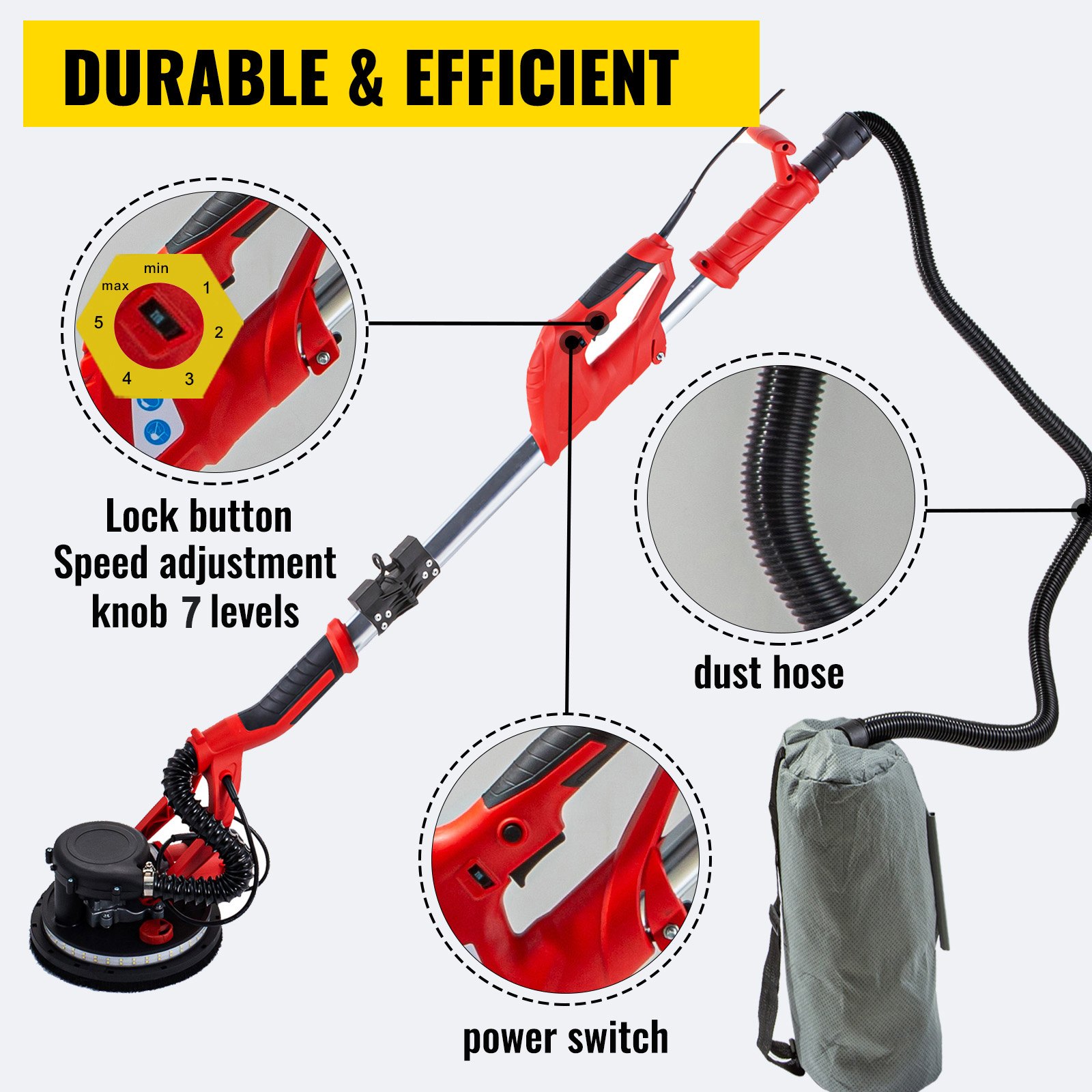 VEVOR Drywall Sander 850W, Electric Variable Speed 800-1750 RPM, Foldable Sheetrock With Telescope Handle, LED Strip Light And Vacuum Bag, Wall$127.99
 View on Mallflare
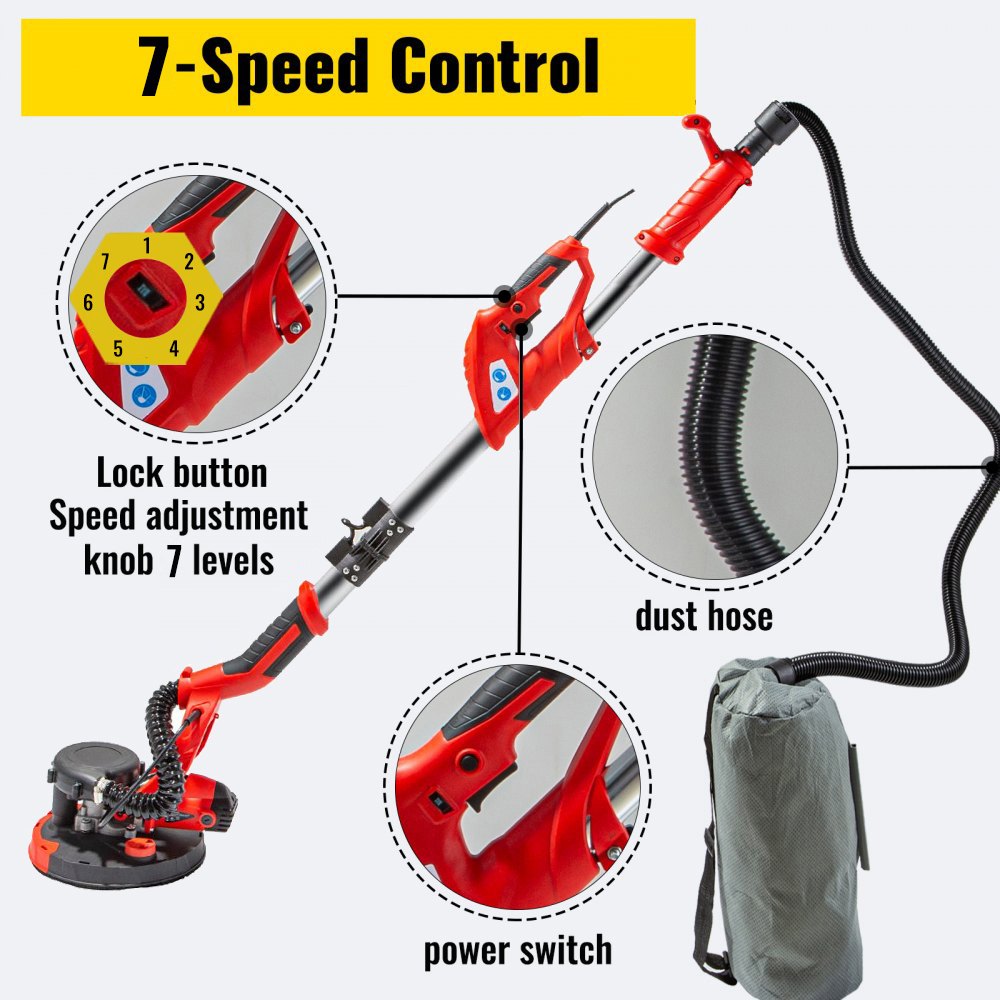 Drywall Sander 850W Electric, Variable Speed 800-1750RPM, Foldable Sheetrock With Telescope Handle, Vacuum Bag Sanders 6 Sand Pads$128.99View on Mallflare
Highlights
- Dust extraction is the performance bottleneck: cloth vacuum bags capture coarse dust only, while HEPA-filtered cyclonic extractors with sealed hose couplings retain 99.97% of 0.3-micron gypsum particles.
- Motor architecture separates tiers: brushed universal motors (typ. 750-900W) lose RPM under load and brush life is short; brushless DC or induction motors hold 800-1750 RPM and run cooler for continuous production.
- Long-reach articulation determines wall and ceiling quality: telescoping handles span roughly 1.2-1.7m, and a pivoting/flexible head joint is required to keep the pad flat on high ceilings and tight corners.
- Pad and extraction compatibility matter: hook-and-loop 225mm (9-inch) pads are standard, and the sander's hose diameter must match the extractor port (common 32mm or 35mm) or dust capture collapses.
Best use cases
- Best fit: whole-room drywall finishing and ceiling work—pick a brushless or induction unit with a HEPA cyclonic extractor, sealed 32/35mm hose, and articulating head; skip bag-only 850W units.
- Best fit: DIY garage or single-room remodel—an 850W variable-speed 800-1750 RPM sander with LED strip and bag is adequate if you add a shop vacuum with a HEPA cartridge and use a sealed adapter.
- Wrong fit: production crews running 6+ hours daily—brushed bag units overheat and leak dust; choose induction-motor long-reach sanders with external extractor ports instead.
- Best fit: overhead ceiling sanding—prioritize a telescoping handle reaching 1.7m plus a pivoting head; fixed-head short-reach sanders force ladders and gouge joints.
Buying tips
- Match hose to extractor: confirm the sander's dust port diameter (32mm or 35mm) equals your vacuum hose or use a rubber stepped adapter—mismatched ports leak dust and cut suction.
- Size the pad to the task: 225mm (9-inch) hook-and-loop pads cover joints fast but are heavy overhead; 180-215mm heads suit detail and closet work with less fatigue.
- Choose motor by duty cycle: brushed 750-900W units suit intermittent DIY; brushless or induction motors hold 800-1750 RPM under load for continuous production sanding.
- Verify vacuum airflow, not just the bag: extraction needs roughly 100+ CFM and a HEPA cartridge to capture gypsum fines; a cloth bag alone recirculates respirable dust.
Specs
| Motor Type | Brushed 750-900W vs Brushless/Induction |
|---|---|
| Speed Range | 800-1750 RPM variable |
| Dust Extraction | Cloth bag vs HEPA cyclonic 100+ CFM |
| Pad & Hose | 225mm hook-and-loop / 32-35mm port |
Related searches
What to check before buying
- Measure ceiling height and wall runs: a telescoping handle reaching ~1.7m plus 225mm pad covers standard 2.4-2.7m ceilings without a ladder.
- Confirm your vacuum's hose diameter (32mm or 35mm) and HEPA cartridge compatibility before buying the sander—port mismatch defeats extraction.
- Check pad mounting: hook-and-loop 225mm backing is standard; ensure replacement pads and interface pads are available in that size and grit range.
- Verify power: corded sanders draw 750-900W at 120V (US) or 220-240V (EU) and need a grounded outlet; confirm plug type matches your region.
FAQ
Data sources: eBay / Amazon listings and product attribute feeds Data updated Nov 20, 2026.
Some links on this page are affiliate links. If you buy after clicking one, we may earn a commission at no extra cost to you. This does not change which products appear here or their order. Affiliate disclosure.