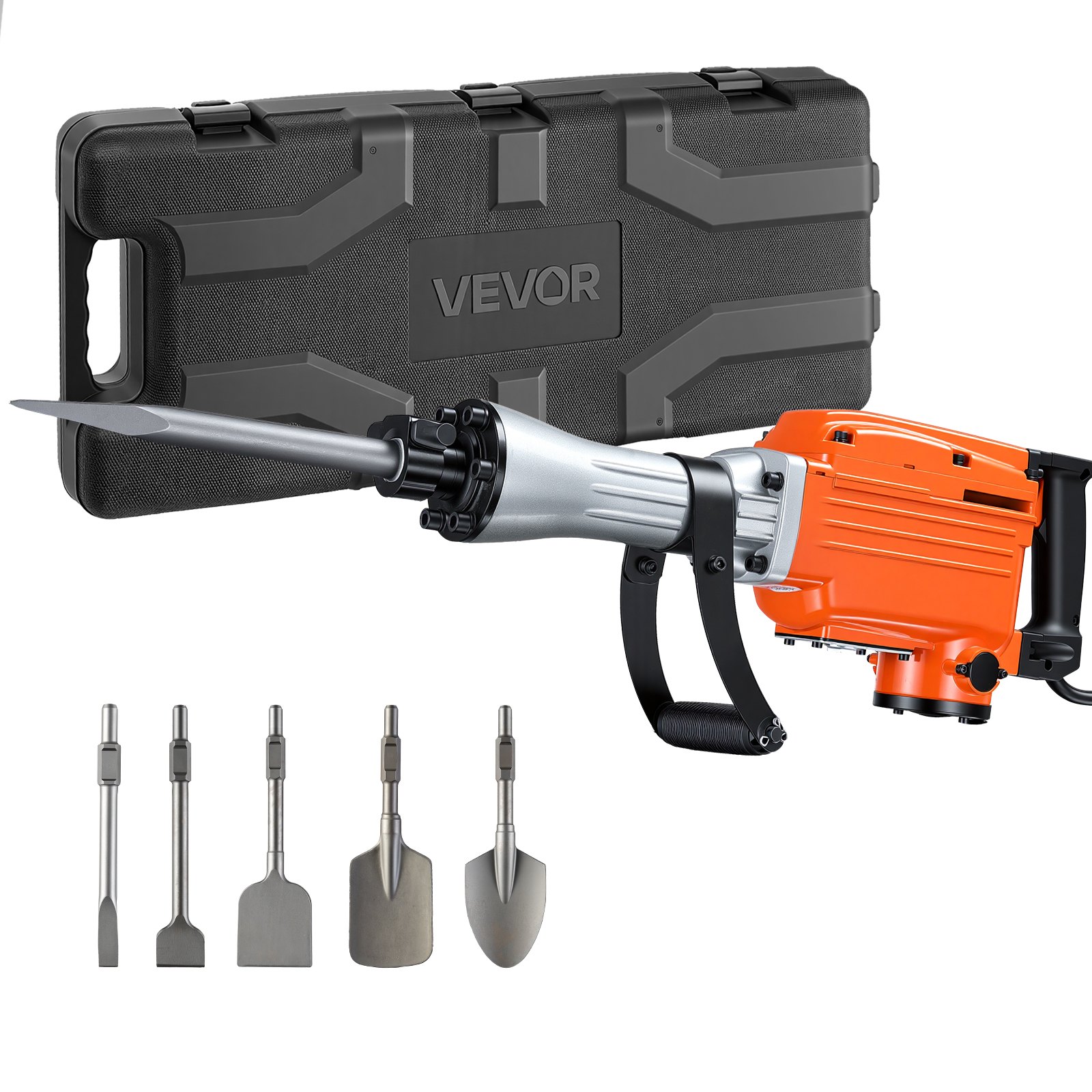

Photos from current listings. Actual item, color, and included accessories may vary.
Electric Chisel Hammer Buying Guide
An electric chisel hammer (demolition hammer) is a corded impact tool that drives a steel chisel into concrete, masonry, and asphalt using a motor-driven piston mechanism. The core trade-off is between impact energy (joules) for breaking force and beats-per-minute for speed, with hex-shank compatibility and anti-vibration construction separating pro-duty units from light-duty compromises. Choose a SDS-max or hex-shank hammer with at least 15 J impact energy for structural demolition; skip SDS-plus or 10 J-class tools for anything beyond tile and light mortar.


At a glance
- Category
- Power Tools
- Data updated
- Nov 20, 2026
Current offers
Highlights
- Impact energy classes: 10–15 J for light demolition and tile removal; 15–25 J for concrete slabs and trenching; 25 J+ for heavy structural breaking.
- Shank standards: SDS-max (18 mm) and 17 mm hex are the demolition standard; SDS-plus (10 mm) is for rotary hammers and cannot handle chisel impact loads.
- Beat rate vs. impact: 1,900–2,200 BPM suits general concrete; lower BPM with high joules favors hard aggregate, higher BPM favors soft masonry.
- Anti-vibration: pro-tier models use isolated handle mounts and damping; entry units transmit full vibration, limiting safe continuous use to short bursts.
Best use cases
- Concrete slab and footing demolition: pick a 15–25 J hex-shank hammer with a 360° swiveling front handle and at least 2,000 BPM; skip SDS-plus rotary hammers.
- Trenching and pipe chasing in masonry: a 10–15 J SDS-max unit with narrow chisels is ideal; full-size 25 J breakers are overkill and hard to control.
- Tile and mortar removal in bathrooms: a light 10 J SDS-max or heavy-duty SDS-plus rotary hammer on chisel mode works; skip 30 J-class breakers that crack substrates.
- Vertical wall and overhead work: choose the lightest hammer with vibration damping and a front handle; skip top-handle-only breakers above 15 J for overhead safety.
Buying tips
- Match shank to chisel: SDS-max and 17 mm hex are not interchangeable; confirm the tool’s shank standard before buying chisel sets.
- For concrete over 100 mm thick, select at least 20 J impact energy and 1,800+ BPM; thinner slabs tolerate 10–15 J tools.
- Corded electric hammers need a 15 A or 20 A circuit for 2,000 W+ models; check amperage on the tool label against your breaker.
- Weight matters: 5–8 kg units are one-hand controllable; 10 kg+ breakers require two hands and are for floor work only.
Specs
| Shank Standard | SDS-max / 17 mm hex / SDS-plus |
|---|---|
| Impact Energy | 10–15 J light / 15–25 J demo / 25 J+ heavy |
| Blows Per Minute | 1,300–2,200 BPM typical |
| Input Power | 1,500–2,200 W corded |
Related searches
What to check before buying
- Measure the slab or wall thickness: tools under 15 J stall in concrete thicker than 100 mm.
- Confirm your electrical circuit: 2,200 W tools draw ~18 A at 120 V and need a 20 A dedicated circuit.
- Check chisel compatibility: SDS-max chisels are 18 mm shank; 17 mm hex chisels fit hex tools only.
- Verify handle and case: a 360° swiveling front handle and hard carrying case are standard on pro-duty units; gloves are consumables, not safety certification.
FAQ
Data sources: eBay / Amazon listings and product attribute feeds Data updated Nov 20, 2026.
Some links on this page are affiliate links. If you buy after clicking one, we may earn a commission at no extra cost to you. This does not change which products appear here or their order. Affiliate disclosure.