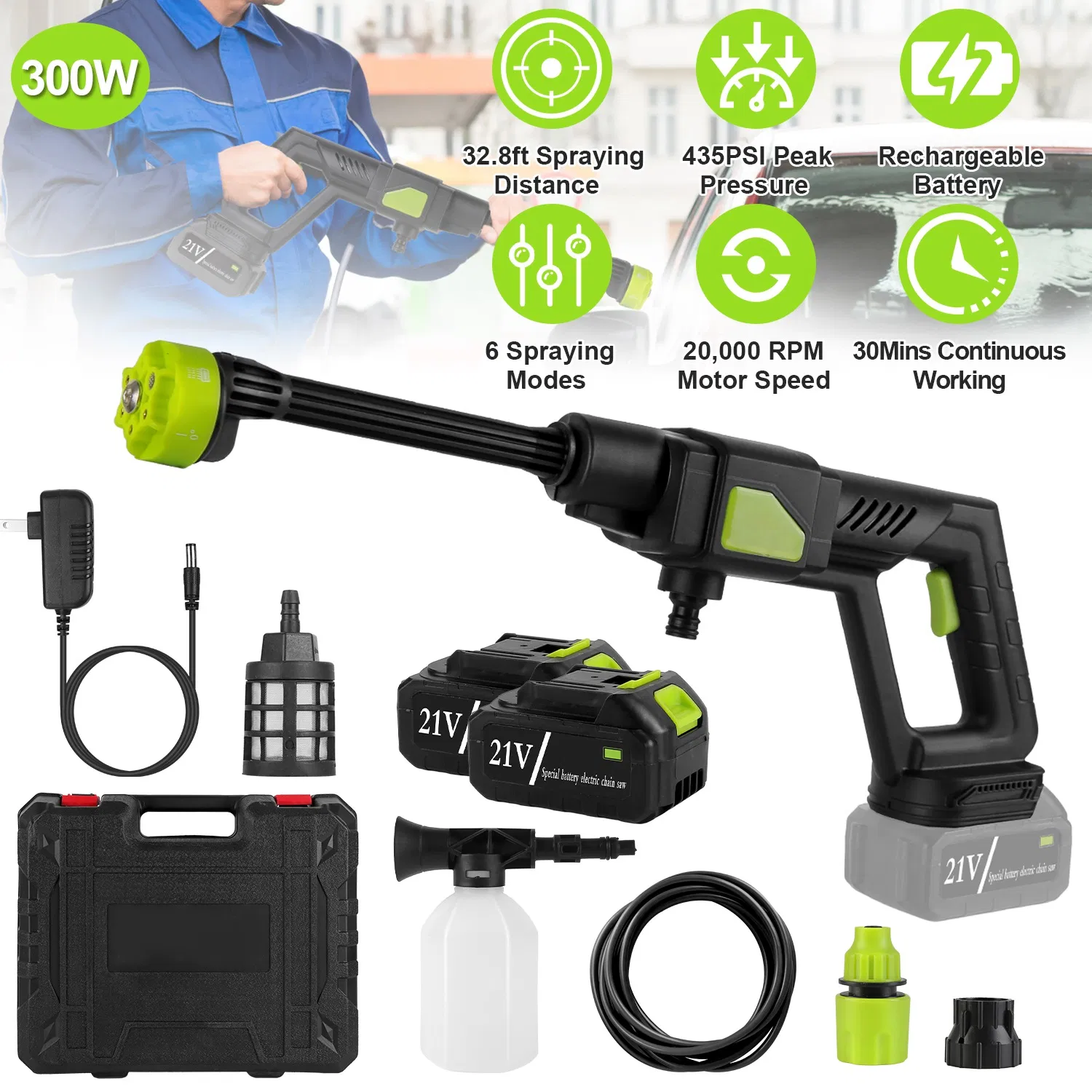

Photos from current listings. Actual item, color, and included accessories may vary.
Electric Power Washer Buying Guide
Electric power washers split into two architectures: corded units (120V AC, 1,400–3,000 PSI) for sustained cleaning power, and cordless battery units (18–40V DC, 300–800 PSI) for portability. The core trade-off is PSI/GPM versus mobility—corded wins on raw cleaning force, battery wins where no outlet exists. The decision rule: buy corded if the job involves deep grime on driveways or siding; buy battery only for light rinse-downs and remote spots where a hose and outlet are unavailable.


At a glance
- Category
- Power Tools
- Data updated
- Nov 20, 2026
Current offers
Highlights
- Corded 120V units deliver 1,400–3,000 PSI at 1.2–2.5 GPM; battery units top out near 300–800 PSI at under 1 GPM—a 3–5x cleaning-power gap.
- Axial cam pumps are common in entry corded models (shorter duty life); triplex plunger pumps in prosumer units last 3–5x longer under continuous use.
- Battery platforms are voltage-locked: 18V/20V max packs share one charger family; 40V systems are separate—pick a platform already in your garage.
- Universal motor (corded) vs brushless DC (better battery units): brushless adds 20–30% runtime and motor life but costs more per unit.
Best use cases
- Best fit corded: concrete driveways, deck stripping, siding wash—pick 1,800–2,400 PSI with adjustable pressure and a 25-ft hose; skip sub-1,600 PSI toys.
- Best fit battery: car rinses, patio furniture, balcony cleanup, campsite gear—pick 18–40V with 4.0Ah+ pack and 5-in-1 nozzle; skip for paint prep or oil stains.
- Best fit hybrid: homes with outdoor outlets near the job—corded with 35-ft hose and reel beats hauling batteries; skip battery if outlet is within 50 ft.
- Wrong fit either way: stripping lead paint or restoring a 20-year-old deck—rent a gas 3,000+ PSI unit; electric models lack the GPM for heavy stripping.
Buying tips
- Match PSI to surface: 1,200–1,600 for cars/furniture, 1,800–2,400 for driveways/siding, 2,500+ only with a surface cleaner attachment to avoid etching.
- Check pump type: triplex ceramic-plunger pumps outlast axial cam 3–5x; if the listing says 'axial' and the price is low, expect a wear item.
- Verify hose length and diameter: 25 ft x 1/4 in is standard; 35 ft reduces repositioning, and a 3/8 in hose flows better but is stiffer.
- Battery buyers: confirm pack voltage and Ah—4.0Ah gives roughly 20–30 min of intermittent spray; 2.0Ah kits stall mid-job.
Specs
| Power Source | Corded 120V AC vs 18–40V battery |
|---|---|
| Pressure Range | Corded 1,400–3,000 PSI / Battery 300–800 PSI |
| Pump Type | Axial cam (entry) vs triplex (durable) |
| Hose & Fitting | 25–35 ft, 1/4-in quick-connect |
Related searches
What to check before buying
- Measure outlet-to-job distance: corded needs 120V within ~50 ft including extension; beyond that, battery or a longer hose.
- Check water supply: most corded units need a spigot; confirm a suction/self-priming mode if pulling from a bucket.
- Verify surface material: wood and painted surfaces need under 1,600 PSI or a wide nozzle; concrete tolerates 2,400+.
- Confirm nozzle and accessory fit: standard 1/4-in quick-connect accepts turbo and surface-cleaner attachments; proprietary fittings limit upgrades.
FAQ
Data sources: eBay / Amazon listings and product attribute feeds Data updated Nov 20, 2026.
Some links on this page are affiliate links. If you buy after clicking one, we may earn a commission at no extra cost to you. This does not change which products appear here or their order. Affiliate disclosure.