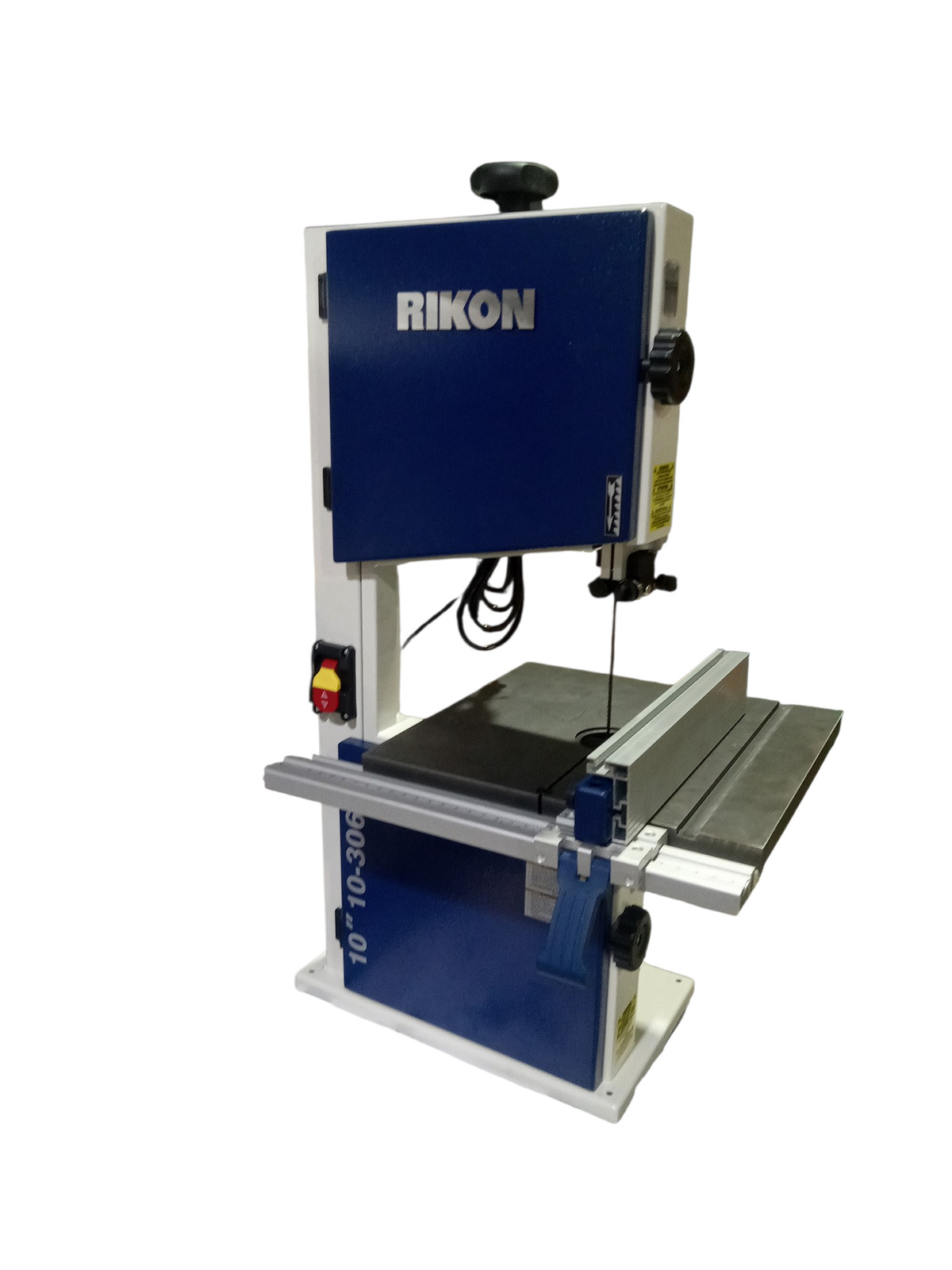

Photos from current listings. Actual item, color, and included accessories may vary.
Band Saw Buying Guide
A band saw is a continuous-loop blade saw that excels at curved cuts, resawing, and veneer work, with performance dictated by motor horsepower, throat depth, and blade tensioning rigidity. The core trade-off is cast-iron wheel/frame mass for vibration-free resawing versus stamped-steel portability and lower cost. Buyers should treat any saw under 1/2 HP or with plastic trunnions as a light-duty compromise rather than a durable woodworking investment.


At a glance
- Category
- Woodworking Saws & Planers
- Data updated
- Nov 20, 2026
Current offers
Highlights
- Cast-iron wheels and frame dampen vibration for clean resaw cuts; stamped steel is lighter but flexes under tension.
- Motor tiers: 1/2 HP for 10-inch benchtop hobby saws, 1-1.5 HP for 14-inch floor models, 2 HP+ for resawing thick stock.
- Throat capacity (10, 14, 17 inch) sets the widest cut; resaw height (6-12 inch) sets vertical board thickness.
- Two-speed pulley vs variable-speed: two-speed covers wood and non-ferrous metal; VFD gives infinite blade speed control.
Best use cases
- Buy a 10-inch benchtop (1/2-3/4 HP, 6-inch resaw) for small-box work and curves if you have under 6 feet of shop space and only cut stock under 2 inches thick.
- Choose a 14-inch floor model with 1-1.5 HP and 8-12 inch resaw for furniture work, veneer, and curved chair parts; skip 10-inch saws if you routinely resaw 6-inch or thicker boards.
- For metal and plastic, pick a variable-speed or two-speed saw with a bi-metal blade; skip single-speed wood-only saws that run 1,500+ FPM and will burn metal.
Buying tips
- Match throat depth to your widest cut: a 14-inch saw clears 13.5 inches to the blade, enough for most furniture curves; 10-inch saws limit you to under 9.5 inches.
- Resaw height must exceed your thickest board plus blade set: choose 12-inch resaw capacity if you mill 8/4 lumber, 6-inch is fine for 4/4 stock.
- Insist on cast-iron or machined-aluminum trunnions and a rack-and-pinion blade guide; plastic trunnions flex and strip under tension.
- For resawing above 6 inches, choose 1.5 HP or more and a tension-release lever; underpowered saws stall and leave washboard cuts.
Specs
| Motor Power | 1/2 HP benchtop to 2 HP+ resaw |
|---|---|
| Throat Capacity | 10, 14, 17, 18 inch |
| Resaw Height | 6 in benchtop to 12 in floor |
| Blade Speed | Single-speed wood / variable metal |
Related searches
What to check before buying
- Measure shop height and floor footprint: 14-inch floor saws need roughly 6 feet of ceiling clearance and 2x2 feet of floor.
- Confirm dedicated 120V 15A or 240V circuit for 1.5 HP+ motors; most benchtop saws run on standard 15A 120V.
- Check blade length spec (e.g., 93.5-inch for 14-inch saws) and buy 1/4-inch, 1/2-inch, and 3/4-inch blades for curves, general, and resaw.
- Verify fence and miter gauge are included or available; aftermarket fences (e.g., Carter, Kreg) add rigidity for resaw accuracy.
FAQ
Data sources: eBay / Amazon listings and product attribute feeds Data updated Nov 20, 2026.
Some links on this page are affiliate links. If you buy after clicking one, we may earn a commission at no extra cost to you. This does not change which products appear here or their order. Affiliate disclosure.