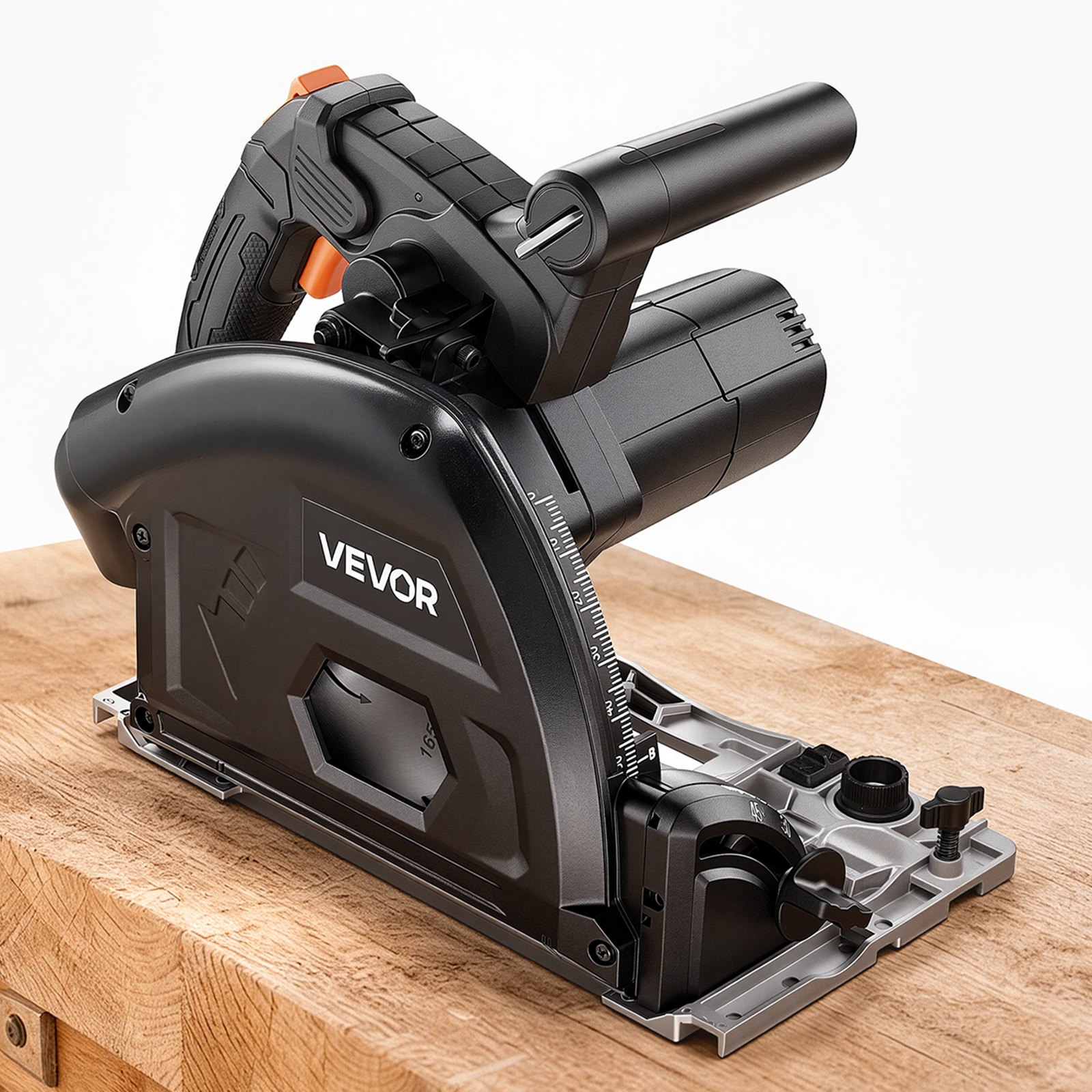

Photos from current listings. Actual item, color, and included accessories may vary.
Circular Saw Buying Guide
A circular saw is a handheld cutoff tool whose blade depth, motor torque, and base-plate rigidity determine whether cuts stay true or wander. The core trade-off is between a sidewinder's raw RPM and a worm-drive's high-torque, deep-cut geometry, while plunge-track models add rail-guided accuracy at the cost of setup time. Buy a saw whose blade size and amp draw match your thickest regular cut; compromise there and no aftermarket blade will fix the deflection.


At a glance
- Category
- Woodworking Saws & Planers
- Data updated
- Nov 20, 2026
Current offers
Highlights
- Blade diameter sets max depth: 6-1/2 in saws cut about 2-1/4 in at 90 degrees, 7-1/4 in saws reach 2-1/2 in, and 10-1/4 in worm drives clear 3-1/2 in for timber.
- Motor architecture matters: sidewinder saws spin 5,000-5,800 RPM with the motor parallel to the blade; worm-drive saws run lower RPM with far higher torque for wet lumber and deep rips.
- Track/plunge saws use a spring-loaded plunge base and a 1.4-1.8 kW motor to ride a guide rail, delivering splinter-free cuts that a standard shoe cannot match without a clamped straightedge.
- Base plate material separates durable from disposable: die-cast magnesium or aluminum shoes hold flatness under load, while stamped steel shoes flex and tilt the blade in long rips.
Best use cases
- Framing and decking: pick a 7-1/4 in sidewinder with at least 15 A and a magnesium shoe; skip 6-1/2 in trim saws that stall in wet 2x10 stock.
- Sheet-goods cabinetry and countertops: choose a 6-1/2 in plunge track saw with a 55 in rail for factory-straight edges; a bare track saw without rail defeats the purpose.
- Heavy timber and beam work: use a 10-1/4 in worm-drive saw for 3-1/2 in depth; a standard 7-1/4 in sidewinder cannot clear 4x4 posts in one pass.
- Occasional DIY crosscuts: a 7-1/4 in corded saw with a carbide 24-tooth blade is the right floor; cordless 18V trim saws are wrong-fit for repeated wet-lumber cutting.
Buying tips
- Match depth to material: subtract 1/4 in from your thickest regular cut, then choose 6-1/2 in (2-1/4 in depth), 7-1/4 in (2-1/2 in), or 10-1/4 in (3-1/2 in) accordingly.
- For track saws, confirm rail length covers your stock plus 12 in: a 55 in rail handles 4x8 sheets on the long axis but needs two rails joined for full 8 ft rips.
- Check amperage and no-load RPM together: 15 A at 5,500 RPM is the framing baseline; sub-12 A motors bog in wet pressure-treated lumber regardless of blade choice.
- Prefer die-cast magnesium or aluminum base plates and a blade brake; stamped shoes and absent brakes are the clearest markers of a disposable build.
Specs
| Blade Size | 6-1/2 / 7-1/4 / 10-1/4 in |
|---|---|
| Motor Type | Sidewinder vs Worm-Drive |
| Max Depth at 90° | 2-1/4 to 3-1/2 in |
| Base Plate | Die-cast magnesium vs stamped steel |
Related searches
What to check before buying
- Measure your thickest regular cut and confirm the saw's 90-degree depth exceeds it by at least 1/4 in before buying.
- Confirm the blade arbor size (5/8 in is standard, 20 mm on many track saws) so your existing blades fit.
- For track saws, verify rail compatibility and whether the rail is included — a bare plunge saw cannot guide itself.
- Check power source and circuit: 15 A corded saws need a dedicated 120 V circuit; cordless models require the matching battery platform and charger.
FAQ
Data sources: eBay / Amazon listings and product attribute feeds Data updated Nov 20, 2026.
Some links on this page are affiliate links. If you buy after clicking one, we may earn a commission at no extra cost to you. This does not change which products appear here or their order. Affiliate disclosure.