Photos from current listings. Actual item, color, and included accessories may vary.
Circular Saw And Guide Rail Buying Guide
A circular saw guide rail system pairs a sidewinder or plunge-cut saw with an aluminum extrusion track to deliver track-saw straightness without a full track-saw investment. The core trade-off is rail compatibility and base-plate slop versus saw power and depth capacity: sidewinder saws need an adapter skate to ride a rail, while dedicated plunge track saws lock to a proprietary rail with zero play. Buy a true plunge track saw plus matching rail for repeatable sheet-goods cuts; buy a sidewinder and adapter skate only for occasional rips where portability outweighs precision.

At a glance
- Category
- Woodworking Saws & Planers
- Data updated
- Nov 20, 2026
Current offers
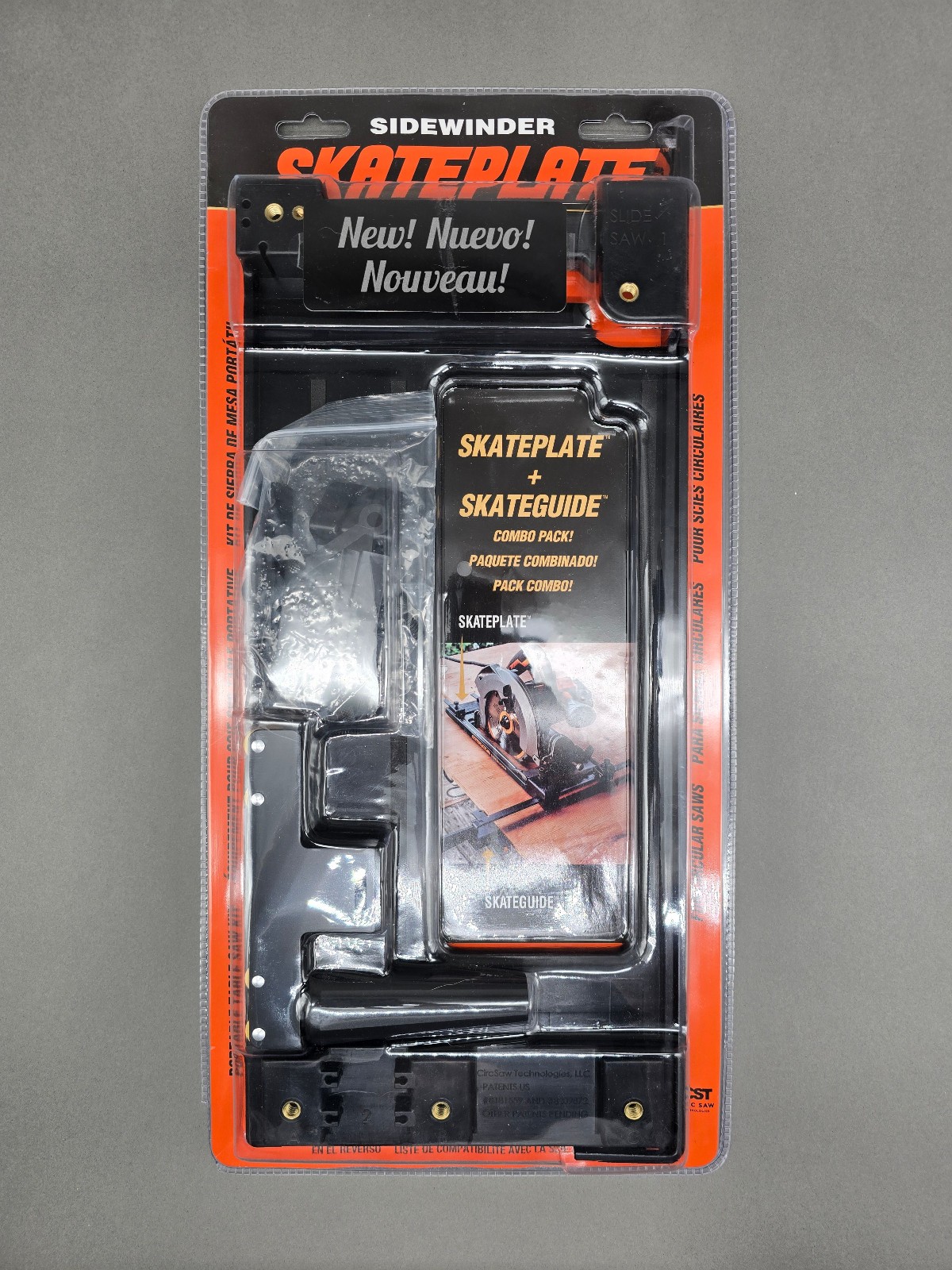 Sidewinder Skateplate Skateguide Combo Pack Circular Saw Guide Woodworking Tool$59.97
 View on eBay
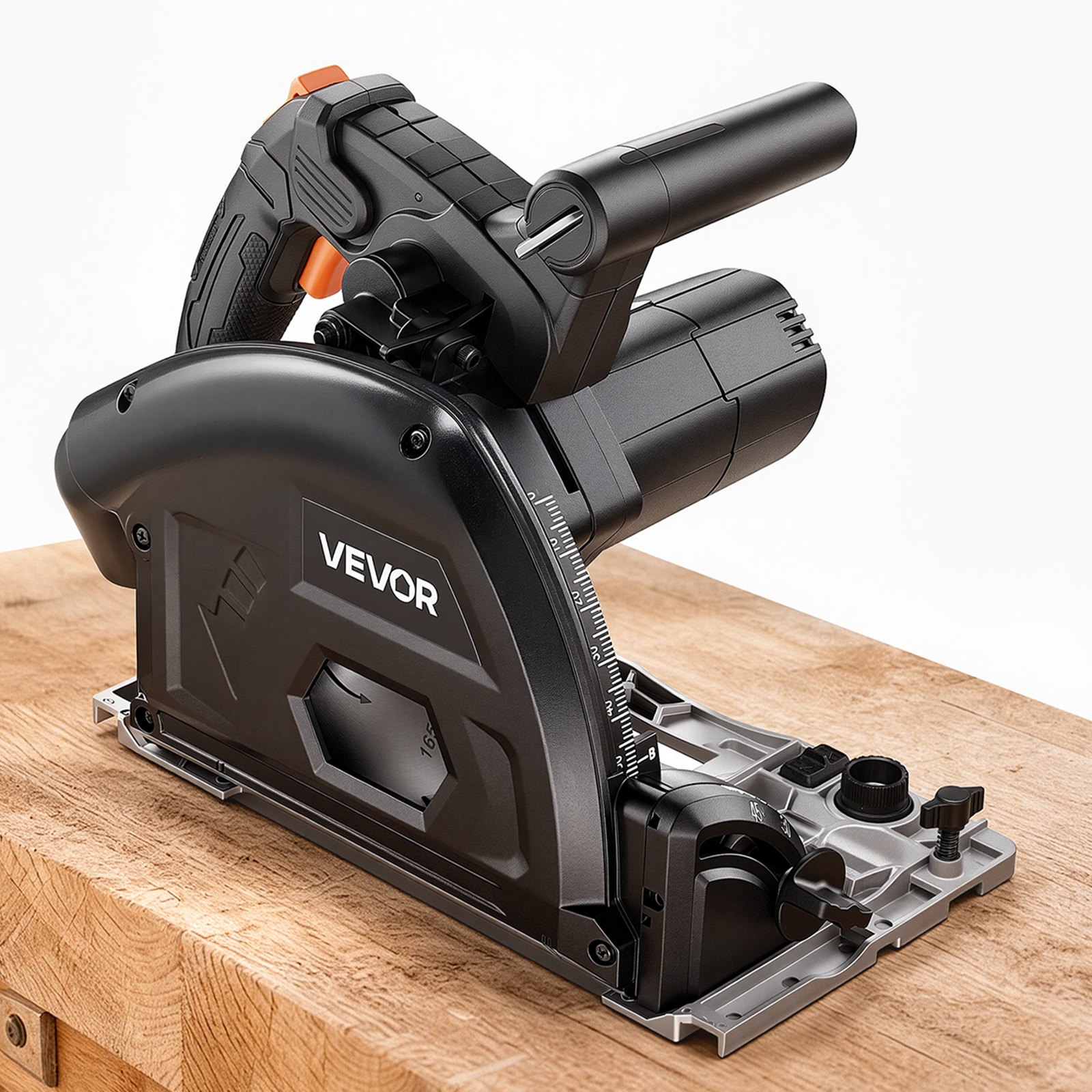 Track Saw 6-1/2-Inch Plunge-Cut Circular Saw with 48-Tooth Blade, for Wood Plastic, 1400W Motor, 5500 RPM Max, 0-45° Angle Adjustment, 2.16 in Cutting Depth, Guide Rail Not Included, Black$118.99
 View on Mallflare
Highlights
- Sidewinder circular saws use a tilting shoe and worm-drive or direct-drive motor; plunge track saws use a spring-loaded plunge mechanism with a riving knife and constant-speed 1,200-1,400W motor.
- Guide rails are extruded aluminum with a rubber friction strip on the underside and a splinter guard on the cut edge; rail length and joining accuracy determine straight-line capacity.
- Track saw base plates lock into the rail groove with adjustable cams, while sidewinder saws require a separate skate/skateguide adapter that adds play and reduces cut accuracy.
- 6-1/2-inch plunge saws cut roughly 2-1/8 inches at 90 degrees and 1-1/2 inches at 45 degrees; 7-1/4-inch sidewinders cut deeper but need wider adapter plates for rail use.
Best use cases
- Best fit: cabinet and furniture makers breaking down plywood and MDF sheets should pick a plunge track saw with a 55-inch rail and a joining kit for 8-foot rips.
- Best fit: remodelers cutting doors and trim on site should pick a 6-1/2-inch plunge saw with a short 27.5-inch rail pair for portability and clean finish cuts.
- Wrong fit: framing carpenters cutting dimensional lumber all day should skip the rail system and use a 7-1/4-inch sidewinder with a speed square; rails slow repetitive rough cuts.
- Wrong fit: budget buyers expecting track-saw accuracy from a sidewinder plus skate adapter will see 1-2mm wander; choose a dedicated plunge track saw if glue-line straightness matters.
Buying tips
- Match rail to saw brand: Festool, Makita, and Bosch rails share a compatible groove pattern, but DeWalt and Triton rails use different rib geometry; cross-brand use needs a verified adapter.
- For 8-foot sheet goods, buy two 55-inch rails plus a connector kit, or one 118-inch rail; a single 55-inch rail only covers crosscuts on 4x8 stock.
- Check base-plate thickness and cam adjustment: plunge saws with machined aluminum bases hold rail tolerance under 0.1mm, while stamped-steel sidewinder shoes flex and need frequent re-tightening.
- Choose 1,200W or higher for hardwood and 1,400W for continuous sheet breakdown; budget 1,000W motors bog down in 3/4-inch plywood on long rips.
Specs
| Saw Type | Sidewinder vs plunge track saw |
|---|---|
| Rail Compatibility | Festool/Makita/Bosch groove / DeWalt |
| Cut Depth at 90° | 2-1/8 in (6-1/2 in) / 2-7/16 in (7-1/4 in) |
| Motor Power | 1,200-1,400W plunge / 1,500-1,800W sidewinder |
Related searches
What to check before buying
- Measure your widest cut: a 55-inch rail crosscuts 48-inch sheet goods, but ripping 8-foot sheets requires a second rail and connector.
- Confirm your saw's base plate matches the rail groove: sidewinder saws need a skate adapter sized to the shoe width, while plunge saws use brand-specific cams.
- Check bench and floor space: a 118-inch rail needs over 10 feet of clear run-out on both sides of the cut for safe support.
- Verify power supply: 1,400W saws draw about 12A and need a 15A circuit; long extension cords below 12 AWG cause voltage drop and motor overheating.
FAQ
Data sources: eBay / Amazon listings and product attribute feeds Data updated Nov 20, 2026.
Some links on this page are affiliate links. If you buy after clicking one, we may earn a commission at no extra cost to you. This does not change which products appear here or their order. Affiliate disclosure.