Photos from current listings. Actual item, color, and included accessories may vary.
Circular Saw Blade Buying Guide
Circular saw blades are the cutting interface that determines cut quality, motor load, and safety across wood, metal, and aluminum. The core trade-off is tooth geometry and carbide grade versus kerf and plate stability—thin-kerf blades cut faster but deflect more, while full-kerf blades track straighter under load. The decision rule: match tooth count and hook angle to material hardness, and never run a low-tooth rip blade in non-ferrous metal or a high-tooth finish blade in thick wet lumber.

At a glance
- Category
- Woodworking Saws & Planers
- Data updated
- Nov 20, 2026
Current offers
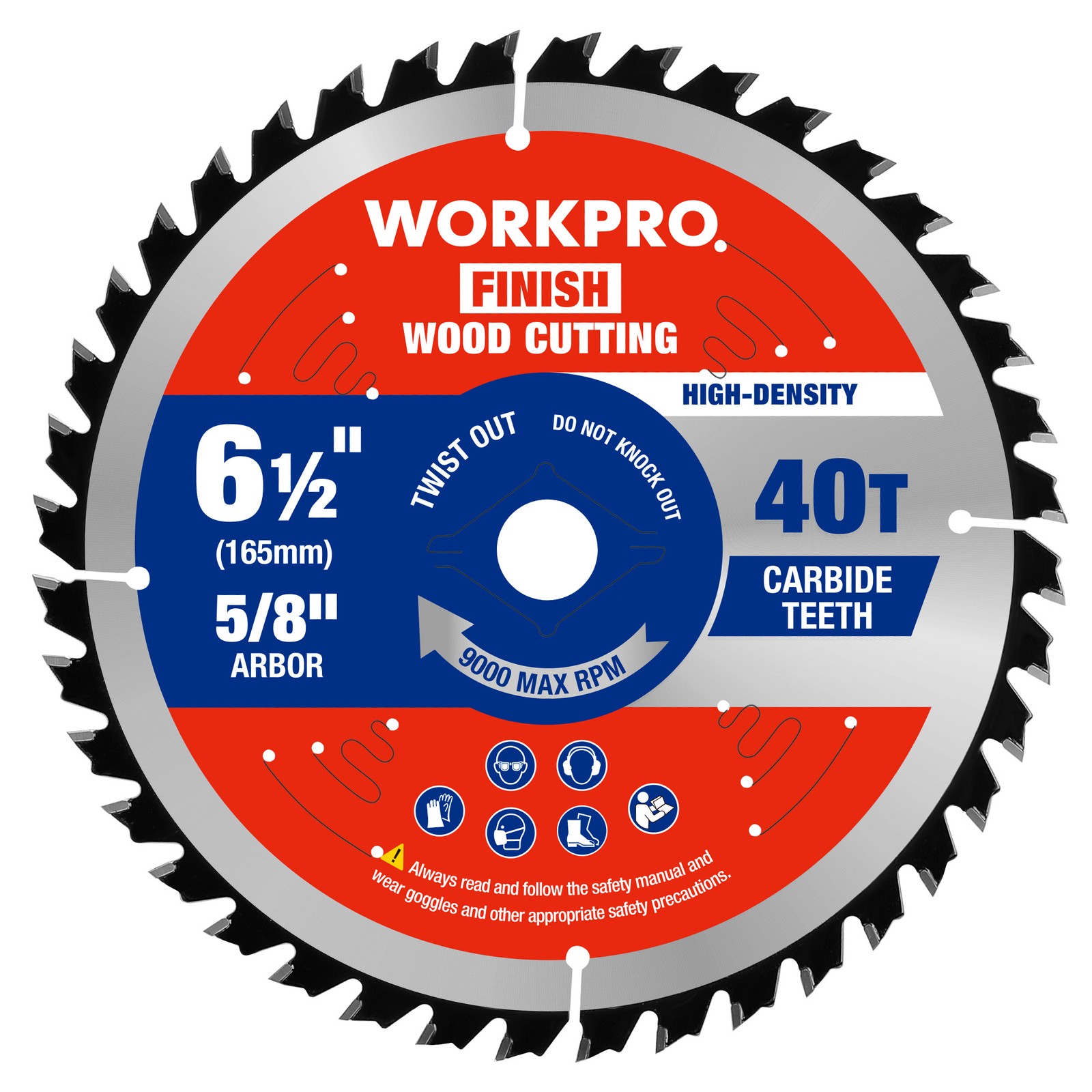 WORKPRO 6-1/2'' Woodworking Circular Saw Blade 40T General Purpose Wood Cutting$11.99
 View on eBay
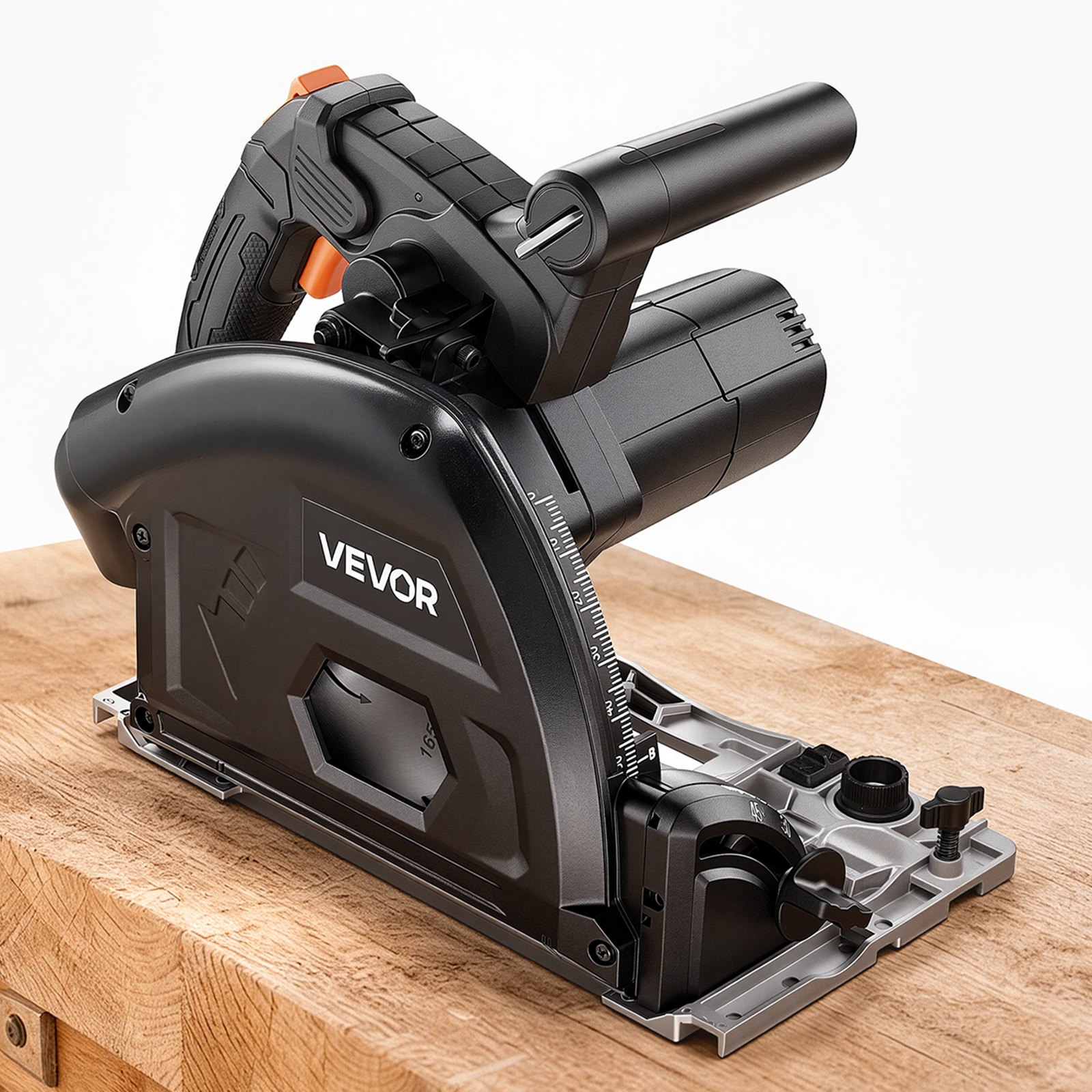 Track Saw 6-1/2-Inch Plunge-Cut Circular Saw with 48-Tooth Blade, for Wood Plastic, 1400W Motor, 5500 RPM Max, 0-45° Angle Adjustment, 2.16 in Cutting Depth, Guide Rail Not Included, Black$118.99
 View on Mallflare
Highlights
- Tooth count separates rip from crosscut: 24T for fast rip in thick stock, 40-60T for crosscut and finish, 80T+ for aluminum and laminates.
- Carbide grade matters more than tooth count at the low end: C2 micrograin holds an edge in abrasive MDF and composite decking, C3/C4 resists impact in nail-laden reclaimed wood.
- Kerf and plate thickness govern motor load: thin-kerf 0.063-0.079 in blades suit 6-1/2 in cordless saws; full-kerf 0.087-0.125 in blades stabilize 7-1/4 in and larger worm-drive saws.
- Hook angle changes feed force: positive 15-20° for rip and framing, 0-5° for metal and aluminum to prevent climb, negative -5° for miter saws and thin-gauge sheet.
Best use cases
- Framing and decking: choose a 24T ATB or FTG 7-1/4 in blade with positive hook for fast rip in 2x lumber—skip 60T finish blades that burn and slow the cut.
- Aluminum and non-ferrous: run a 60-80T triple-chip or negative-hook 6-1/2-7-1/4 in blade with wax lubricant—never use a wood rip blade, which grabs and kicks.
- Trim and plywood finish: a 40-48T ATB 6-1/2 in thin-kerf blade on a plunge/track saw gives splinter-free crosscuts up to 2.16 in depth—skip full-kerf on 18V cordless platforms.
Buying tips
- Match arbor bore to saw spindle: 5/8 in is standard on 7-1/4 in saws, 20 mm on many 6-1/2 in plunge saws—use a bushing adapter only if it is steel, not plastic.
- Keep blade diameter within the saw's max RPM rating: 6-1/2 in blades typically rate 7,000-8,000 RPM; exceeding it on a 5,500 RPM track saw is safe, but oversize blades on high-RPM saws are not.
- For metal, choose a blade with a lower tooth count than for aluminum: 14-24T for steel studs and angle iron, 60-80T for aluminum extrusion to clear chips.
- Replace or sharpen when carbide tips show rounded corners or the blade requires feed force—dull blades overheat the motor and glaze the cut.
Specs
| Blade Diameter | 6-1/2 in / 7-1/4 in / 10 in |
|---|---|
| Arbor Bore | 5/8 in / 20 mm / 15/16 in |
| Tooth Count | 24T rip / 40-60T crosscut / 80T metal |
| Kerf Type | Thin-kerf 0.063-0.079 / Full 0.087-0.125 |
Related searches
What to check before buying
- Confirm saw arbor size (5/8 in, 20 mm, or 15/16 in) and blade diameter before purchase—wrong bore means the blade will not mount safely.
- Verify max RPM on the blade label meets or exceeds the saw's no-load RPM; never run a blade rated below saw RPM.
- Check cutting depth: a 6-1/2 in blade yields about 2.16 in at 90° and less at 45°, so thick stock needs a 7-1/4 in blade.
- For track/plunge saws, confirm the blade kerf matches the guide rail splinter strip—thin-kerf 0.063-0.079 in blades are standard for 6-1/2 in plunge saws.
FAQ
Data sources: eBay / Amazon listings and product attribute feeds Data updated Nov 20, 2026.
Some links on this page are affiliate links. If you buy after clicking one, we may earn a commission at no extra cost to you. This does not change which products appear here or their order. Affiliate disclosure.