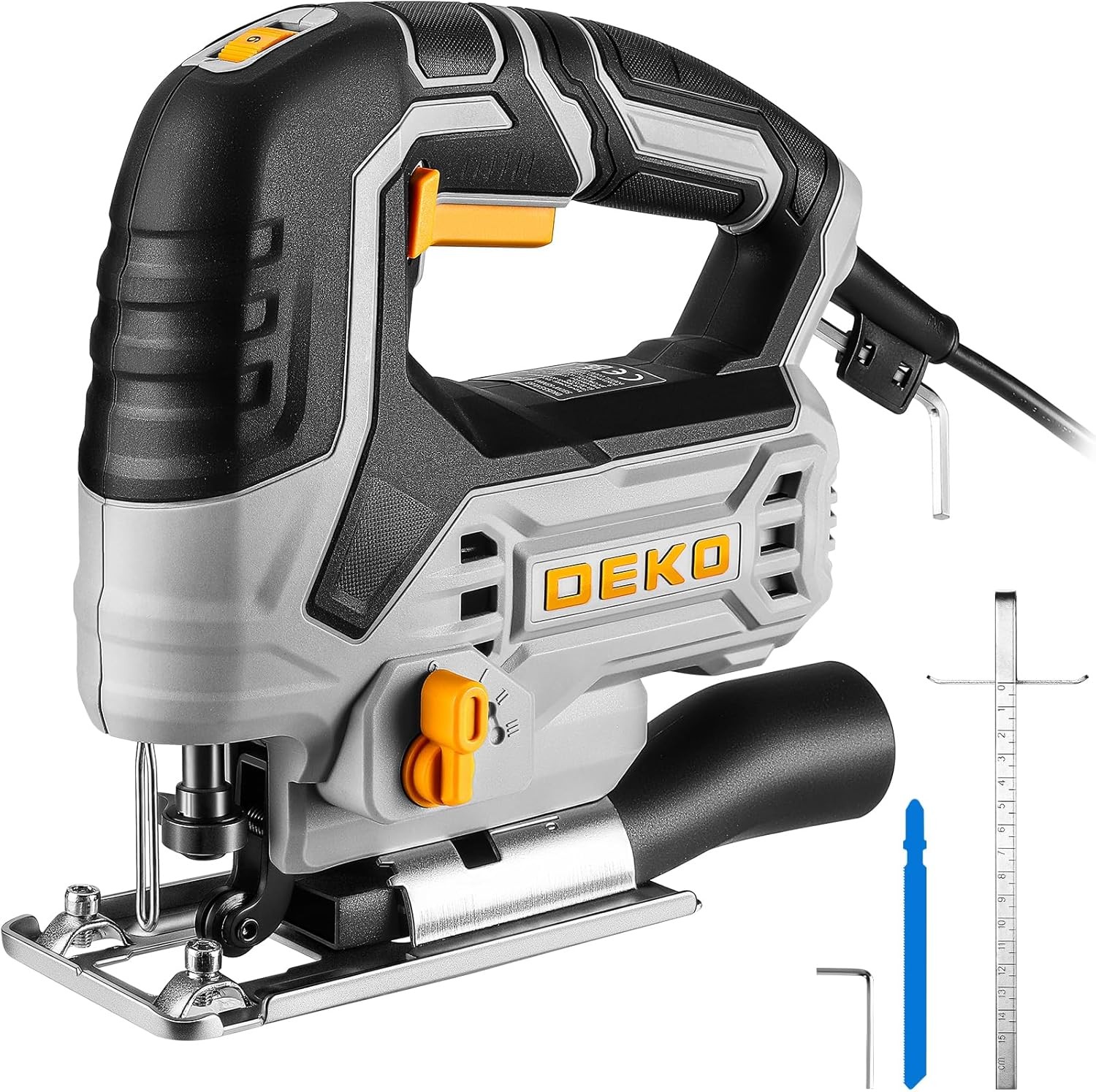

Photos from current listings. Actual item, color, and included accessories may vary.
Electric Saw Buying Guide
Electric saws span jigsaws, circular saws, and reciprocating saws, each defined by motor type, blade orbit, and cut capacity. The core trade-off is brushed vs brushless motors and stamped vs cast bases: brushless and cast-metal build deliver longer life and straighter cuts, while brushed and stamped units suit light, occasional work. Buy brushless with a tool-free blade change and a metal base for regular woodworking; buy brushed only for infrequent, thin-stock tasks.


At a glance
- Category
- Woodworking Saws & Planers
- Data updated
- Nov 20, 2026
Current offers
Highlights
- Brushless motors run cooler and deliver 50-100% longer runtime per charge than brushed motors, with no carbon brushes to replace.
- Jigsaws are rated by stroke length (18-26 mm) and strokes per minute (500-3,500 SPM); orbital action in 3-4 stages speeds thick-wood cuts but roughens edges.
- Circular saws are defined by blade diameter (140-235 mm) and no-load RPM; a 184-190 mm blade cuts 60-65 mm at 90 degrees, while 235 mm reaches 85 mm.
- Cast aluminum or magnesium base plates resist deflection and stay square; stamped steel bases flex under pressure and cause bevel drift.
Best use cases
- Pick a barrel-grip or top-handle jigsaw with orbital action for curved cuts, cutouts, and laminate; skip it for long rip cuts in thick hardwood where a circular saw is faster and straighter.
- Pick a 184-190 mm circular saw with a carbide-tipped 24T blade for framing, decking, and rip cuts up to 65 mm; skip underpowered 140 mm trim saws for anything beyond 40 mm stock.
- Pick a reciprocating saw for demolition, pruning, and pipe cutting; skip it for finish carpentry because the blade stroke tears wood fibers.
- Pick a corded saw when working within reach of an outlet or in a shop; pick a cordless model only if you already own that battery platform, since bare tools need matching packs and chargers.
Buying tips
- Match blade size to cut depth: a 184 mm circular saw handles 2x lumber at 90 degrees, while a 235 mm saw is needed for 4x4 posts and deep rips.
- Choose a jigsaw with at least 20 mm stroke and variable speed (0-3,000 SPM) for wood; a 26 mm stroke cuts faster but is harder to control on thin stock.
- Verify the blade clamp: tool-free quick-change clamps accept T-shank blades and save time; older U-shank bayonet clamps limit blade choice.
- For cordless, confirm the tool is bare-tool or includes the battery platform you own; a 4.0 Ah pack suits saws better than 1.5-2.0 Ah compact packs.
Specs
| Motor Type | Brushless vs Brushed |
|---|---|
| Jigsaw Stroke | 18-26 mm / 500-3,500 SPM |
| Circular Blade Size | 140-235 mm diameter |
| Base Material | Cast aluminum vs stamped steel |
Related searches
What to check before buying
- Measure your thickest regular stock: a jigsaw needs 10 mm extra stroke beyond stock thickness; a circular saw needs blade depth at 45 degrees if you bevel.
- Confirm your power source: corded saws need a nearby outlet and draw 5-10 A; cordless saws need the correct battery platform and charger.
- Check blade availability locally: 184 mm and 235 mm circular saw blades and T-shank jigsaw blades are widely stocked; odd sizes are special-order.
- Plan for dust and chips: jigsaws and circular saws have dust ports sized for 28-35 mm hoses; a shop vac adapter is needed for extraction.
FAQ
Data sources: eBay / Amazon listings and product attribute feeds Data updated Nov 20, 2026.
Some links on this page are affiliate links. If you buy after clicking one, we may earn a commission at no extra cost to you. This does not change which products appear here or their order. Affiliate disclosure.