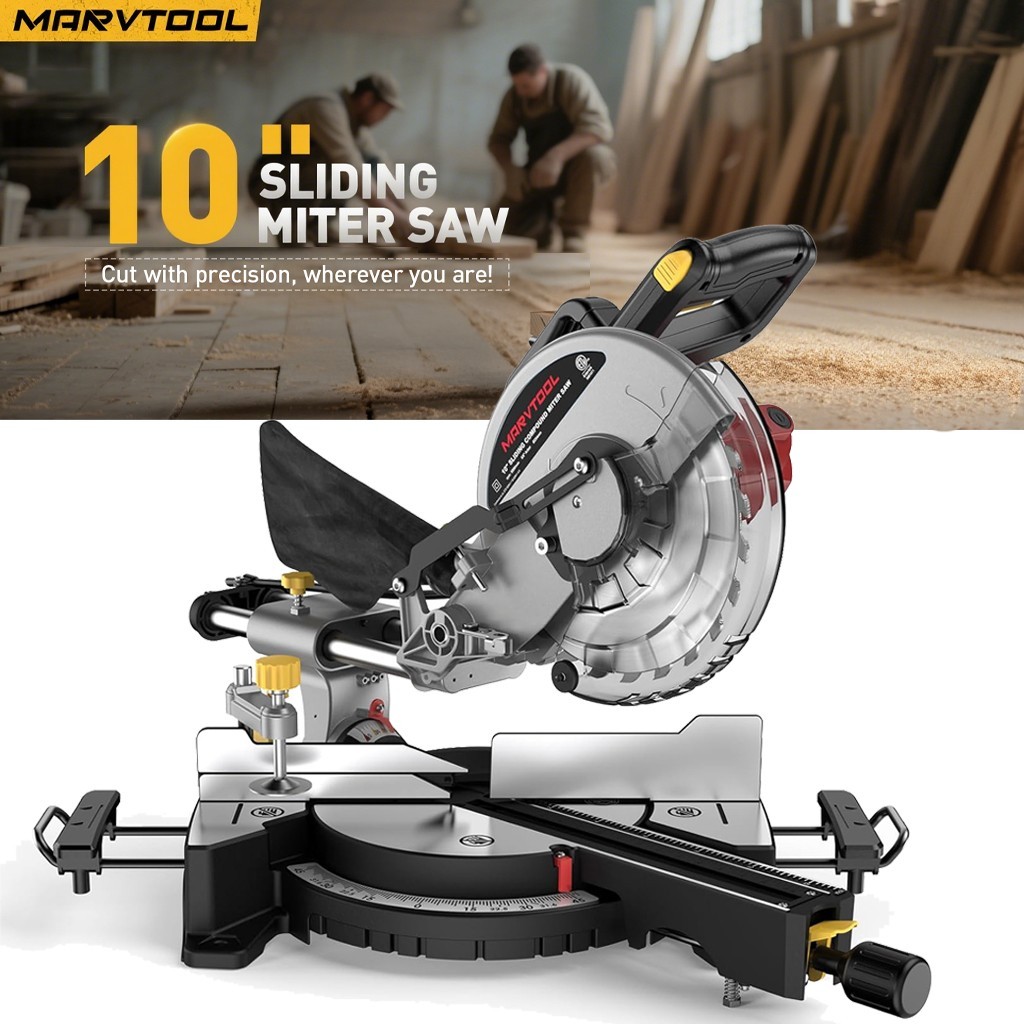

Photos from current listings. Actual item, color, and included accessories may vary.
Miter Buying Guide
Miter saws are the precision crosscut and angle-cutting workhorses of woodworking, with the core trade-off between a compact single-bevel 10-inch sliding saw and a larger dual-bevel 12-inch unit determining capacity, portability, and cut complexity. Buy a sliding compound model when you need crosscut capacity beyond 8 inches or compound bevels for crown molding; skip non-sliding or single-bevel-only saws only if you exclusively cut trim at 90 degrees. The clear rule: prioritize a sliding rail system and at least single-bevel capability for general carpentry, and step up to dual-bevel only if you routinely cut both sides of compound angles without flipping stock.


At a glance
- Category
- Woodworking Saws & Planers
- Data updated
- Nov 20, 2026
Current offers
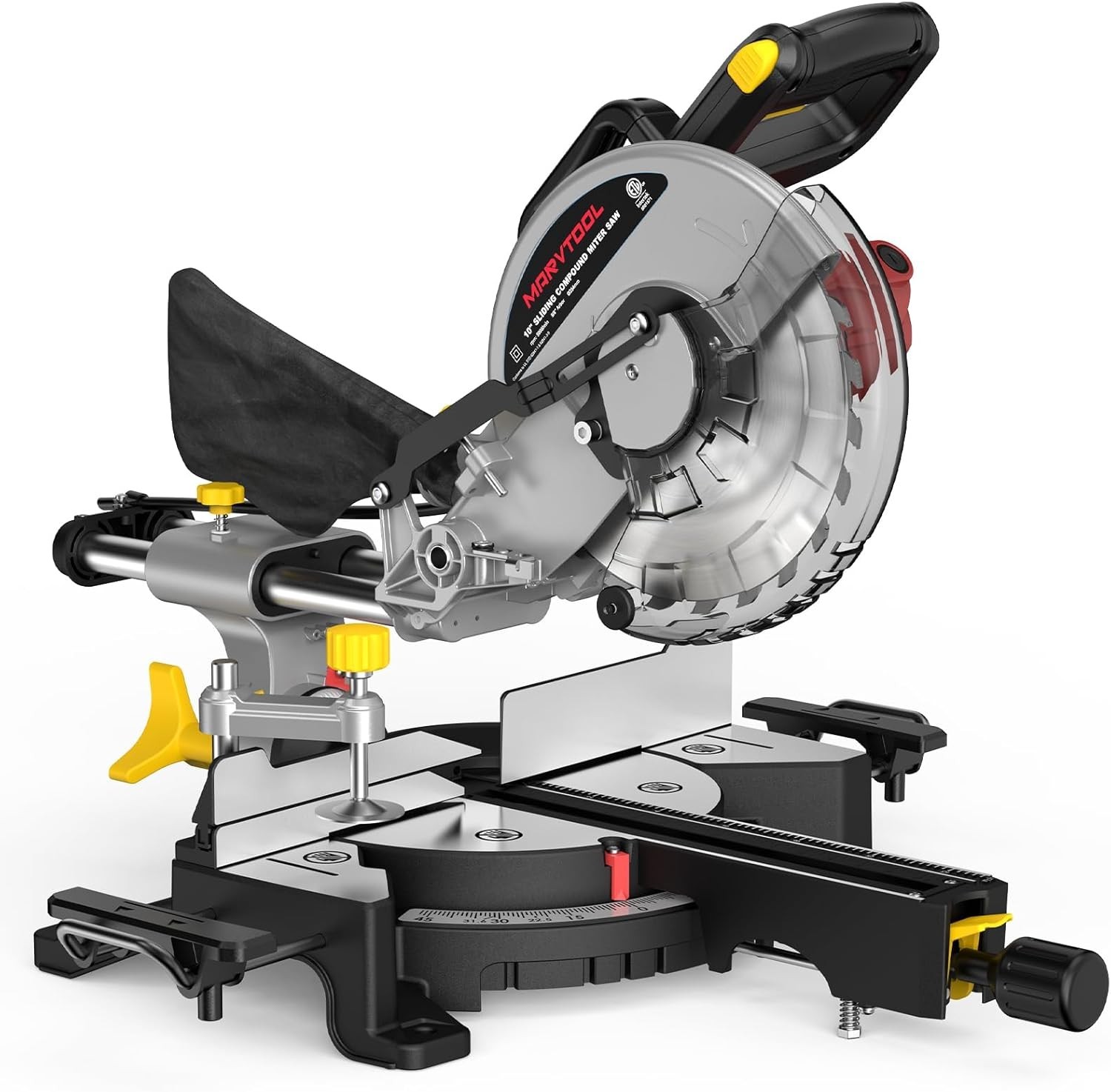
Highlights
- Blade size drives capacity: 10-inch saws crosscut roughly 4x6 stock at 90 degrees while sliding 12-inch models reach 6x8 or larger, with 15-amp motors standard across both tiers.
- Sliding rail mechanism (usually dual horizontal steel rails) adds crosscut reach but introduces rail flex and requires periodic waxing; fixed-head chop saws are stiffer but limited to narrow stock.
- Bevel detents at 0, 22.5, and 45 degrees are common; single-bevel saws tilt one direction only, forcing you to flip stock for opposite-side bevels, while dual-bevel saws tilt both ways with positive stops.
- Speed ratings cluster around 4,000-5,000 RPM no-load; higher RPM suits finish trim with thin kerf blades, while lower RPM with a full kerf blade powers through dimensional lumber.
Best use cases
- Best fit: sliding 10-inch single-bevel compound saw for trim carpentry, deck framing, and general crosscuts up to 12 inches at 90 degrees — pick this as the first miter saw for a home shop.
- Best fit: dual-bevel 12-inch sliding compound saw for crown molding, baseboard, and picture-frame cuts where you cut both bevel directions without flipping long stock.
- Wrong fit: non-sliding 10-inch chop saw if you regularly crosscut 2x8 or wider boards — step up to a sliding model instead of forcing narrow capacity.
- Wrong fit: a 12-inch dual-bevel saw for a cramped one-car garage or job-site portability — the extra weight and footprint outweigh capacity gains for small-space trim work.
Buying tips
- Match blade size to stock: a 10-inch sliding saw handles 2x6 at 90 degrees and 2x4 at 45 degrees; a 12-inch sliding saw adds roughly 2 inches of crosscut capacity for 2x8 and wider.
- Choose dual-bevel only if you cut compound angles in both directions — single-bevel saws save cost and weight but require flipping stock for opposite bevels, which is error-prone on long boards.
- Verify the sliding rail system uses dual steel rails with a lock lever; single-rail or stamped-steel designs flex under load and lose accuracy on wide crosscuts.
- Check bevel detent stops and miter detents: positive stops at 0, 15, 22.5, 31.6, and 45 degrees speed common cuts, while a miter override with a clamp lets you lock any angle.
Specs
| Blade Size | 10 in vs 12 in |
|---|---|
| Sliding vs Chop | Sliding rails vs fixed head |
| Bevel Type | Single-bevel vs dual-bevel |
| Motor Amperage | 15 amp (typical) |
Related searches
What to check before buying
- Measure your longest typical crosscut: if it exceeds 6 inches at 90 degrees, you need a sliding saw; if it exceeds 8 inches, step up to a 12-inch blade.
- Confirm bench or stand depth: sliding saws need 24-30 inches of front-to-back clearance for rail travel, plus outfeed support for long stock.
- Check your outlet and circuit: 15-amp motors draw near 1,800 watts and require a dedicated 20-amp circuit to avoid breaker trips under load.
- Verify blade arbor size (5/8 inch is standard on most 10- and 12-inch saws) and whether a laser or LED cut-line indicator is included or sold separately.
FAQ
Data sources: eBay / Amazon listings and product attribute feeds Data updated Nov 20, 2026.
Some links on this page are affiliate links. If you buy after clicking one, we may earn a commission at no extra cost to you. This does not change which products appear here or their order. Affiliate disclosure.