Photos from current listings. Actual item, color, and included accessories may vary.
Thickness Planer Buying Guide
A thickness planer is a benchtop or stationary machine that mills rough lumber to a consistent thickness, and the core trade-off is cutterhead design and motor class: two-blade HSS and universal motors cut fast but leave tearout and need frequent blade changes, while helical/spiral insert heads and induction motors deliver glue-ready surfaces with lower noise and longer service life. Buy the cutterhead architecture and width that match your stock, and skip any machine that lacks a cutterhead lock or repeatable depth stop.


At a glance
- Category
- Woodworking Saws & Planers
- Data updated
- Nov 20, 2026
Current offers
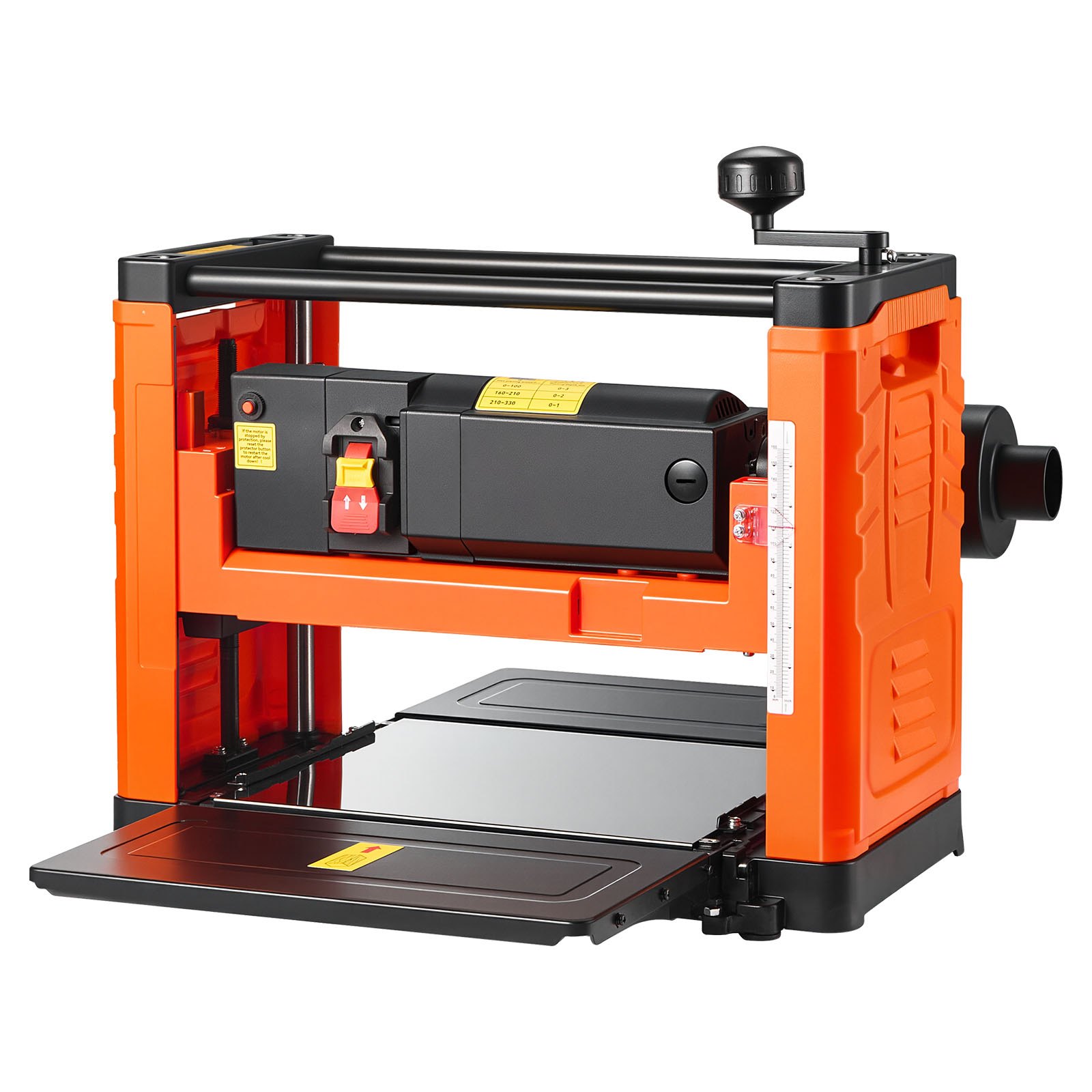 Thickness Planer, Two-Blade, 13-Inch Width Worktable Power Benchtop 1800W 23500 RPM Powerful Motor, Dual Rollers, Over Protection, Single Speed Woodworking, For Hard & Soft Wood Material$389.99
 View on Mallflare
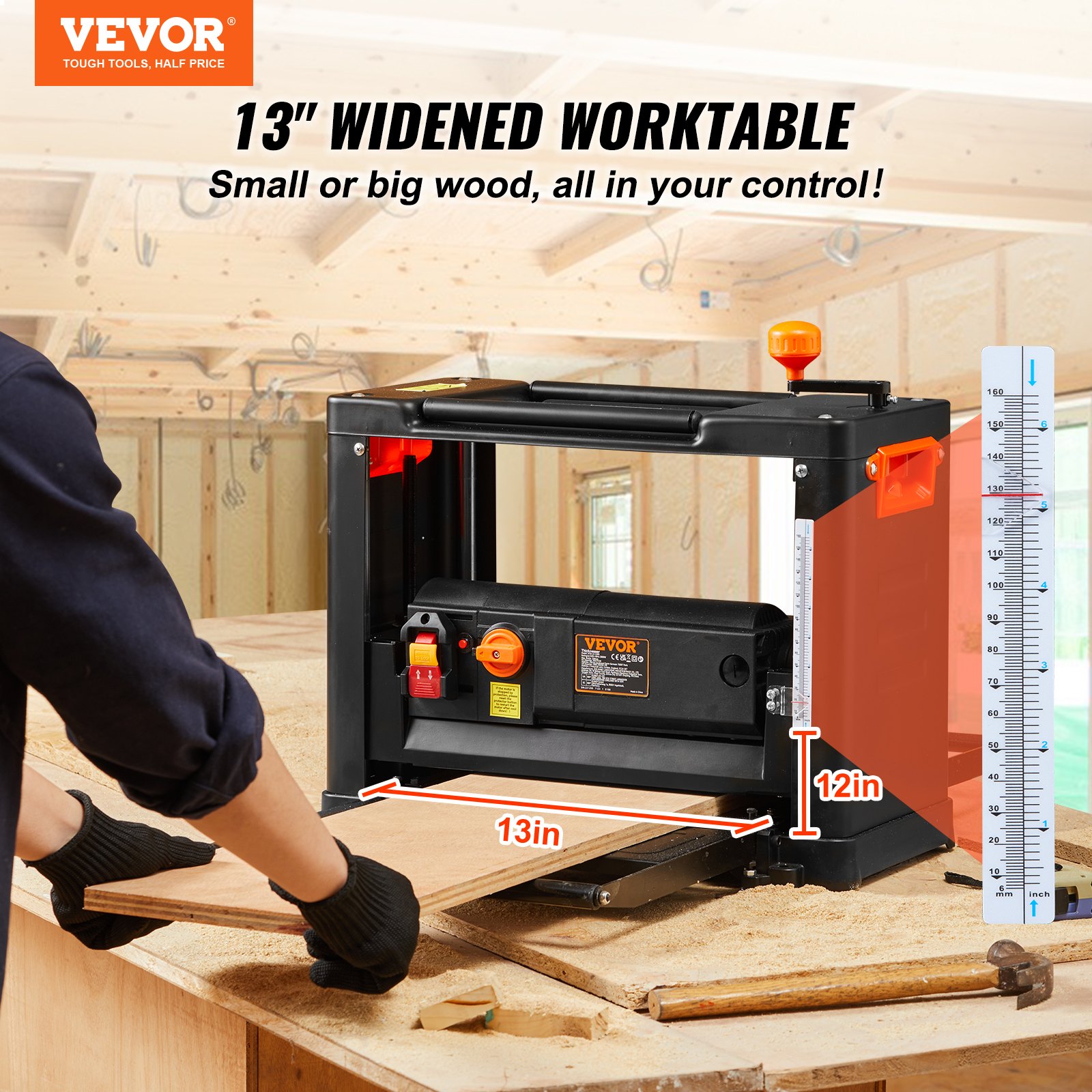 Thickness Planer 13-Inch Two-Speed Three-Blade 15-Amp For Woodworking$420.99View on Mallflare
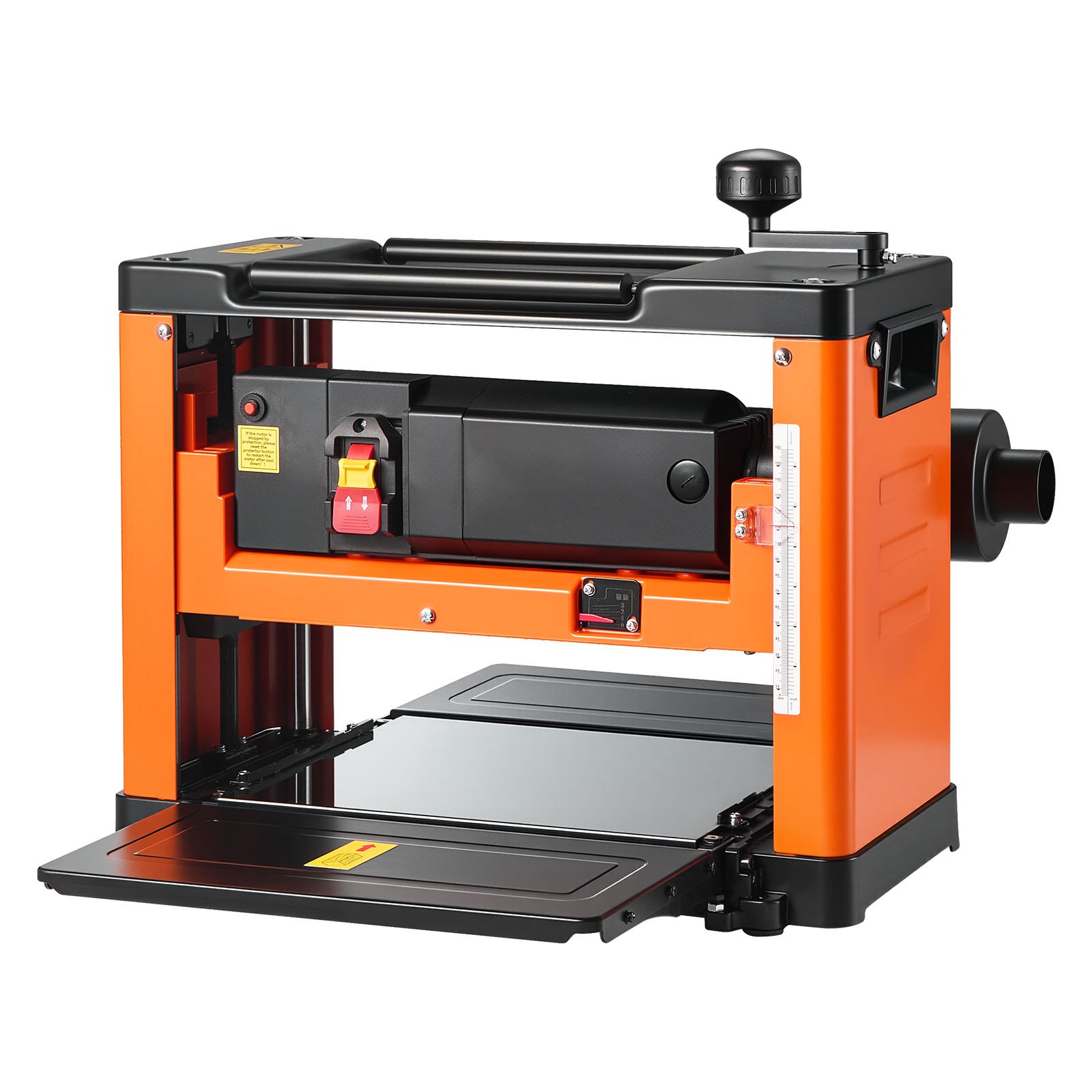 Thickness Planer, 13-Inch Width Worktable, Woodworking Power Benchtop Spiral-Style Cutterhead With 24 Inserts, 2000W 23500 RPM Powerful Motor, Single Speed, For Hard & Soft Wood Material$506.99View on Mallflare
Highlights
- Cutterhead type decides surface quality: 2-blade HSS knives tear out figured grain and need dual-edge rotation; spiral/helical insert heads with 24+ carbide inserts shear-cut for glue-ready faces.
- Motor class sets duty cycle: 15-Amp universal brushed motors (1800-2000W, ~23500 RPM) are light and cheap but wear brushes; induction motors run cooler and quieter for continuous shop use.
- Planer width caps stock size: 13-inch benchtops handle 12-inch boards and glued panels; 15-inch and 20-inch stationary units are required for wide slabs and production runs.
- Feed and control features separate tiers: dual feed rollers plus a cutterhead lock prevent snipe; two-speed gearboxes trade feed rate for cuts-per-inch on hardwoods versus softwoods.
Best use cases
- Best for home shops milling 4/4 to 8/4 hardwood up to 12 inches wide: pick a 13-inch benchtop with a spiral insert head and cutterhead lock; skip 2-blade units if you plan to finish figured maple or walnut.
- Best for budget-conscious buyers planing softwood construction lumber and pallet wood: a 13-inch two-blade 15-Amp benchtop is sufficient; skip helical heads only if you accept tearout and frequent knife sharpening.
- Best for production or wide-slab work: choose a 15-inch or 20-inch stationary planer with an induction motor and carbide insert head; skip all benchtop 13-inch models, which cannot handle 14-inch-plus glue-ups or continuous feed.
- Wrong fit: planing end grain, reclaimed lumber full of grit, or stock thinner than 1/8 inch on any benchtop planer without a sled and feed aids—use a drum sander or hand plane instead.
Buying tips
- Match width to your widest glue-up: a 13-inch planer handles two 6-inch boards joined, but a 12-inch finished panel needs a 13-inch machine plus sled clearance; go 15-inch for 14-inch panels.
- Choose carbide insert heads (24-40 inserts) over 2- or 3-blade HSS: inserts rotate four edges and cost less per edge over life, and they resist chip-out on hard maple and exotic species.
- Check amperage and feed rate together: 15-Amp universal motors with two-speed feed (e.g., 16/30 FPM) let you take lighter cuts per inch on hardwoods; single-speed 23500 RPM units are best limited to softwoods and light passes.
- Require a cutterhead lock and infeed/outfeed roller pressure adjustment: these two features, not motor wattage, are what eliminate snipe at the ends of boards and keep thickness repeatable.
Specs
| Cutterhead Type | 2-blade HSS vs spiral insert (24+) |
|---|---|
| Planer Width | 13 in benchtop / 15-20 in stationary |
| Motor Class | 15-Amp universal vs induction |
| Feed & Snipe Control | Dual rollers + cutterhead lock |
Related searches
What to check before buying
- Measure your widest stock and glue-ups: buy a planer at least 1 inch wider than the finished panel; 13-inch covers most hobby work, 15-inch covers wide slabs.
- Verify bench space and weight: 13-inch benchtops need roughly 24x24 inches of bench and 70-90 lbs; stationary 15-inch units need a mobile base and 220V if specified.
- Confirm power: most 13-inch benchtops run on 120V/15-Amp dedicated circuits; 15-inch and larger induction models may require 220V—check the motor nameplate before purchase.
- Plan for dust collection: all planers need a 4-inch or 2.5-inch dust port connected to a collector or shop vac; without it, chips recirculate and jam the feed rollers.
FAQ
Data sources: eBay / Amazon listings and product attribute feeds Data updated Nov 20, 2026.
Some links on this page are affiliate links. If you buy after clicking one, we may earn a commission at no extra cost to you. This does not change which products appear here or their order. Affiliate disclosure.