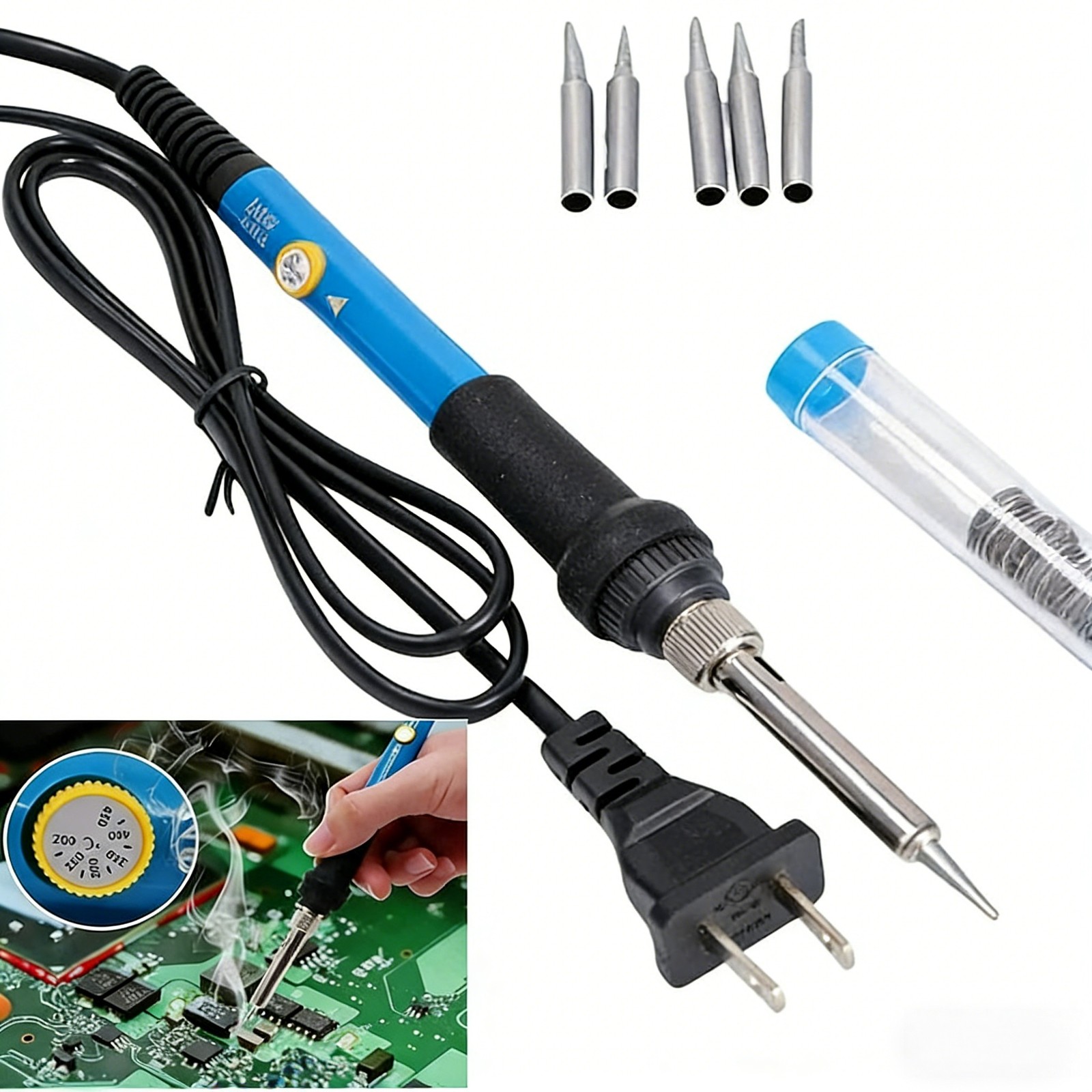

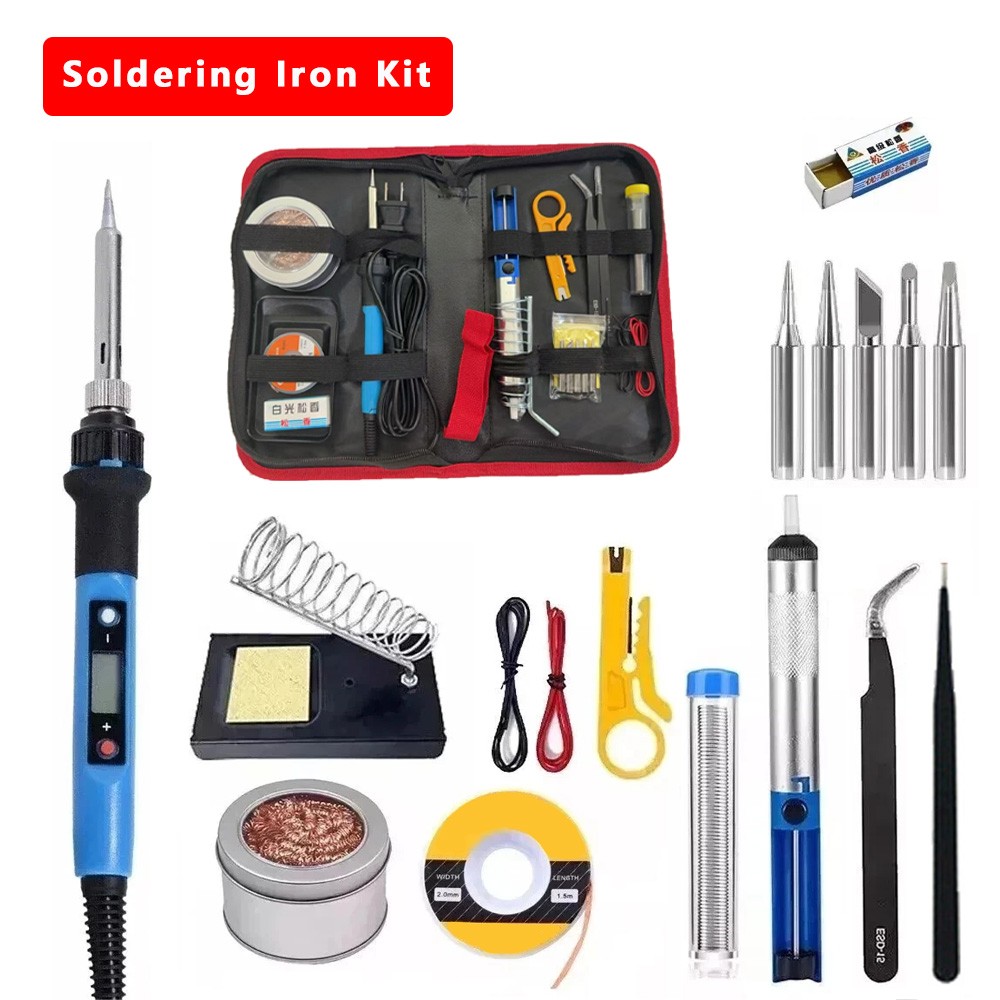
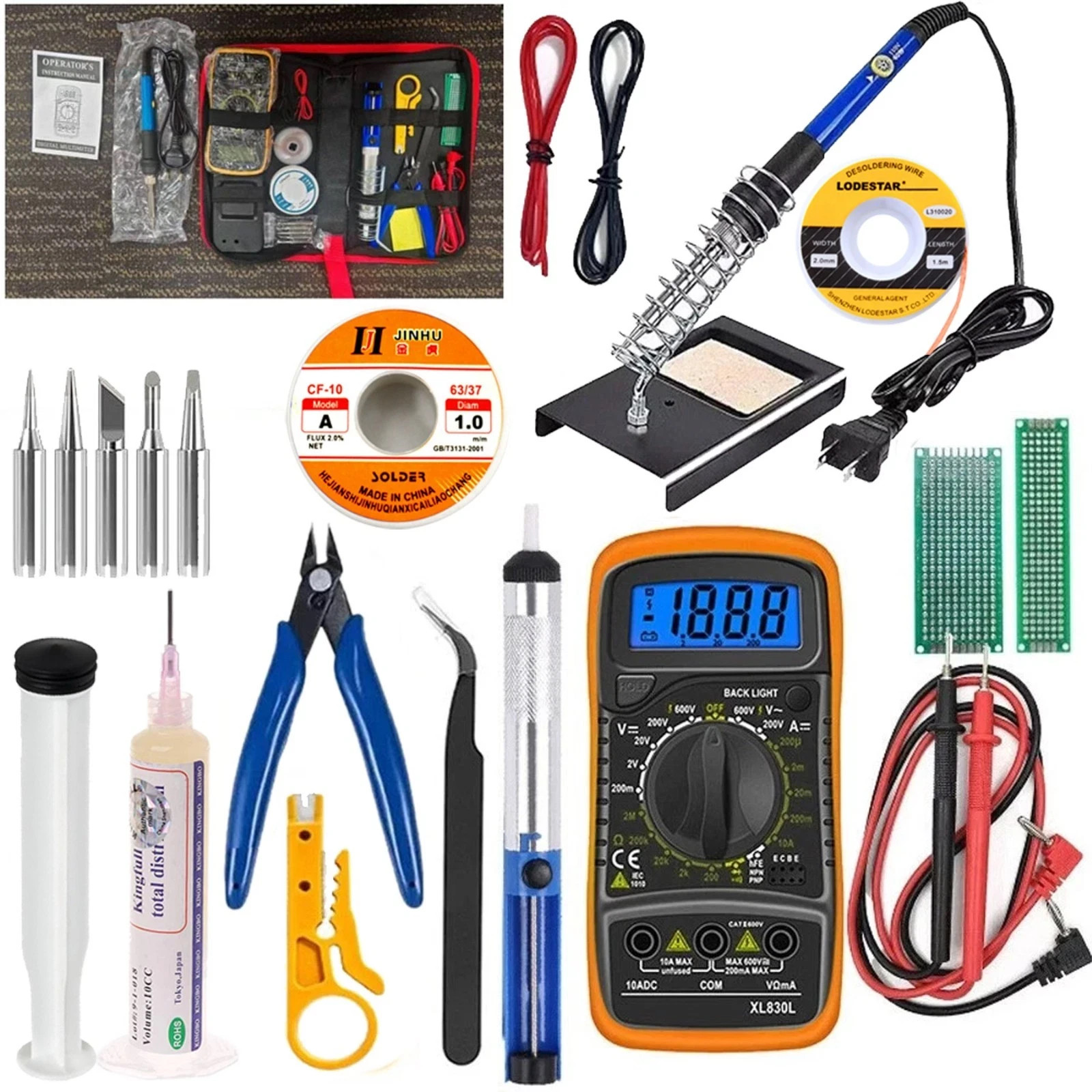
Photos from current listings. Actual item, color, and included accessories may vary.
Electric Soldering Iron Kit Buying Guide
An electric soldering iron kit bundles a heating iron with essential consumables and hand tools, so the core trade-off is heater architecture and thermal recovery versus included accessory quality. Buyers should treat wattage as a starting point, not a spec: a regulated ceramic- or nichrome-element iron with a grounded tip and replaceable parts is durable, while unregulated high-watt pens with fixed tips are disposable compromises.


At a glance
- Category
- Soldering & Electronics Repair Tools
- Data updated
- Nov 20, 2026
Current offers
Highlights
- Heater type decides performance: ceramic-element irons heat faster and hold temperature better than cheap nichrome-wire pens of the same wattage.
- Adjustable analog or digital control with thermal feedback outperforms simple triac dimming, which only throttles power without measuring tip temperature.
- A grounded (three-wire) iron and ESD-safe tip protect sensitive CMOS components; two-wire ungrounded irons risk static damage and tripping GFCI outlets.
- Replaceable tips in standard 900M-T or T18/T12 form factors determine long-term cost; proprietary press-fit tips turn a cheap kit into a disposable tool.
Best use cases
- Best fit for 60W adjustable kits: occasional PCB rework, wire splicing, and hobby repairs where a regulated analog dial and a few spare tips cover most joints.
- Best fit for 80W kits: thicker wire, ground-plane soldering, and stained-glass or automotive wiring where extra thermal mass and faster recovery matter.
- Wrong fit: SMD rework and fine-pitch board repair—skip pen-style kits and choose a temperature-controlled station with a T12 cartridge and hot-air capability.
- Wrong fit: daily production or lead-free soldering at high volume—unregulated 30–60W pencils lack the thermal headroom and tip stability to sustain production joints.
Buying tips
- Match wattage to joint mass: 30–40W for fine wire and small pads, 60W for general PCB work, 80W+ for thick wire and ground planes; more wattage without regulation just overheats small joints.
- Choose an iron with a grounded three-prong plug and a ceramic heater; this combination gives stable temperature, ESD safety, and replaceable-element service life.
- Confirm the tip standard before buying: 900M-T and T18/T12 tips are widely stocked and cheap, while pressed-in or proprietary tips limit replacement options.
- Prefer kits that specify a temperature range in degrees (roughly 200–450°C) and include a stand, sponge or brass wool, and desoldering pump rather than vague 'adjustable' claims.
Specs
| Heater Type | Ceramic element vs nichrome wire |
|---|---|
| Power / Wattage | 30W / 60W / 80W adjustable |
| Tip Standard | 900M-T / T18 / T12 replaceable |
| Temp Control | Analog dial vs digital feedback |
Related searches
What to check before buying
- Check outlet voltage and plug type: 110–120V models for North America, 220–240V for Europe and much of Asia; a mismatched iron fails or overheats immediately.
- Reserve a heat-safe work surface and confirm the included stand is stable enough to hold a hot iron without tipping.
- Verify the kit includes or supports the tip style you need for your joints (conical for fine work, chisel for wire and through-hole).
- Plan for consumables: solder alloy and rosin flux, brass wool or replacement sponges, and spare tips should be available in the same tip standard.
FAQ
Data sources: eBay / Amazon listings and product attribute feeds Data updated Nov 20, 2026.
Some links on this page are affiliate links. If you buy after clicking one, we may earn a commission at no extra cost to you. This does not change which products appear here or their order. Affiliate disclosure.