
Photos from current listings. Actual item, color, and included accessories may vary.
Helping Hand Soldering Buying Guide
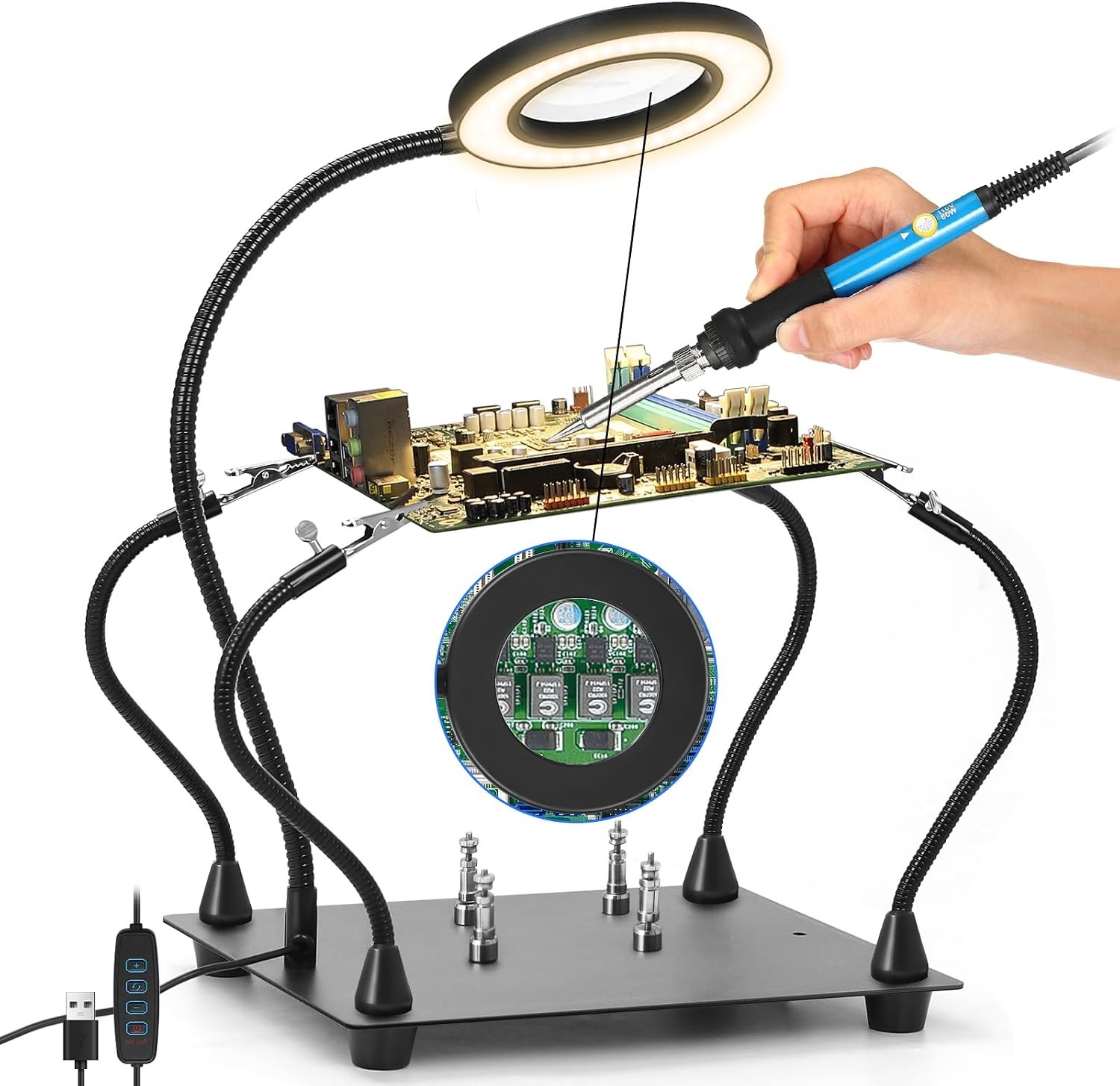
A helping-hands soldering tool is a weighted base with adjustable arms and clips that holds PCBs, wires, and connectors steady while you solder—its core trade-off is arm rigidity and joint design versus base stability and heat resistance. Choose cast-iron or steel bases with all-metal lockable joints and silicone-insulated clips for durable, wobble-free work; skip lightweight plastic bases with friction-only arms and bare steel clips that scratch boards and melt under sustained heat.


At a glance
- Category
- Soldering & Electronics Repair Tools
- Data updated
- Nov 20, 2026
Current offers
Highlights
- Base weight and footprint determine tip-over resistance: cast-iron bases above 1.5 kg resist drag from iron cords and heavy cables; stamped-steel bases under 500 g slide and tip during rework.
- Joint architecture separates tiers: all-metal ball-and-socket or split-clamp joints lock rigidly under load; plastic friction joints creep and sag when holding a 200 g PCB at extension.
- Clip insulation matters: silicone-sleeved alligator clips and nylon-tipped PCB fingers prevent solder bridging and board scratches; bare steel jaws mar pads and wick heat away from the joint.
- Arm span and reach vary: standard bench units reach 20–30 cm with 2–4 arms; magnifier-and-light combos add a 2–5x lens on a central post, useful for fine-pitch work but adding top-heaviness.
Best use cases
- Best fit: through-hole and wire-splicing work on a stable bench—pick a heavy cast-iron base with 2–4 lockable arms and silicone-sleeved clips; skip featherweight plastic-base units that slide when you tug a wire.
- Best fit: SMD and fine-pitch rework—choose a model with a 2–5x magnifier, a bright daylight LED ring, and fine nylon-tipped fingers; skip bulky 4-arm rigs that block iron access to dense boards.
- Wrong fit: soldering on a soft or sloped surface (carpet, couch, uneven table)—helping hands need a rigid, level, heat-safe bench; add a silicone work mat and a weighted base plate instead of relying on suction cups.
- Wrong fit: high-volume production or heavy panel work—a helping-hands station is for single-joint manual work; use a proper PCB vise or fixture plate for large boards and repeated reflow.
Buying tips
- Match base weight to your heaviest workpiece: for boards over 15 cm long or cable bundles, choose a base at least 1.5 kg or clamp the base to the bench; sub-500 g bases are for light wire-only jobs.
- Check joint type before buying: all-metal locking nuts or ball joints hold position; friction-only plastic knuckles are the first failure point and cause clip droop mid-joint.
- Verify clip insulation and jaw material: silicone or rubber-sleeved jaws protect pads and survive contact with a 350 °C iron tip; bare metal jaws should be avoided for PCB work.
- Plan for power and mounting: magnifier-lamp combos need a nearby outlet or USB source and add top weight; confirm the central post diameter and base thread match any third-party clamp or mat you use.
Specs
| Base Material | Cast iron / steel vs plastic |
|---|---|
| Joint Type | All-metal lockable vs plastic friction |
| Clip Insulation | Silicone-sleeved vs bare steel |
| Arm Reach | 20–30 cm, 2–4 arms |
Related searches
What to check before buying
- Measure your bench: confirm at least 30 x 20 cm of flat, heat-resistant surface for the base plus arm swing; a 1.5 kg base needs a sturdy table, not a folding TV tray.
- Check board and wire sizes against clip jaw opening: standard alligator jaws open about 10–15 mm; larger connectors need wider clips or a PCB vise instead.
- Confirm heat environment: keep plastic-base units away from hot-air rework and direct iron contact; silicone mats and metal bases tolerate splashes and radiant heat.
- Verify companion parts: magnifier-lamp models need a power outlet or USB port; weighted bases may need a C-clamp for thin benches; replacement clips and silicone sleeves should be available.
FAQ
Data sources: eBay / Amazon listings and product attribute feeds Data updated Nov 20, 2026.
Some links on this page are affiliate links. If you buy after clicking one, we may earn a commission at no extra cost to you. This does not change which products appear here or their order. Affiliate disclosure.