Photos from current listings. Actual item, color, and included accessories may vary.
Rosin Core Solder Buying Guide
Rosin core solder is a flux-cored wire that combines tin-lead or lead-free alloy with an internal flux channel for electronics joints. The core trade-off is alloy composition (eutectic 63/37 vs 60/40 vs lead-free SAC) and flux activity versus residue corrosivity. Choose eutectic Sn63/Pb37 with mildly activated rosin for hand repair, or no-clean lead-free for RoHS-compliant production; avoid acid-core and high-activity flux for PCB work.

At a glance
- Category
- Soldering & Electronics Repair Tools
- Data updated
- Nov 20, 2026
Current offers
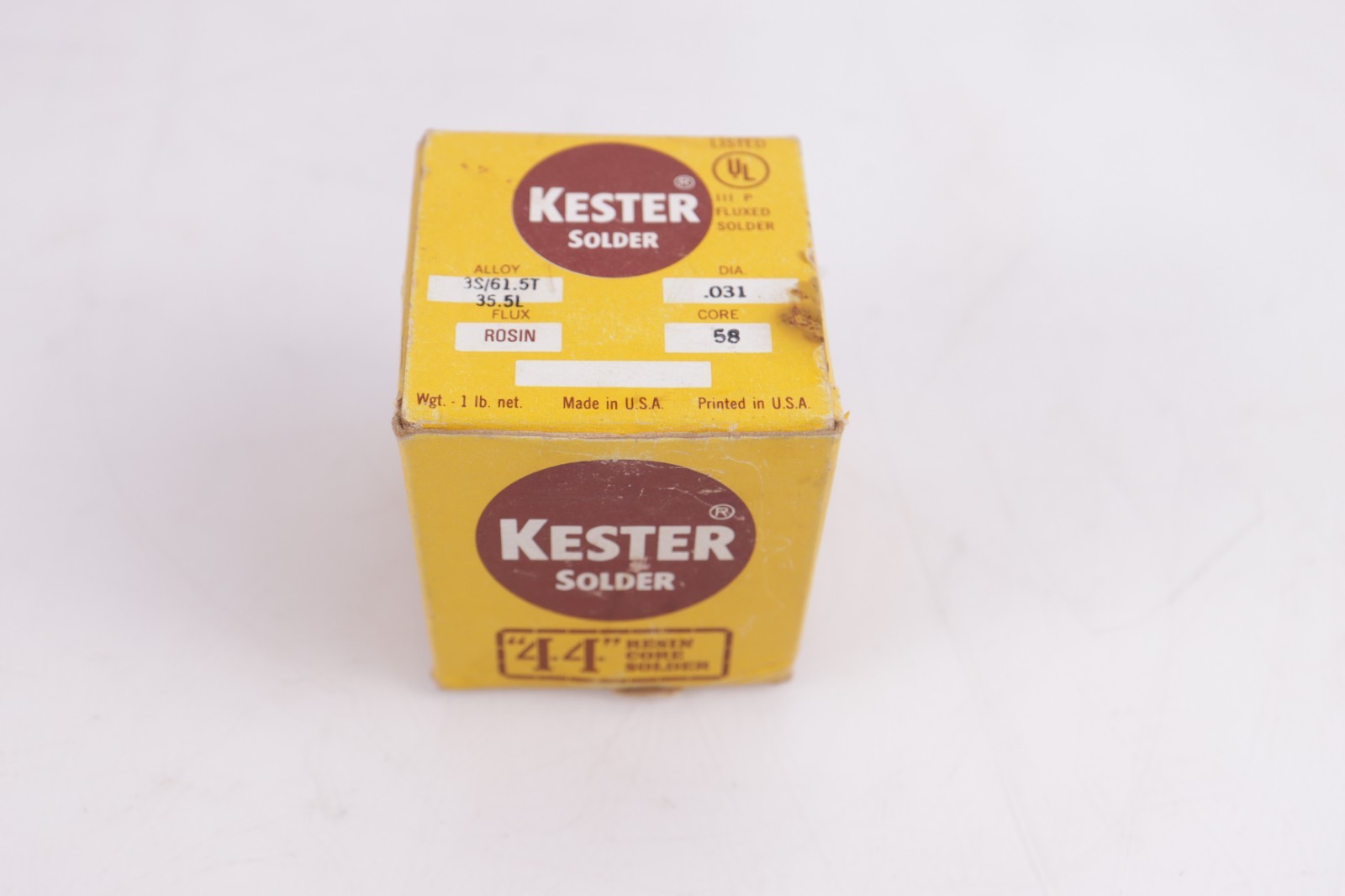 Kester 44 Rosin Core Solder – 1 lb Spool – .031" Diameter – USA Made$49.99
 View on eBay
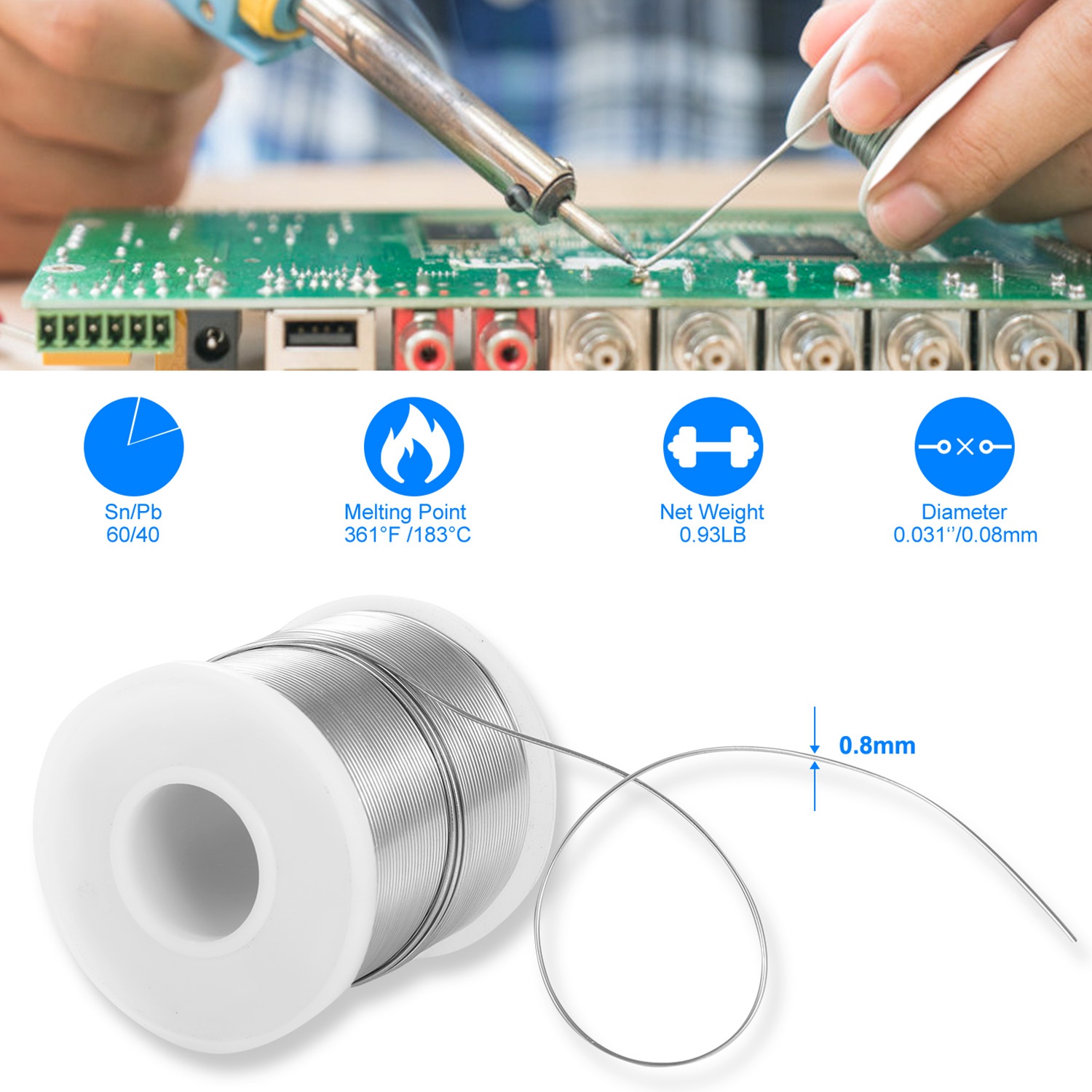 Soldering Wire 60 40 Tin Lead Rosin Core 0.031In 0.8mm 1.7 Percent Flux Electrical Solder Sn60 Pb40 1lb$35.99
 View on Mallflare
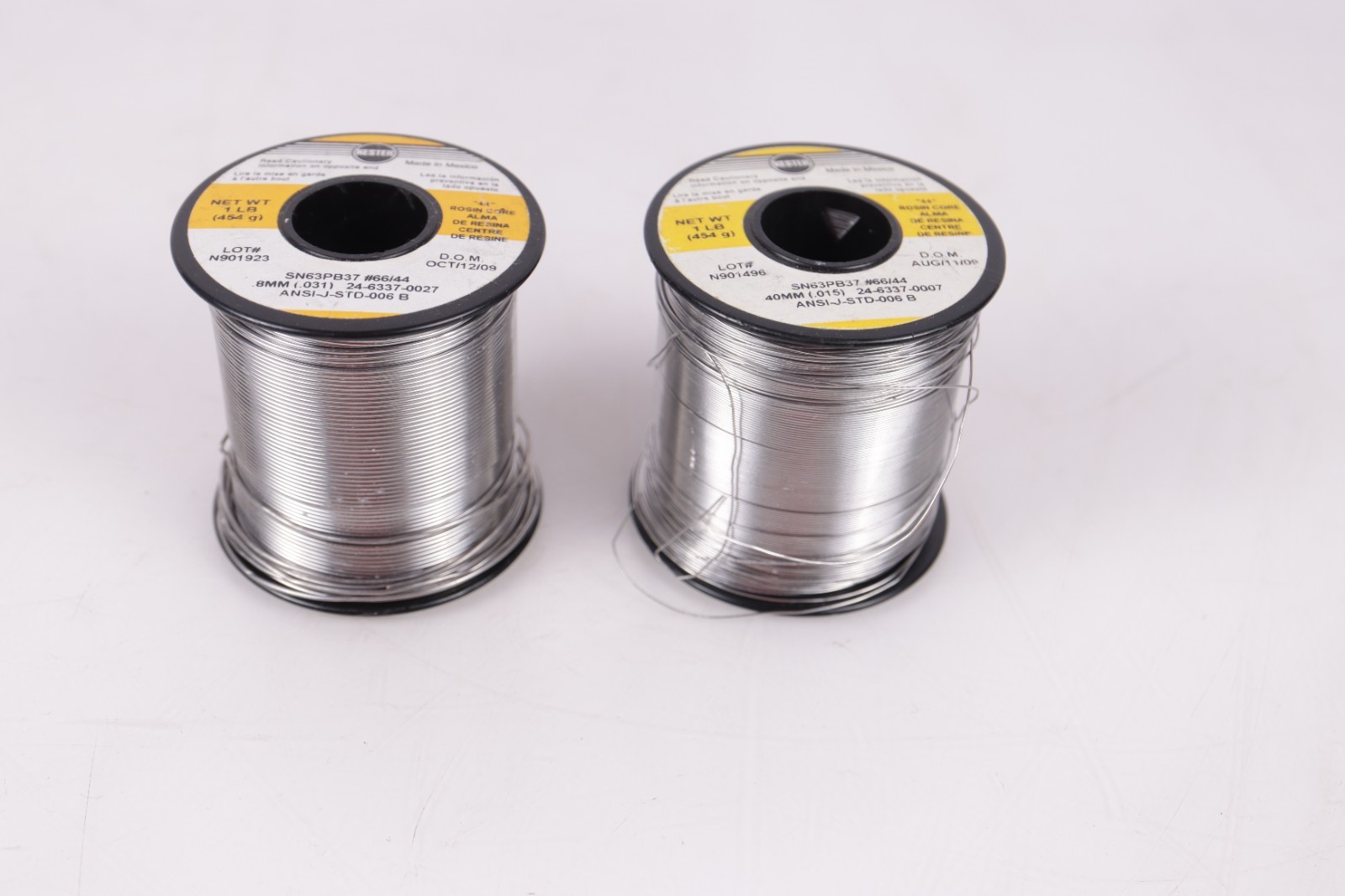 Kester 63/37 Rosin Core Solder – 1 lb Spools – .031 & .015 – Lot of 2$69.99View on eBay
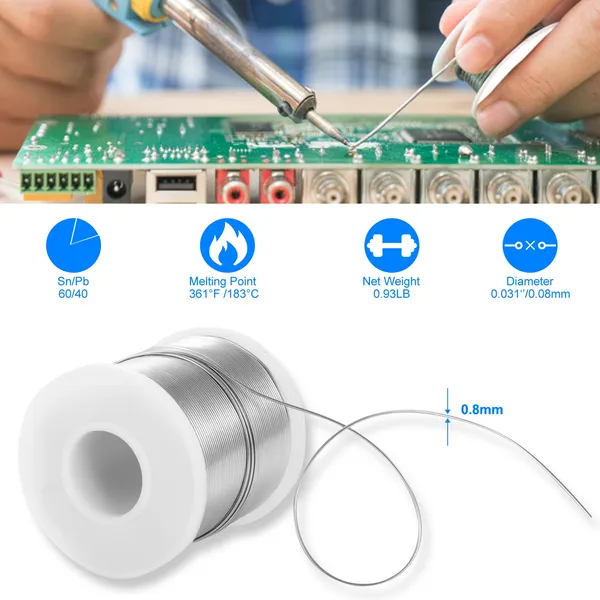 Soldering Wire 60/40 Tin Lead Rosin Core 0.031'/0.8mm 1.7% Flux Electrical Solder Sn60 Pb40 1lb$37.99View on Mallflare
Highlights
- Eutectic Sn63/Pb37 melts at 183°C with zero plastic range, snapping from solid to liquid and eliminating cold, grainy joints common with 60/40's 5°C slush phase.
- Rosin flux (R) and mildly activated rosin (RMA) are non-corrosive and safe for electronics; acid-core or high-activity (RA) flux leaves conductive, corrosive residue and is for plumbing only.
- Wire gauge controls heat delivery: 0.015 in (0.4 mm) suits fine-pitch SMD and rework, 0.031 in (0.8 mm) handles through-hole and general PCB work, 0.062 in (1.6 mm) suits heavy lugs and chassis grounds.
- Lead-free Sn96.5/Ag3.0/Cu0.5 (SAC305) melts near 217–220°C, requires 30–50°C higher iron temperature and more flux activity than tin-lead, and produces duller but acceptable joints.
Best use cases
- Best fit: through-hole PCB assembly and general electronics repair — pick 0.031 in Sn63/Pb37 rosin core (RMA) on a 1 lb spool; skip 60/40 for critical joints and skip lead-free unless RoHS compliance is mandatory.
- Best fit: fine-pitch SMD, drag soldering, and rework — pick 0.015 in Sn63/Pb37 with RMA flux; skip 0.031 in wire, which deposits excess alloy and bridges fine-pitch pads.
- Best fit: plumbing, sheet metal, and stained-glass copper foil — pick acid-core or high-activity flux solder; never use it on PCBs or stranded wire, where residue causes corrosion and shorts.
- Best fit: RoHS-compliant commercial builds — pick SAC305 no-clean rosin-core wire at 0.031 in and adjust iron to 350–380°C; skip tin-lead alloy, which fails compliance audits.
Buying tips
- Match alloy to service temperature: Sn63/Pb37 for 183°C hand work, SAC305 for 217–220°C RoHS builds; never mix alloys in the same joint, as the resulting melting range is unpredictable.
- Select diameter by pad pitch: 0.015 in for 0.5 mm pitch and below, 0.031 in for 2.54 mm through-hole, 0.062 in for wire gauges above 14 AWG and chassis lugs.
- Confirm flux type on the label: 'Rosin Core' should read R or RMA (non-corrosive); RA and acid-core are for non-electronics and must be cleaned if used near circuitry.
- Buy sealed 1 lb spools from established alloy brands (Kester 44/285, AIM, Multicore) to guarantee alloy tolerance and flux percentage; unlabeled wire may be off-ratio 60/40 with inconsistent flux.
Specs
| Alloy | Sn63/Pb37 · 60/40 · SAC305 |
|---|---|
| Flux Core | Rosin R / RMA (non-corrosive) |
| Wire Diameter | 0.015 · 0.031 · 0.062 in |
| Melting Point | 183°C tin-lead · 217–220°C lead-free |
Related searches
What to check before buying
- Verify your iron reaches the alloy's working temperature: 315–350°C for Sn63/Pb37, 350–380°C for SAC305; underpowered irons cannot wet lead-free joints.
- Measure the finest pad pitch and smallest wire gauge you solder to choose 0.015, 0.031, or 0.062 in diameter before buying a spool.
- Check ventilation and residue plan: rosin fumes require fume extraction, and RMA residue should be cleaned with isopropyl alcohol on high-impedance circuits.
- Confirm spool size and shelf life: 1 lb spools suit regular bench work; store sealed and dry, as oxidized wire and flux degrade wetting after long exposure.
FAQ
Data sources: eBay / Amazon listings and product attribute feeds Data updated Nov 20, 2026.
Some links on this page are affiliate links. If you buy after clicking one, we may earn a commission at no extra cost to you. This does not change which products appear here or their order. Affiliate disclosure.