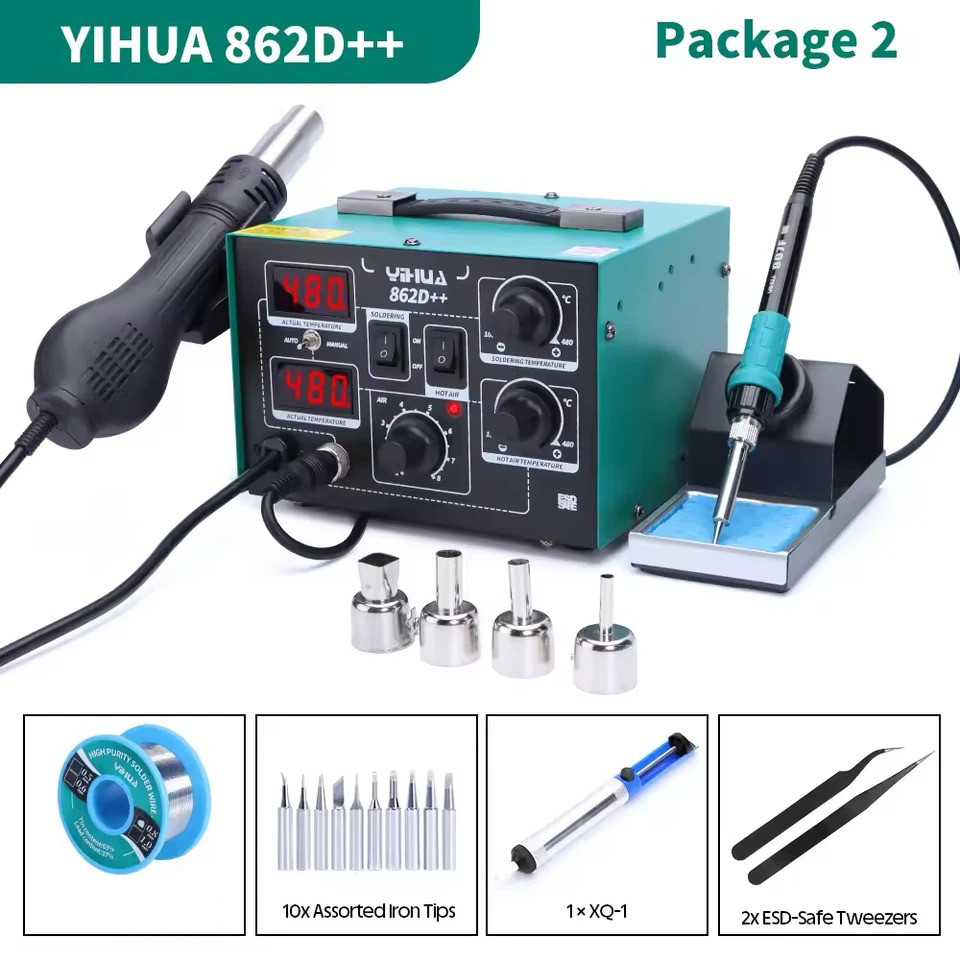

Photos from current listings. Actual item, color, and included accessories may vary.
Soldering Iron Station Buying Guide
A soldering iron station pairs a temperature-controlled iron with a dedicated power base, and the primary trade-off is between fast thermal recovery (high-wattage heating element plus closed-loop feedback) and low cost. Buyers should choose a station only if it holds set temperature under repeated joints and offers replaceable tips; otherwise a direct-plug iron or simple analog station is a false economy.


At a glance
- Category
- Soldering & Electronics Repair Tools
- Data updated
- Nov 20, 2026
Current offers
Highlights
- Closed-loop PID/thermocouple control holds tip temperature within a few degrees; cheap dimmer-style stations sag under load and cause cold joints.
- Heating element wattage determines recovery speed: 50-70W handles through-hole and light SMD, while 70-90W+ or dual-heater designs are needed for ground planes and heavy connectors.
- 2-in-1 hot-air plus iron stations use a separate diaphragm or brushless blower; the hot-air side runs 500-750W for rework, not for general soldering.
- Replaceable tip geometry (conical, chisel, knife, hoof) and a standard handle/cable connector matter more for longevity than any digital display.
Best use cases
- Pick a 50-70W analog or single-digital iron station with a ceramic heater for through-hole kits, guitar wiring, and cable repairs; skip hot-air rework if you never touch SMD.
- Choose a 70-90W digital station with a chisel tip and fast recovery for PCB assembly with ground planes, battery tabs, and heavier gauge wire.
- Buy a 2-in-1 hot-air + iron rework station only if you desolder SMD chips, shrink tubing, or reflow paste; a plain iron station wastes money and bench space otherwise.
- For production or daily repair, select a station with a standard replaceable heating element and tip series that remains available for years; avoid one-piece proprietary iron handles.
Buying tips
- Match wattage to thermal mass: 50-60W for 0.8mm solder and small pads, 70-90W for 2mm+ joints, ground planes, and 12-14 AWG wire.
- Confirm the tip series is a known standard (e.g., 900M/900M-T, T12, or the manufacturer's replaceable series) so tips and heaters stay available.
- Prefer closed-loop thermocouple or thermistor feedback with a stated temperature accuracy of ±5-10°C; analog rotary-dial stations typically drift more.
- For 2-in-1 rework stations, check hot-air airflow is adjustable and the nozzle is replaceable; fixed-flow blowers limit control on small SMD parts.
Specs
| Station Type | Iron only vs 2-in-1 hot-air + iron |
|---|---|
| Heating Power | 50-70W iron / 500-750W hot air |
| Control Loop | Closed-loop PID vs analog dial |
| Tip Series | Replaceable standard series (900M, T12) |
Related searches
What to check before buying
- Measure bench depth and clearance: stations with hot-air wands need 30-40cm behind the unit for the handpiece cradle and cable.
- Verify mains voltage and plug type (120V/60Hz or 220-240V/50Hz) matches your outlet; hot-air 750W units draw near the limit of a 10A circuit.
- Confirm the package includes the iron, stand, sponge or brass wool, and at least one tip in the geometry you need; tips are often sold separately.
- For hot-air rework, ensure you have flux, tweezers, and a heat-resistant mat; the station alone does not provide the full rework toolset.
FAQ
Data sources: eBay / Amazon listings and product attribute feeds Data updated Nov 20, 2026.
Some links on this page are affiliate links. If you buy after clicking one, we may earn a commission at no extra cost to you. This does not change which products appear here or their order. Affiliate disclosure.