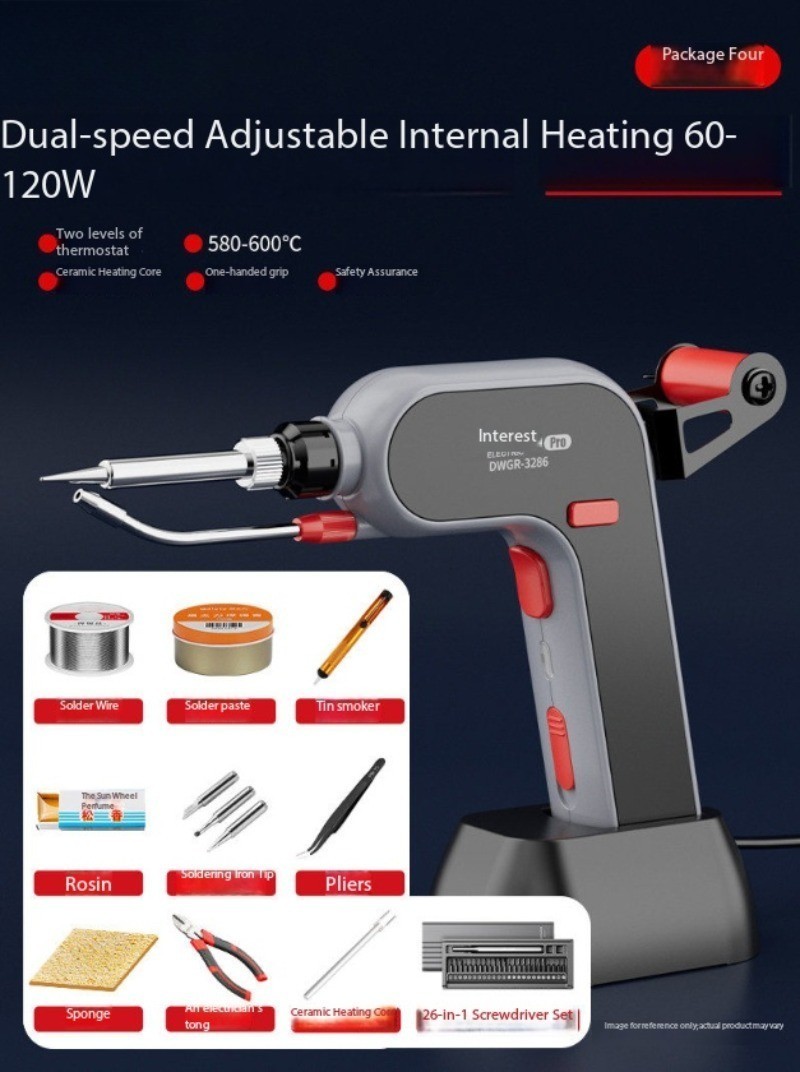

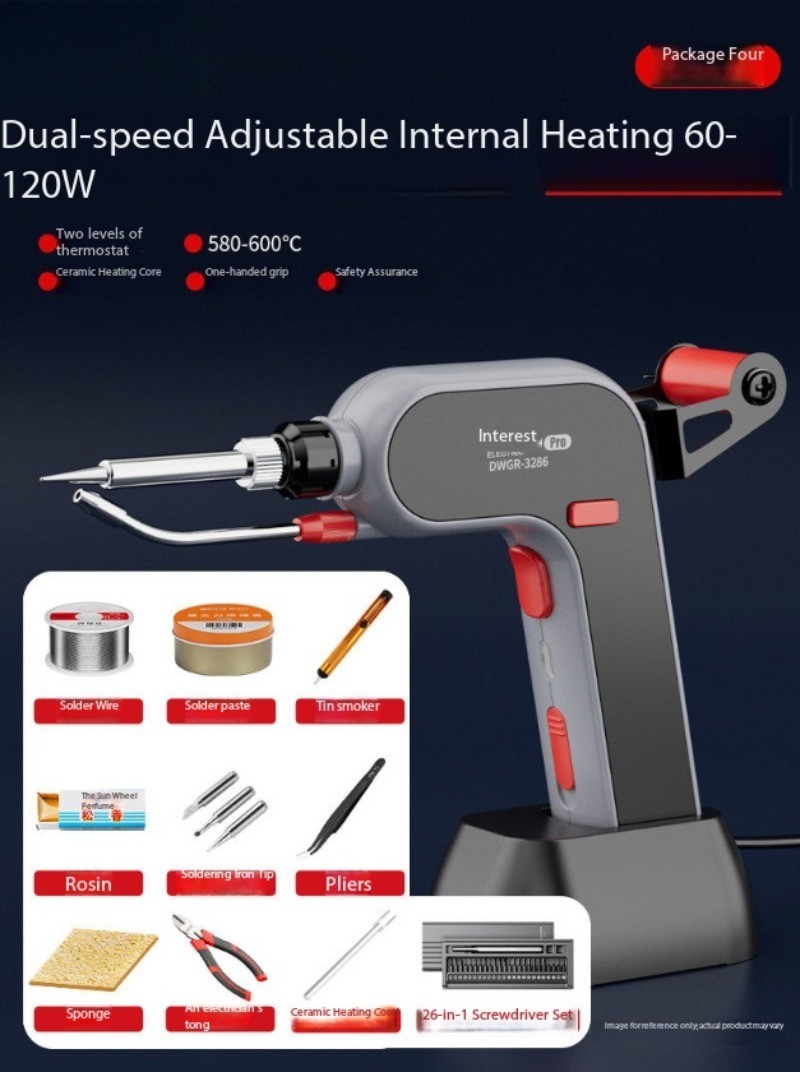
Photos from current listings. Actual item, color, and included accessories may vary.
Soldering Machine Jewelry Buying Guide
A jewelry soldering machine is a compact, temperature-controlled heat source—usually a soldering iron station or a focused resistive/arc unit—used for joining precious metals, setting pins, and repairing chains without melting the whole piece. The core trade-off is thermal control and tip geometry versus raw wattage: jewelry work demands fine, stable heat at the joint, not a broad high-power blast. Buy a station with adjustable temperature and interchangeable fine tips; skip fixed-wattage pencil irons and oversized gun-style units for delicate work.


At a glance
- Category
- Soldering & Electronics Repair Tools
- Data updated
- Nov 20, 2026
Current offers
Highlights
- Temperature stability within ±10°F (≈±5°C) matters more than peak wattage for consistent silver and gold solder flow.
- Fine conical or chisel tips of 0.5–1.5 mm concentrate heat at small joints; broad tips bleed heat into the workpiece.
- Silver solders (hard solder) flow near 1,200–1,400°F, so the station must sustain tip temperature well above that under load.
- Adjustable analog or digital stations with 50–80 W output and ESD-safe grounding suit jewelry benches better than fixed 30 W pencils.
Best use cases
- Best fit: chain and jump-ring repair on silver or gold — pick a temperature-controlled station with a fine chisel tip and 60–80 W headroom.
- Best fit: bezel and prong setting touch-ups — choose a station with rapid recovery and a 1 mm conical tip for pinpoint heat.
- Wrong fit: heavy brass or copper fabrication — skip jewelry stations and step up to a higher-wattage torch or dedicated resistance welder.
- Wrong fit: production brazing of large metal assemblies — a fine-tip station cannot deliver enough sustained heat; use a focused torch or induction unit.
Buying tips
- Match wattage to metal mass: 50–80 W covers most silver jewelry; thin chains need 40–60 W with fine tips to avoid overheating.
- Choose a station with a thermocouple or digital feedback loop rather than a simple dimmer; stable temperature prevents solder crystallization.
- Prefer standard interchangeable tip families (e.g., 900M or T18-style) so replacement fine tips remain available and affordable.
- Select a grounded, ESD-safe iron when working near sensitive stones or electronic components in mixed repair benches.
Specs
| Station Type | Adjustable station vs fixed pencil |
|---|---|
| Power Output | 40–80 W for jewelry work |
| Temperature Range | 200–900°F adjustable, ±10°F stable |
| Tip Compatibility | Interchangeable fine 0.5–1.5 mm tips |
Related searches
What to check before buying
- Confirm bench outlet voltage (120 V or 230 V) and plug type match your region before ordering.
- Measure workspace clearance for the station body and heat-resistant stand; the iron tip reaches 700°F+ and needs a safe rest.
- Verify replacement fine tips (0.5–1.5 mm) are listed for the exact station model—tip families differ by collar diameter.
- Plan a heat-resistant soldering mat and ventilation or fume extraction; jewelry soldering produces metal fumes and flux smoke.
FAQ
Data sources: eBay / Amazon listings and product attribute feeds Data updated Nov 20, 2026.
Some links on this page are affiliate links. If you buy after clicking one, we may earn a commission at no extra cost to you. This does not change which products appear here or their order. Affiliate disclosure.