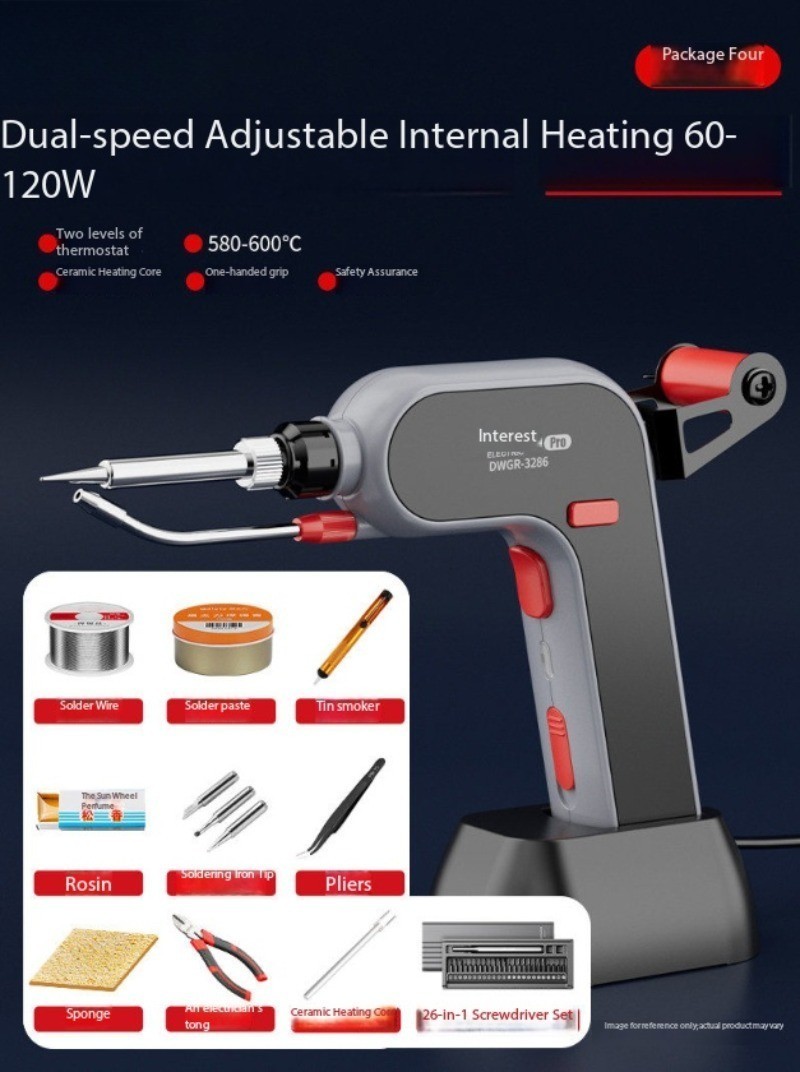

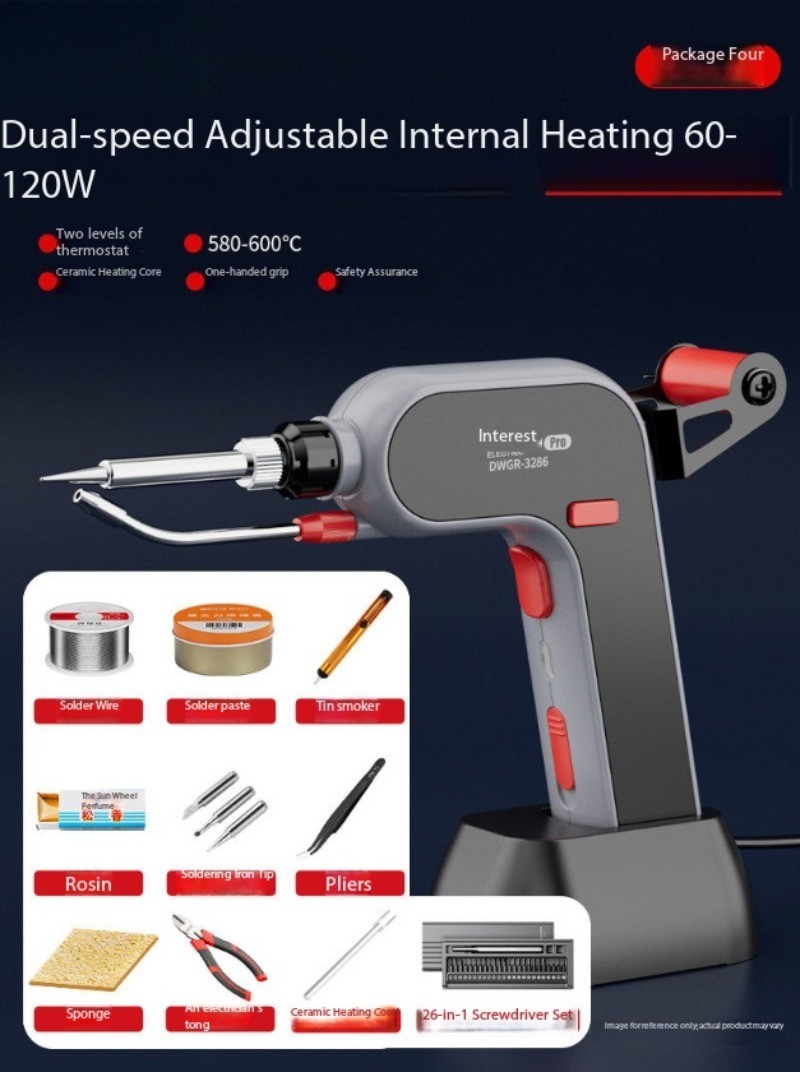
Photos from current listings. Actual item, color, and included accessories may vary.
Soldering Pen Kit Buying Guide
A soldering pen kit is a compact, integrated iron—usually USB-C or battery powered—with a fine-point tip, designed for electronics repair and on-the-go joints rather than sheet-metal work. The core trade-off is thermal recovery vs. portability: barrel-style pens with high-wattage elements and precision tips hold heat through repeated joints, while slim low-power pens are light but stall on ground planes and thick wire. Buy a kit with a temperature-controlled element and swappable precision tips for electronics; skip any unregulated pen that lacks thermal feedback for board-level work.


At a glance
- Category
- Soldering & Electronics Repair Tools
- Data updated
- Nov 20, 2026
Current offers
Highlights
- USB-C PD pens typically draw 45-65 W at 9-20 V; they need a PD 3.0 charger that negotiates the top voltage or they underperform.
- Barrel-style pen irons with 60-80 W ceramic elements recover heat faster on ground planes than 8-25 W battery pens.
- Precision tips (conical 0.5-1.0 mm, chisel 1.6-2.4 mm) and quick tip-swap collets determine joint quality more than pen body wattage alone.
- Battery pen kits (18650 or built-in Li-ion) trade continuous thermal output for cordless freedom; runtime depends on element duty cycle, not mAh.
Best use cases
- PCB rework, drone/RC repairs, and field connector fixes: choose a USB-C PD pen kit with a fine conical tip and temperature display; skip high-wattage barrel irons that overheat small pads.
- Bench electronics with repeated through-hole and larger pads: pick a 60-80 W temperature-controlled pen with chisel tip options; skip 8-15 W unregulated pencil irons that stall under load.
- Cordless field and automotive splice work: choose a battery pen kit with swappable tips and a visible charge indicator; skip USB-only pens when no power bank or outlet is available.
Buying tips
- Match power to joint mass: 45-65 W PD pens suit 0.5-1.5 mm pads and wire up to ~18 AWG; 60-80 W barrel pens handle 14-16 AWG and ground planes.
- Require a temperature-controlled element (adjustable setpoint or regulated tip) rather than a fixed-wattage heating coil; fixed pens swing widely on load.
- Check tip ecosystem: standard 900M/TS-style or manufacturer collet tips are cheap and available; proprietary press-fit tips lock you into one supply.
- For USB-C pens, confirm PD 3.0 input and 9-20 V negotiation; a 5 V/3 A phone charger will not reach full heat.
Specs
| Power Source | USB-C PD vs battery vs corded |
|---|---|
| Element Power | 8-25 W pen / 45-80 W barrel |
| Heat Control | Regulated setpoint vs fixed wattage |
| Tip Standard | 900M/TS-style vs proprietary collet |
Related searches
What to check before buying
- Measure your workbench clearance: pen length under ~20 cm and a flexible silicone cable suit tight enclosures; barrel irons need more swing room.
- Confirm your USB-C charger supports PD 3.0 at 45 W or higher and can output 9-20 V; standard 5 V chargers are insufficient.
- Verify tip availability and spare-part supply (tips, heating element, collet) before choosing a proprietary pen body.
- Check ventilation and fume extraction: rosin flux fumes need a fan or fume extractor regardless of pen size.
FAQ
Data sources: eBay / Amazon listings and product attribute feeds Data updated Nov 20, 2026.
Some links on this page are affiliate links. If you buy after clicking one, we may earn a commission at no extra cost to you. This does not change which products appear here or their order. Affiliate disclosure.