Choosing an FDM 3D printer is less about collecting the longest feature list and more about matching the machine to the work: occasional small prints, or longer projects that benefit from an enclosed chamber and interruption recovery. The Flashforge Guider II targets the latter use case with a large-format design, Wi-Fi, touchscreen controls, a heated build plate, and resume printing. The decision is whether that focused setup matches your projects.
Quick verdict
The Flashforge Guider II is a focused choice for shoppers planning long-duration printing, prototyping, engineering work, or production use. Its large-format, enclosed design gives it a clear purpose rather than presenting it as a basic desktop machine for any printing task.
Who it suits
The stated audience includes serious hobbyists, makers, engineers, schools, and production environments. That makes the Guider II worth considering when multiple users or extended projects are part of the plan. Resume printing after a power interruption is especially relevant for jobs where restarting from the beginning would be inconvenient.
Shoppers who mainly want the simplest possible entry into FDM printing may find the Guider II's larger, more feature-focused design unnecessary. The fit depends on whether the intended work uses those capabilities.
What stands out
Flashforge Guider II Large-Format 3D Printer
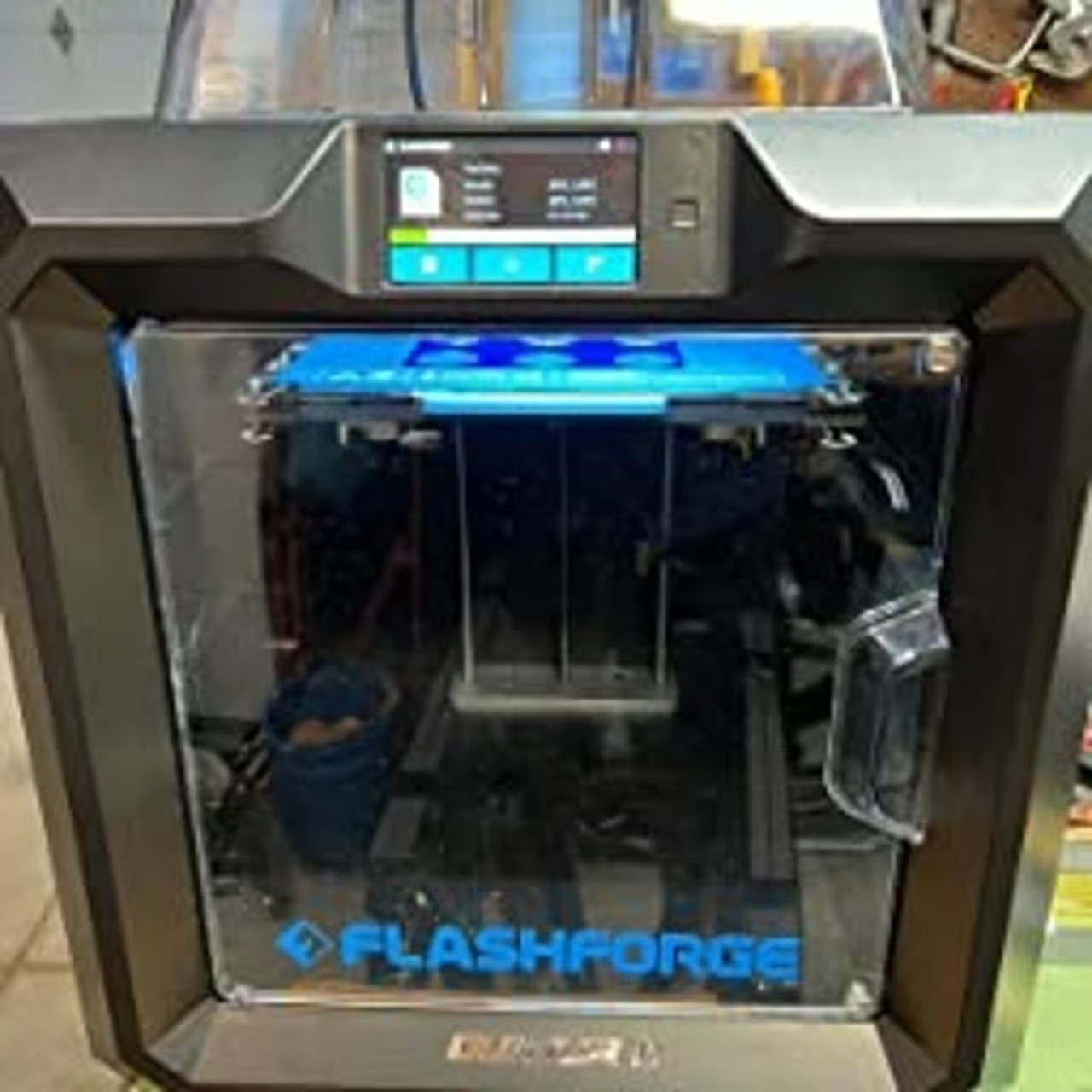
Choose the Guider II for the combination of a fully enclosed chamber, heated build plate, Wi-Fi connectivity, touchscreen operation, and resume printing. Those features give the machine a defined workflow for longer projects, while compatibility with PLA, ABS, and PETG covers several commonly used filament types.
The concrete limitation is the USD 899.81 price. A shopper working with a lower purchase ceiling may find that cost difficult to reconcile unless the enclosed format, interruption recovery, and other listed features are central priorities.
Meaningful trade-offs
The Guider II's feature set is specialized toward a particular kind of workspace. Someone who does not need an enclosed chamber, heated build plate, or resume printing may be paying for capabilities outside their priorities. Conversely, those features are directly aligned with the product's stated focus on long-duration projects, prototyping, and production.
The filament specification is also specific: the printer uses 1.75 mm filament, with PLA, ABS, and PETG named as compatible materials. Its supported file inputs include .3mf, .stl, .obj, .fpp, .bmp, .png, and .jpg, giving shoppers concrete workflow details to compare with the files they plan to use.
Bottom line
The Flashforge Guider II makes the most sense for a maker, engineer, school, or production setting seeking a large-format enclosed FDM printer with project-continuity features. At USD 899.81, the choice comes down to whether that defined feature mix matches the work. For a simpler, lower-priced printing brief, the Guider II is less compelling; for longer and more involved projects, its purpose is clear.