Choosing among FDM 3D printers is less about speed alone when your projects involve PEEK, PEI, PPSU, or other engineering thermoplastics. The key question is whether you need controlled high-temperature printing in a compact machine-or whether a conventional desktop printer would cover your work. The IEMAI3d high-temperature printer is aimed squarely at the first use case.
Quick verdict
The IEMAI HT-M makes sense for engineering labs, R&D teams, and small-batch functional production that need the listed combination of a 450°C nozzle, actively heated chamber up to 90°C, and heated build plate up to 150°C. Its approximately 220 × 220 × 220 mm build volume keeps the machine relatively space-efficient, but also defines the size of parts it can handle. At USD 3,490.00, it is a specialized purchase for demanding materials rather than a general-purpose entry point.
Industrial PEEK/PEI High-Temp 3D Printer - 450°C Nozzle, 90°C Chamber | IEMAI3d
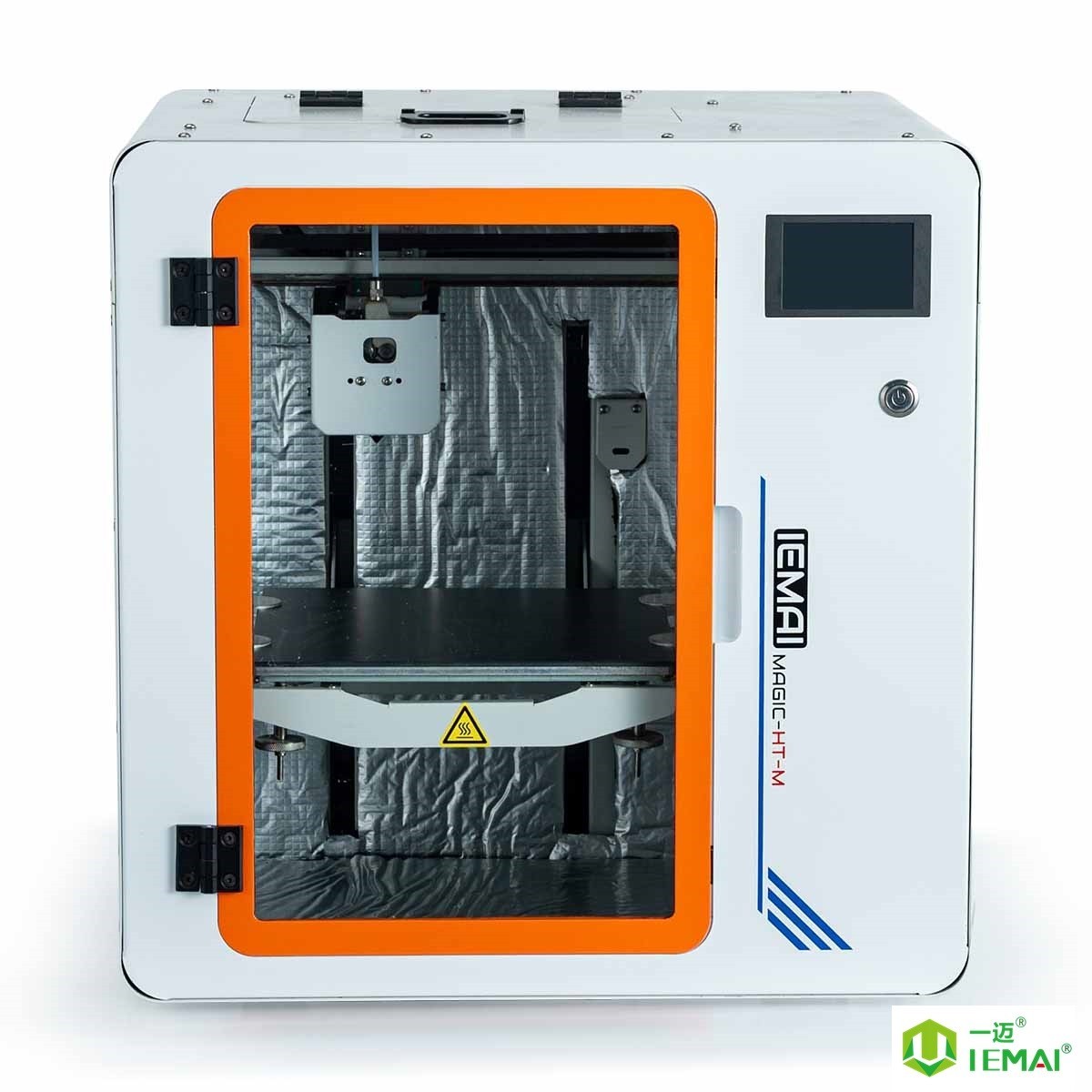
The clearest reason to choose the IEMAI HT-M is its stated support for PEEK, PEI (ULTEM), PPSU, PC, and PA-CF, paired with thermal controls designed around those materials. Power-failure recovery, resume printing, touchscreen controls, adjustable layer thickness, and adjustable print speed add practical control during longer jobs.
The limitation is the compact build envelope. A 220 × 220 × 220 mm maximum print size may suit smaller functional components and lab work, while users planning larger parts will need to account for that boundary. The USD 3,490.00 listed price is another meaningful consideration because the purchase is centered on high-temperature capability rather than basic filament printing.
Who it suits
This desktop-sized industrial FDM printer is most relevant to teams working with engineering thermoplastics and needing an actively heated chamber. The listed material range gives it a clear role in prototyping and small-batch functional production where PEEK, PEI, PPSU, PC, or PA-CF are part of the workflow.
It is less compelling for someone whose projects stay with ordinary filament and do not require the 450°C nozzle, 90°C chamber, or 150°C build plate. Those specifications are central to the machine's purpose, so paying for them only makes sense when the intended materials and applications call for them.
What stands out
The thermal specification is the defining feature: a 450°C maximum nozzle temperature, chamber heating up to 90°C, and a build plate reaching 150°C. The approximately 220 mm cubed build area balances those capabilities with a compact footprint. USB 2.0, USB 3.0, and Wi-Fi connectivity provide several listed interface options, while the standard 0.4 mm nozzle can be supplemented with 0.8 mm and 1.0 mm options.
Meaningful trade-offs
The IEMAI HT-M is specialized, and that specialization shapes the decision. Its material support and heated environment are concrete advantages for the stated engineering applications, but its build volume is not intended for oversized work. The price also places it firmly in a professional equipment decision rather than a casual desktop purchase.
Bottom line
Choose the IEMAI3d High-Temp 3D Printer when PEEK, PEI, PPSU, or similar engineering materials justify a 450°C nozzle and heated chamber. If your needs fit within the 220 × 220 × 220 mm build volume, it offers a focused combination of thermal capability, controls, and connectivity at a clearly stated USD 3,490.00 price.