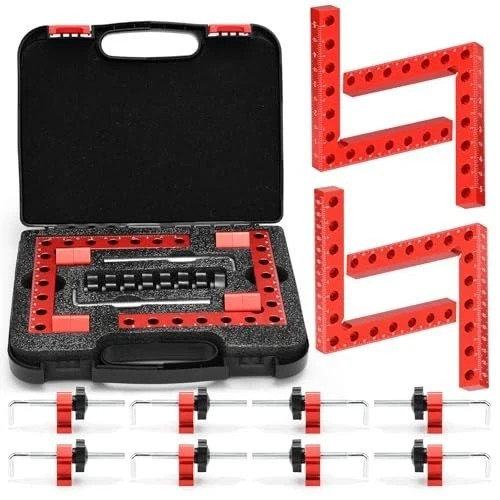

Photos from current listings. Actual item, color, and included accessories may vary.
90 Degree Corner Clamp Buying Guide
A 90-degree corner clamp is a right-angle positioning jig that holds two workpieces square during glue-up, drilling, or welding. The core trade-off is between cast-aluminum body rigidity and stamped-steel or plastic construction, with jaw reach and clamping force determining whether the joint stays true under load. Buy cast or machined aluminum bodies with dual-axis screws and a confirmed jaw opening at or above your stock thickness; skip stamped or plastic-bodied clamps for anything beyond light assembly.


At a glance
- Category
- Woodworking Clamps, Jigs & Joinery
- Data updated
- Nov 20, 2026
Current offers
Highlights
- Cast or machined aluminum alloy bodies resist deflection under clamp load far better than stamped steel or molded plastic, keeping the 90° reference true during glue-up.
- Dual-screw independent jaw adjustment lets each leg clamp a different stock thickness, unlike single-screw designs that force equal thickness on both faces.
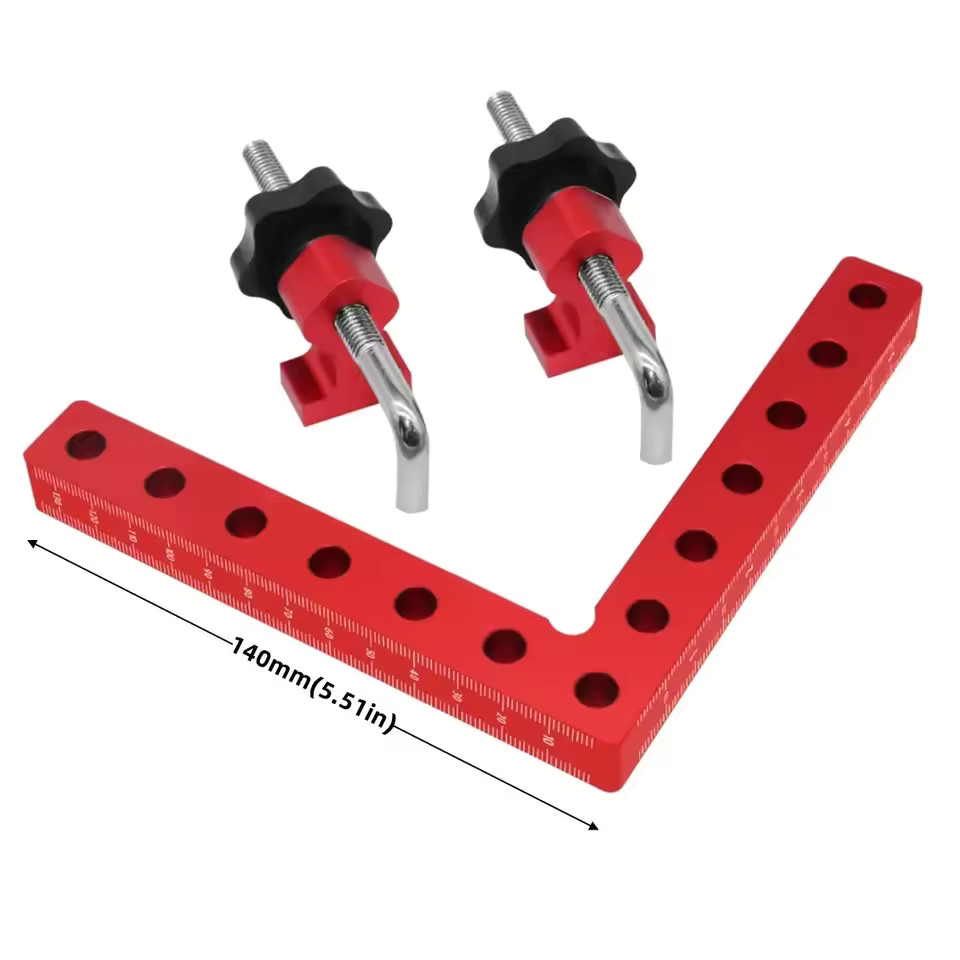
- Jaw opening and throat depth are the real capacity limits: a 5.5-inch leg clamp handles roughly 2-inch stock; 140mm-class clamps suit thinner panels and frames.
- Aluminum bodies stay dimensionally stable and rust-free, but require flat machined faces; painted or anodized finishes can mask burrs that throw off square.
Best use cases
- Best fit: cabinet and drawer box assembly with 3/4-inch plywood or solid stock — pick a 5.5-inch cast-aluminum pair with dual screws for even pressure on both panels.
- Best fit: picture frames and small boxes — a 140mm-class aluminum clamp with a deep throat reaches past the frame lip without marring the face.
- Wrong fit: welding or heavy steel fabrication — aluminum corner clamps deform under weld heat and high clamp force; use dedicated steel welding squares instead.
- Wrong fit: large casework or table frames wider than the jaw opening — step up to corner clamp sets with extended reach or bar-clamp plus square combinations.
Buying tips
- Match jaw opening to stock: a 5.5-inch leg clamp opens to roughly 2 to 2.5 inches, so it suits 3/4-inch stock with room for glue squeeze-out and cauls.
- Choose cast or machined aluminum alloy over stamped steel or plastic; cast bodies hold square under load and resist denting at the reference corner.
- Buy in pairs or four-packs for box and frame assembly — a single clamp cannot hold a four-corner glue-up square while you fasten it.
- Confirm the clamp has independent dual screws per leg; single-screw designs force equal stock thickness and skew joints on mixed-material assemblies.
Specs
| Body Material | Cast/machined aluminum alloy vs steel |
|---|---|
| Jaw Opening | ~2-2.5 in (5.5-in leg) / 140mm class |
| Screw Type | Dual independent vs single-screw |
| Pack Size | 1, 2, or 4-pack for box assembly |
Related searches
What to check before buying
- Measure your thickest stock plus caul thickness and confirm it fits within the clamp's rated jaw opening before ordering.
- Check the clamp's leg length against your panel width: legs shorter than the joint depth leave the corner unsupported.
- Verify the reference faces are machined flat and unpainted at the 90° corner, since paint or coating thickness throws joints off square.
- Confirm the clamp body material is aluminum alloy rather than zinc-plated steel or plastic if you need rust-free, non-marring faces.
FAQ
Data sources: eBay / Amazon listings and product attribute feeds Data updated Nov 20, 2026.
Some links on this page are affiliate links. If you buy after clicking one, we may earn a commission at no extra cost to you. This does not change which products appear here or their order. Affiliate disclosure.