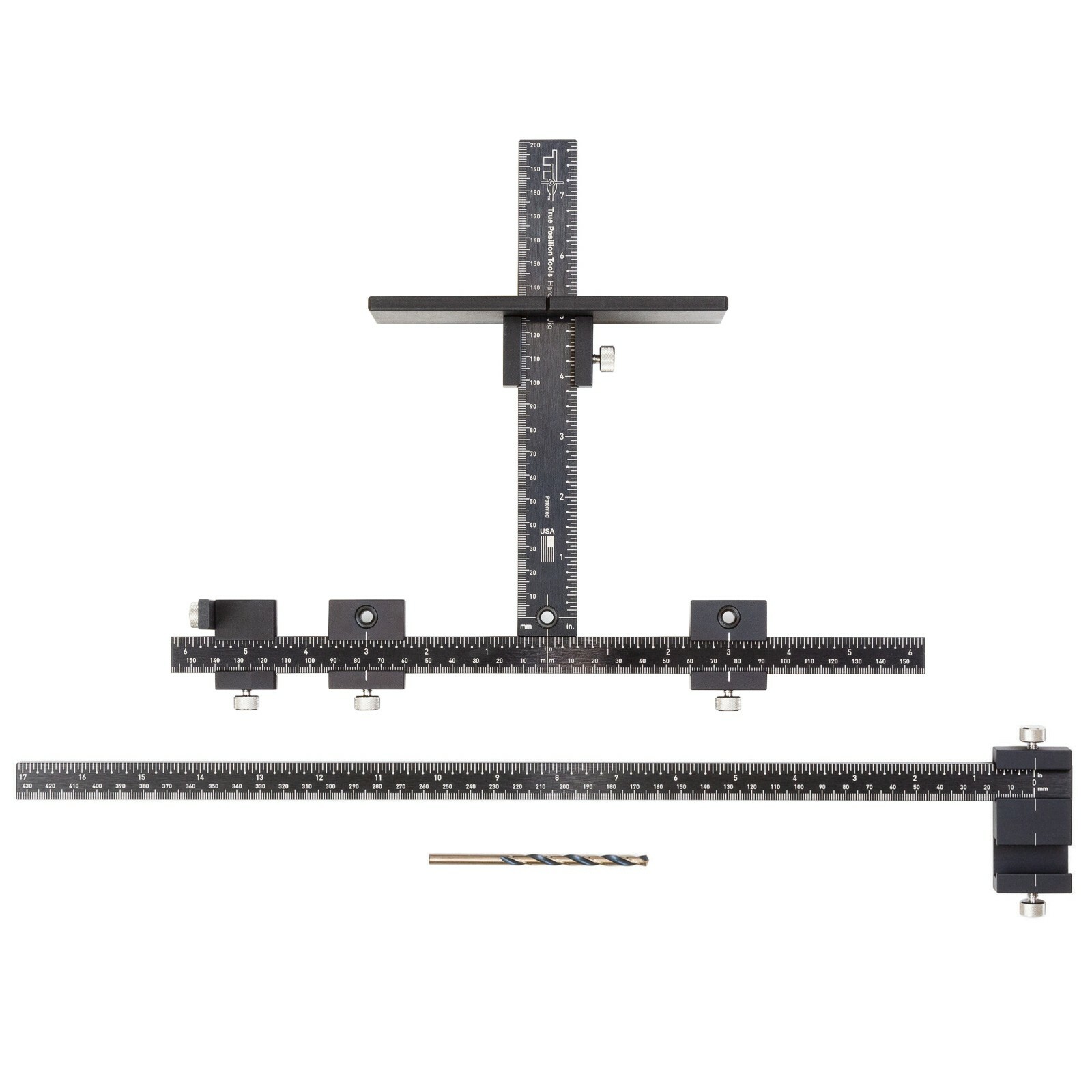

Photos from current listings. Actual item, color, and included accessories may vary.
Cabinet Hardware Jig Buying Guide
A cabinet hardware jig is a drilling guide that locates and spaces pulls and knobs on cabinet doors and drawers, and the primary trade-off is between a fixed-template jig and an adjustable rail system with hardened bushings. Durable options use thick anodized aluminum with replaceable steel drill bushings and positive locking stops; compromises rely on thin stamped plates, plastic guides, or friction-only adjustments that drift under repeated drilling.


At a glance
- Category
- Woodworking Clamps, Jigs & Joinery
- Data updated
- Nov 20, 2026
Current offers
Highlights
- True Position Tools TP-1934E PRO uses a machined aluminum body with dual-sided indexing and hardened steel bushings for repeatable 3- and 4-inch center-to-center pulls.
- Adjustable rail jigs (e.g., TP-1934E, Kreg, FastCap) set both horizontal spacing and vertical offset via positive stops, while fixed templates lock one hole pattern only.
- Bushing inner diameter must match the drill bit: standard 3/16-inch for #8 screws, with 1/4-inch bushings for larger hardware and euro screws.
- Anodized 6061 aluminum bodies resist wear and flex; stamped steel or ABS plastic plates deform or oval out after hundreds of holes.
Best use cases
- Best fit: adjustable aluminum rail jig with steel bushings for pros or DIYers drilling mixed 3-inch and 4-inch pull spacing across many doors and drawers.
- Best fit: compact fixed template for a single kitchen or bath remodel with one hardware pattern and fewer than roughly 30 holes to drill.
- Wrong fit: plastic or thin stamped jigs for production work or hard maple/oak doors where bushing wear and plate flex cause misaligned pulls.
- Wrong fit: a single-spacing jig if your hardware mix includes both bar pulls and knobs at different center-to-center dimensions.
Buying tips
- Match bushing ID to screw size: 3/16 inch for standard #8 pull screws, 1/4 inch for euro screws or larger hardware, and confirm the jig includes the matching drill bit.
- Choose an adjustable rail system with positive stop collars if you drill more than one cabinet run; friction-only sliders creep and require re-checking every few holes.
- Verify the jig covers your actual center-to-center range (commonly 3 to 4 inches, some 2-1/2 to 5 inches) and your vertical offset range before buying.
- Prefer anodized 6061 aluminum bodies with replaceable bushings over plastic or painted steel; bushing replacement extends jig life and preserves hole accuracy.
Specs
| Jig Type | Fixed template vs adjustable rail |
|---|---|
| Body Material | Anodized 6061 aluminum vs plastic/steel |
| Bushing Size | 3/16 in (#8) / 1/4 in (euro) |
| Spacing Range | 3-4 in C-C (some 2.5-5 in) |
Related searches
What to check before buying
- Measure your cabinet door and drawer front thickness and confirm the jig clamp or edge-reference design seats securely on that thickness.
- Check your hardware's center-to-center spacing and screw diameter against the jig's bushing set and spacing range.
- Confirm you have a drill with a chuck that accepts the jig's specified bit shank and that the bit is included or matches the bushing ID.
- Plan for a backer board or tape to prevent tear-out on melamine, veneer, or painted doors, since the jig guides the bit but does not control exit blowout.
FAQ
Data sources: eBay / Amazon listings and product attribute feeds Data updated Nov 20, 2026.
Some links on this page are affiliate links. If you buy after clicking one, we may earn a commission at no extra cost to you. This does not change which products appear here or their order. Affiliate disclosure.