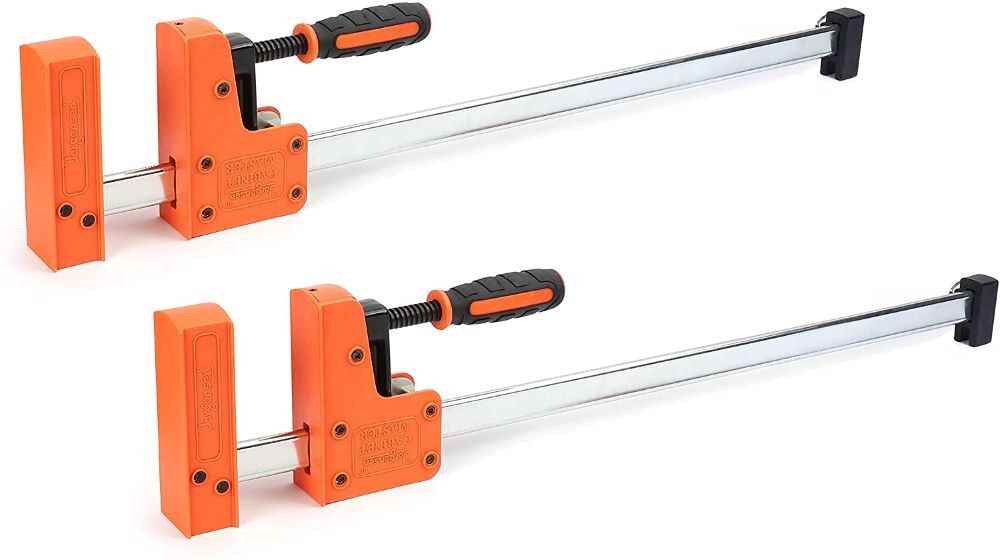

Photos from current listings. Actual item, color, and included accessories may vary.
Jorgensen Parallel Clamp Buying Guide
Jorgensen parallel clamps are heavy-duty bar clamps with wide, flat jaws that stay parallel to the bar, delivering even clamping pressure across panels and glue-ups. The key trade-off is jaw rigidity and bar straightness versus weight: steel bars and cast jaws hold panels flat, while lighter aluminum or plastic-bodied clamps flex under load. Buy steel-bar Jorgensen parallel clamps for cabinet and tabletop glue-ups; skip them for light craft work where a quick-grip or F-clamp is faster and cheaper.


At a glance
- Category
- Woodworking Clamps, Jigs & Joinery
- Data updated
- Nov 20, 2026
Current offers
Highlights
- Jorgensen parallel clamps use a rigid steel bar with sliding and fixed jaws that remain parallel, preventing panel bowing during glue-ups.
- Jaw faces are typically hardened steel or replaceable plastic pads; steel pads grip better but can mar softwoods without cauls.
- Bar cross-section and jaw thickness determine deflection: heavier bars resist flex at full extension, critical for 36-inch and 48-inch spans.
- Clamp heads slide and lock via a pin or screw mechanism; quality models hold jaw alignment under high torque without racking.
Best use cases
- Best fit: cabinet, tabletop, and cutting-board glue-ups up to 48 inches — choose a 24-inch or 36-inch pair for most furniture panels; add 48-inch for wide tops.
- Wrong fit: light craft or single-board assembly — a quick-grip or F-clamp is faster and cheaper; parallel clamps are overkill for stock under 1 inch thick.
- Best fit: veneer and edge-banding pressing where flat, even pressure matters — use plastic jaw pads to avoid marring finished faces.
- Wrong fit: metalworking or welding — parallel clamps are woodworking tools; use bar clamps rated for metal or welding-specific fixtures.
Buying tips
- Match clamp length to project: jaw capacity should exceed the panel width by at least 2 inches so the bar spans the full glue-up without maxing out.
- Choose steel bars over aluminum for spans over 24 inches; steel resists deflection and keeps jaws parallel under high clamping force.
- For 2-pack sets, confirm both clamps share the same bar length and jaw type; mixed-length sets limit symmetrical glue-ups.
- Check jaw depth (throat) — deeper throats clear edge banding and cauls; standard depth suits most panel work but deep-reach models help for assembled frames.
Specs
| Clamp Type | Parallel jaw bar clamp |
|---|---|
| Bar Material | Steel vs aluminum |
| Jaw Capacity | 24 / 36 / 48 in |
| Jaw Pad | Steel or replaceable plastic |
Related searches
What to check before buying
- Measure your widest panel and add 2-4 inches: buy 24-inch clamps for up to 20-inch panels, 36-inch for up to 32-inch, 48-inch for up to 44-inch.
- Confirm bench or floor space for the full bar length plus clamp heads; long bars overhang and need clearance at both ends.
- Check jaw pad material: plastic pads protect finished surfaces, steel pads bite harder but require cauls on softwood.
- Verify the clamp set includes both fixed and sliding jaws with locking pins; some budget sets ship with non-locking sliding heads.
FAQ
Data sources: eBay / Amazon listings and product attribute feeds Data updated Nov 20, 2026.
Some links on this page are affiliate links. If you buy after clicking one, we may earn a commission at no extra cost to you. This does not change which products appear here or their order. Affiliate disclosure.