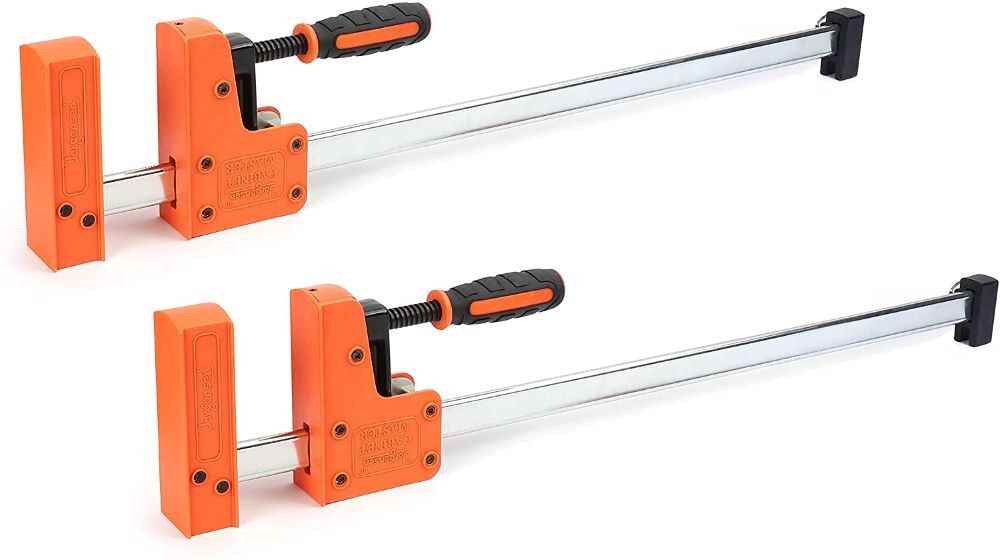

Photos from current listings. Actual item, color, and included accessories may vary.
Parallel Clamp Buying Guide
Parallel clamps are deep-reach bar clamps with wide, flat jaws that stay square to the bar, so they spread glue-up pressure across a panel instead of denting one spot. The core trade-off is jaw rigidity and bar straightness versus weight and cost: heavy steel I-beam bars hold 90° under load, while lightweight plastic-and-steel hybrids flex and rack. Buy steel-bar clamps with rated load for panel glue-ups; skip plastic-bodied 'parallel' clamps for anything wider than a small box.


At a glance
- Category
- Woodworking Clamps, Jigs & Joinery
- Data updated
- Nov 20, 2026
Current offers
Highlights
- Jaw style splits into true parallel jaw clamps (flat faces stay square to the bar) and F-style bar clamps, which only approximate parallelism under load.
- Bar construction decides rigidity: steel I-beam or reinforced box bars resist bowing; plastic-clad or tubular bars deflect and let jaws rack off 90°.
- Load ratings scale with bar length — short 24-inch clamps commonly rate around 1500 lbs, while long 50-inch bars drop near 1100 lbs as leverage increases.
- Deep jaw throat (typically 3.5–5 inches) clears stacked panels and edge banding; shallow F-clamp throats limit reach on cabinet and door glue-ups.
Best use cases
- Panel and tabletop glue-ups: pick steel I-beam parallel clamps in 24–36 inch lengths with 1500-lb-class ratings and 3.5-inch-plus throats; skip plastic-bodied F-clamps.
- Cabinet and door assembly: choose 36–50 inch parallel jaw clamps with tall jaws that clamp across stiles and rails squarely; skip short 12-inch clamps that cannot span the carcass.
- Small boxes and picture frames: a 12–24 inch pair is enough, but still require metal jaws and a straight steel bar to keep corners at 90°; skip long bars that add weight without reach.
- Metalworking and welding: a plastic-bodied clamp with steel bar can grip, but heat and spatter destroy plastic jaw covers — use all-metal bar clamps instead.
Buying tips
- Match clamp length to project diagonal, not edge length: a 24-inch clamp handles roughly 22 inches of jaw opening, so a 30-inch tabletop needs 36-inch clamps.
- Insist on steel I-beam or reinforced box bars for spans over 24 inches; plastic-clad bars flex and rack jaws off square on wide panels.
- Check rated load against span — expect roughly 1500 lbs at 24 inches falling to about 1100 lbs at 50 inches, and buy the shorter clamp when the rating matters.
- Stick to one bar profile and throat depth across your set so jaws align and clamps stack without interference during multi-clamp glue-ups.
Specs
| Jaw Type | Parallel jaw vs F-style sliding jaw |
|---|---|
| Bar Construction | Steel I-beam vs plastic-clad bar |
| Rated Load | ~1100-1500 lbs by bar length |
| Jaw Opening | 12 / 24 / 36 / 50 in sizes |
Related searches
What to check before buying
- Measure the project's diagonal opening and add 2–4 inches of slack; buy clamps whose jaw opening exceeds that figure.
- Confirm the bar cross-section is steel I-beam or box, not plastic-clad tubing, if you plan glue-ups wider than 24 inches.
- Check jaw throat depth against panel stack height — 3.5 inches minimum for double-layer tops, more for edge-banded doors.
- Verify jaw faces are non-marring pads or removable covers so they grip without denting softwoods and finished surfaces.
FAQ
Data sources: eBay / Amazon listings and product attribute feeds Data updated Nov 20, 2026.
Some links on this page are affiliate links. If you buy after clicking one, we may earn a commission at no extra cost to you. This does not change which products appear here or their order. Affiliate disclosure.