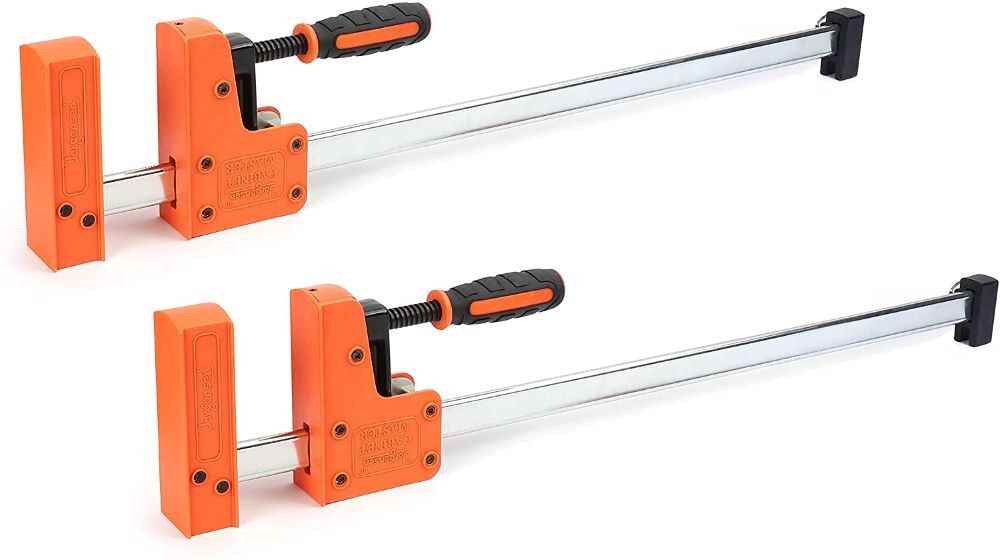

Photos from current listings. Actual item, color, and included accessories may vary.
Parallel Jaw Clamp Buying Guide
Parallel jaw clamps are bar clamps that keep both jaws square to the bar and parallel through the full opening, so pressure stays even instead of tilting the workpiece. The primary trade-off is jaw rigidity versus weight and cost: stamped-steel or plastic-body clamps flex under load, while cast-iron or forged-steel jaws with hardened steel bars hold 90° alignment at full extension. The decision rule is simple—if the clamp jaw is plastic or the bar is thin aluminum, expect deflection above light pressure; for glue-ups that must stay flat, buy cast-iron or forged-steel jaws on a hardened steel bar.


At a glance
- Category
- Woodworking Clamps, Jigs & Joinery
- Data updated
- Nov 20, 2026
Current offers
Highlights
- Jaw material and body construction set rigidity: cast-iron or forged-steel jaws resist deflection, while plastic or stamped-steel bodies flex and twist under glue-up pressure.
- Hardened steel bars (often chrome-plated) maintain straightness; thin aluminum or soft steel bars bow, losing parallel alignment at full opening.
- Parallel-jaw geometry keeps faces square to the bar through the full travel—unlike F-style clamps, which skew as they close and can rack thin panels.
- Bar length is the maximum opening, not the clamping capacity—deduct roughly 2–3 inches for jaw thickness and the screw reach when sizing.
Best use cases
- Best fit: edge-gluing panels and tabletops—pick cast-iron or forged-steel parallel jaw clamps with hardened steel bars in a length that exceeds the panel width plus jaw allowance.
- Best fit: cabinet and frame assembly where 90° faces matter—choose parallel jaw clamps over F-style; skip lightweight plastic-body clamps for anything beyond light holding.
- Wrong fit: permanent or high-vibration holding—parallel jaw clamps are for assembly and glue-up, not welding or structural restraint; use dedicated welding clamps instead.
- Wrong fit: one-handed reach into tight spaces—parallel jaw clamps are two-handed tools; trigger-style bar clamps suit quick light holding better.
Buying tips
- Size by opening: choose a bar length at least the workpiece width plus 2–3 inches of jaw and screw allowance; a 24-inch clamp opens roughly 21–22 inches.
- Prioritize jaw material: cast-iron or forged-steel jaws hold parallel alignment; plastic or stamped-steel jaws deflect and are for light-duty only.
- Check bar steel: hardened, chrome-plated steel bars stay straight; thin aluminum or soft steel bars bow and lose 90° under load.
- Match clamp count to glue-up width: plan roughly one clamp every 6–8 inches of panel width for even pressure, plus one at each end.
Specs
| Jaw Material | Cast iron / forged steel vs plastic |
|---|---|
| Bar Steel | Hardened chrome-plated vs soft aluminum |
| Opening Range | 12–48 in bar length (approx. opening) |
| Jaw Depth (Reach) | 2.5–5 in typical throat depth |
Related searches
What to check before buying
- Measure the widest workpiece and add 2–3 inches: that is the minimum bar length, since jaw thickness and screw reach reduce usable opening.
- Confirm jaw depth (reach) clears the workpiece height and any cauls or battens you plan to use.
- Verify bar cross-section and weight suit your bench and storage—long cast-iron clamps get heavy at 36–48 inches.
- Check jaw faces for non-marring pads if clamping finished or softwood surfaces; bare serrated jaws leave marks.
FAQ
Data sources: eBay / Amazon listings and product attribute feeds Data updated Nov 20, 2026.
Some links on this page are affiliate links. If you buy after clicking one, we may earn a commission at no extra cost to you. This does not change which products appear here or their order. Affiliate disclosure.