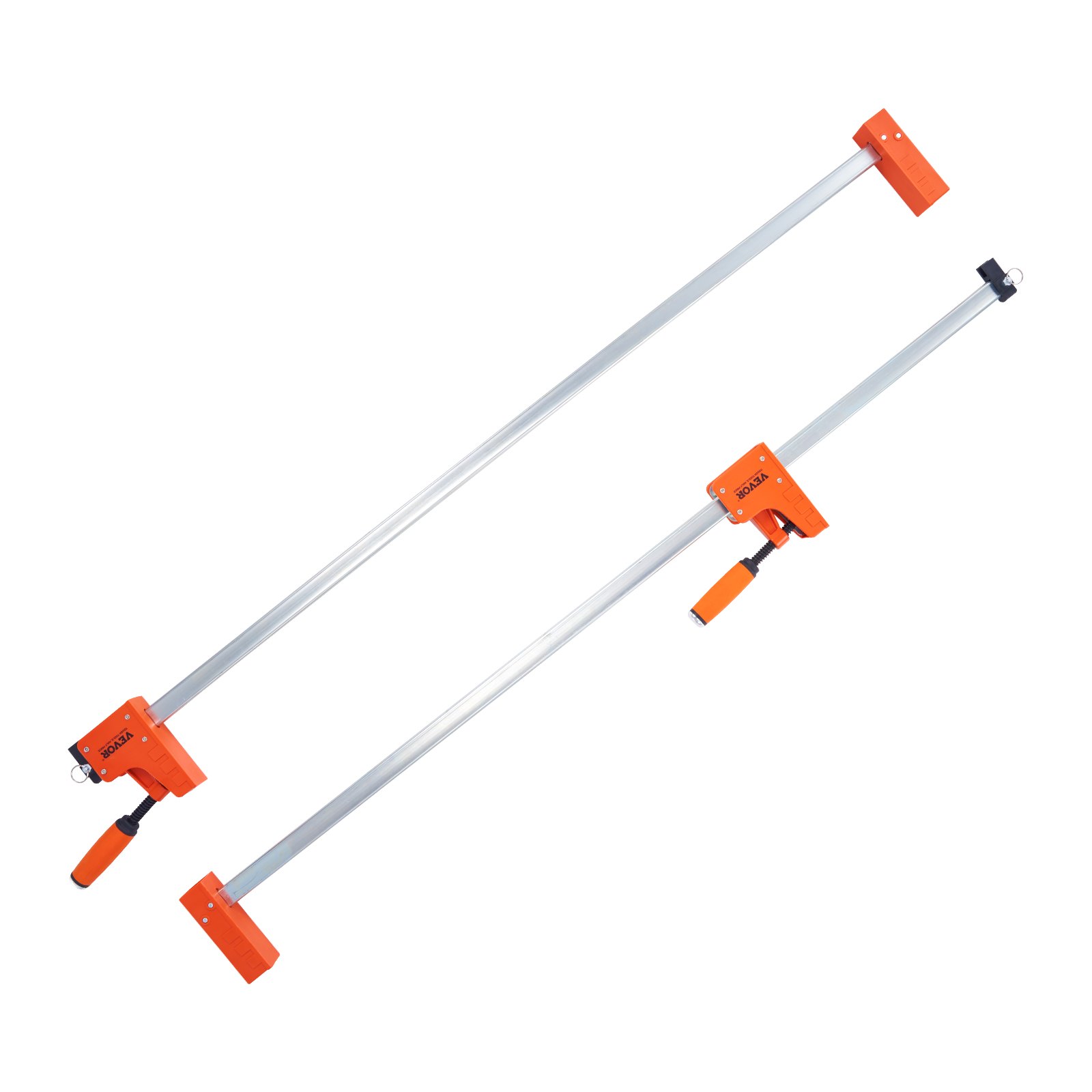

Photos from current listings. Actual item, color, and included accessories may vary.
Parallel Wood Clamp Buying Guide
Parallel wood clamps are bar clamps with jaws that stay parallel across the full opening, delivering even pressure for panel glue-ups and casework. The key trade-off is jaw rigidity and bar straightness: steel bars with reinforced nylon or cast jaws hold alignment under load, while thin bars and all-plastic jaws flex and skew. Choose a clamp rated for at least the load your widest glue-up demands, and skip any clamp whose bar deflects visibly when tightened dry.


At a glance
- Category
- Woodworking Clamps, Jigs & Joinery
- Data updated
- Nov 20, 2026
Current offers
Highlights
- Load ratings of 1,000–1,500 lbs distinguish true parallel clamps from light-duty F-style clamps rated 300–600 lbs.
- Steel bar cross-sections of 1-3/8 x 3/8 in or larger resist bowing; thinner bars deflect and release glue joints unevenly.
- Reinforced nylon or cast-iron jaws with hardened steel pins maintain parallelism; all-plastic jaw bodies creep under sustained pressure.
- Bar lengths from 12 to 50 in cover everything from small boxes to 48-in cabinet panels; jaw reach (throat depth) of 3-1/2 to 5 in clears edge banding.
Best use cases
- Panel and tabletop glue-ups wider than 24 in: pick 36–50 in clamps with 1,100+ lb ratings and steel bars; skip 12-in hobby clamps.
- Cabinet and drawer assembly under 18 in: choose 18–24 in parallel clamps for manageable weight and enough throat depth; full 50-in bars are unwieldy here.
- Thin or delicate stock (under 3/4 in): use parallel clamps with cushioned jaw pads to spread pressure; avoid high-load clamps cranked to maximum on softwood.
- Metalworking or welding alignment: skip parallel wood clamps entirely; their nylon jaws and coatings are not rated for weld spatter or hot work.
Buying tips
- Match bar length to your widest glue-up plus 6 in: a 50-in clamp handles a 48-in panel, while a 24-in clamp maxes out around 21 in of actual jaw opening.
- Require a load limit of at least 1,000 lbs for hardwood panel glue-ups; 600-lb clamps are for light assembly and edge gluing only.
- Check bar cross-section: 1-3/8 x 3/8 in steel or larger stays straight; 1 x 1/4 in bars bow noticeably at mid-span on 36-in clamps.
- Prefer clamps with reversible jaws or sliding heads that lock positively; friction-only heads slip under full pressure and skew the joint.
Specs
| Clamp Type | Parallel jaw / bar clamp |
|---|---|
| Load Rating | 1,000–1,500 lbs (heavy-duty) |
| Bar Material | Carbon steel, 1-3/8 x 3/8 in |
| Jaw Opening | 12–50 in (bar length minus 3–6 in) |
Related searches
What to check before buying
- Measure your widest projected glue-up and add 6 in to select bar length; confirm actual jaw opening in the spec, not just bar length.
- Verify throat depth clears your stock plus cauls: 3-1/2 in minimum for edge banding, 5 in for thick laminated tops.
- Confirm bar profile fits your clamp rack or bench dogs; deep I-beam bars need wider storage slots than flat bars.
- Check jaw pad material for finish compatibility: smooth nylon pads mar less than serrated steel jaws on visible faces.
FAQ
Data sources: eBay / Amazon listings and product attribute feeds Data updated Nov 20, 2026.
Some links on this page are affiliate links. If you buy after clicking one, we may earn a commission at no extra cost to you. This does not change which products appear here or their order. Affiliate disclosure.