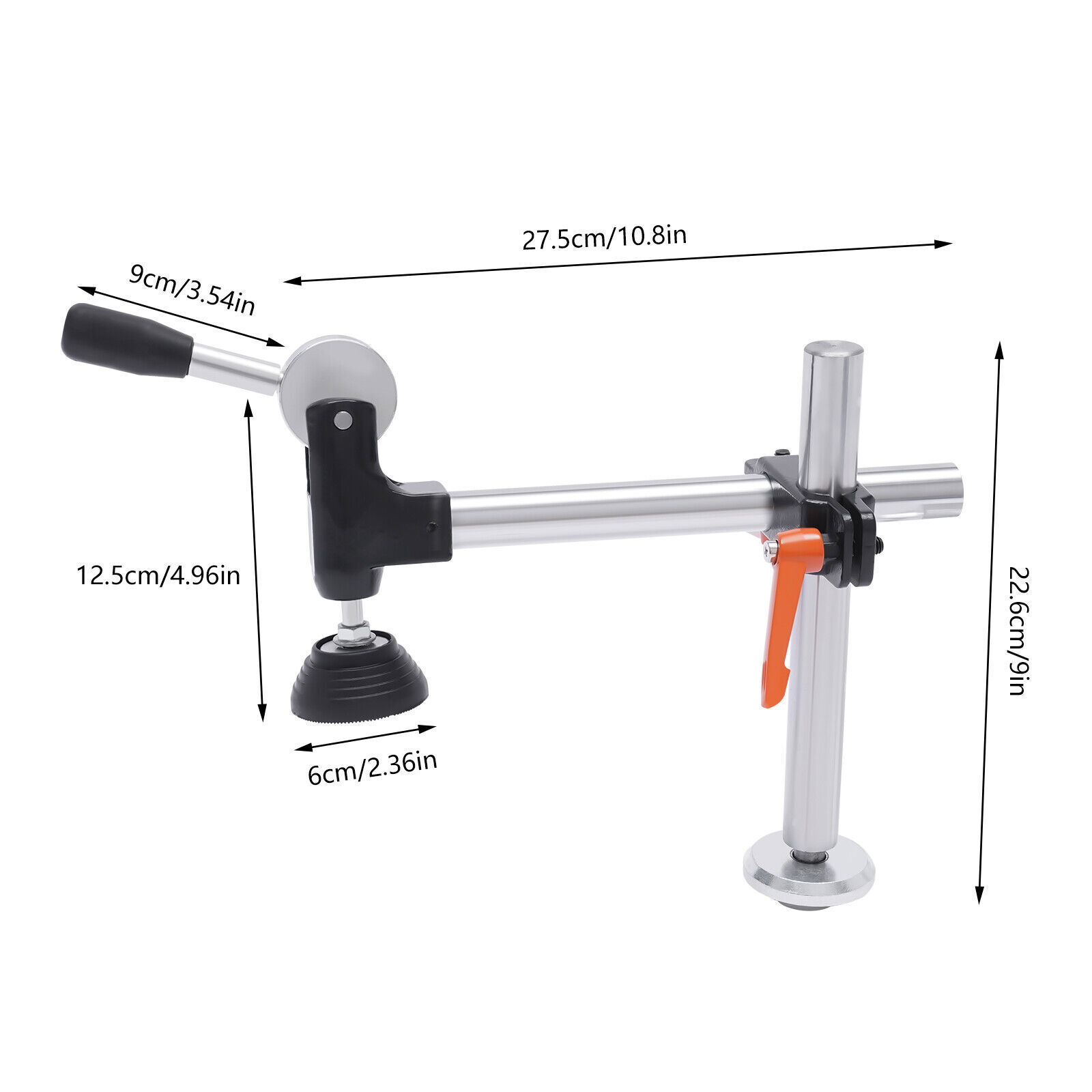

Photos from current listings. Actual item, color, and included accessories may vary.
Table Clamp Buying Guide
Table clamps secure workpieces to a bench or table, and the decisive trade-off is clamping force delivery versus table-slot compatibility—cheap F-style clamps flex and slip, while dedicated hold-down and toggle clamps lock rigidly. The rule: buy a clamp whose throat depth and bar thickness match your tabletop or T-slot, and skip any clamp with a stamped steel jaw or plastic body for load-bearing work.


At a glance
- Category
- Woodworking Clamps, Jigs & Joinery
- Data updated
- Nov 20, 2026
Current offers
Highlights
- Hold-down clamps use a 5/16-in or 3/8-in T-bolt with a pivoting shoe, giving 200-500 lb of vertical hold on a 3/4-in dog-hole bench.
- Toggle clamps (horizontal or vertical handle) deliver 100-500 lb holding capacity via an over-center linkage that stays locked without constant hand pressure.
- Bar clamps for table use need a hardened steel bar of at least 1/4-in thickness; thinner 3/16-in bars deflect and lose grip under 150 lb of load.
- Eccentric or cam-action presser clamps apply rapid low-profile pressure for panel saws and sliding tables, but max out near 100 lb and suit alignment, not heavy stock removal.
Best use cases
- Best fit: bench hold-down clamps with 3/8-in T-bolts for a drill-press or assembly table—pick two per corner for stable edge work; skip quick-release bar clamps that creep under vibration.
- Best fit: horizontal-handle toggle clamps for jigs and fixtures where repeatable 200-lb hold is needed; wrong fit: vertical-handle toggles on a low-clearance table saw sled where the handle hits the workpiece.
- Best fit: cam or eccentric presser clamps for securing thin panels on a sliding table saw; skip these for thick hardwoods where 100 lb of force is insufficient to prevent kickback.
- Best fit: F-style bar clamps with 24-in throat for edge-gluing panels on a flat table; wrong fit: C-clamps for table-to-frame clamping because their deep throat blocks tool access.
Buying tips
- Match clamp throat depth to your table overhang: measure from table edge to the nearest obstruction (leg, apron) and add 1 in—a 4-in throat clamp needs 5 in of clear reach.
- For T-slot tables, confirm slot width: 5/16-in (8 mm) slots take 1/4-in T-bolts, while 3/8-in (10 mm) slots need 5/16-in bolts; mismatched bolts wobble and strip.
- Choose ductile iron or forged steel jaws over cast iron for clamps rated above 300 lb; cast iron cracks under shock loads from hammering or power tools.
- For toggle clamps, verify holding capacity at the spindle, not the handle: a clamp rated 500 lb at the bar may hold only 200 lb at full extension—size up one tier for safety.
Specs
| Clamp Type | Hold-down / Toggle / Cam / Bar |
|---|---|
| Holding Capacity | 100-500 lb (toggle/hold-down) |
| Table Interface | T-slot 5/16-in or 3/8-in / Dog hole |
| Jaw Opening | 1-3/4 to 4 in (tabletop thickness) |
Related searches
What to check before buying
- Measure tabletop thickness and edge overhang: clamps with a 2-in jaw opening fit tops up to 1-3/4 in thick; thicker tops need 3-in or 4-in opening.
- Check T-slot or dog-hole spacing on your table: 3/4-in bench dogs require hold-down clamps with 3/4-in shafts, not 5/8-in.
- Confirm your table frame material: aluminum extrusion tables need T-nuts sized to the slot (often 8 mm or 10 mm), while wooden benches take lag bolts or through-bolts.
- Verify handle clearance: toggle clamps with 4-in handles need 5 in of swing radius; low-profile cam clamps need only 1 in, suiting crowded table saws.
FAQ
Data sources: eBay / Amazon listings and product attribute feeds Data updated Nov 20, 2026.
Some links on this page are affiliate links. If you buy after clicking one, we may earn a commission at no extra cost to you. This does not change which products appear here or their order. Affiliate disclosure.