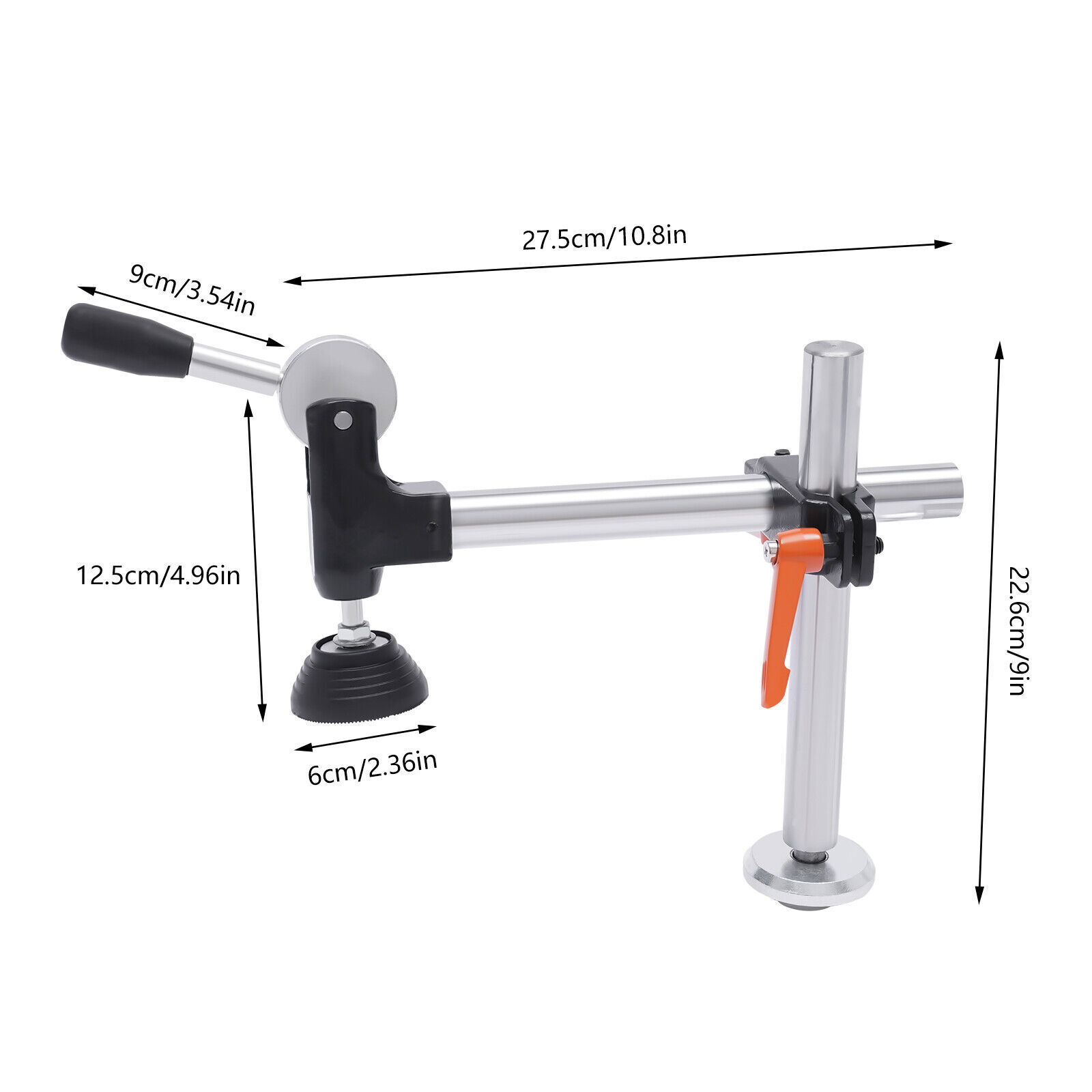

Photos from current listings. Actual item, color, and included accessories may vary.
Table Saw Clamp Buying Guide
A table saw clamp is a work-holding device that secures stock or accessories to the saw's table, fence, or miter slot, preventing kickback and enabling safe, repeatable cuts. The primary trade-off is between quick-release, low-profile hold-downs for general ripping and heavy-duty, high-clearance clamps for sleds and jigs, with durability determined by clamp bar rigidity and clamping force. Buy a clamp whose bar and jaw geometry match your saw's miter slot width and table thickness; skip any clamp that lacks a positive locking mechanism or whose reach cannot clear your blade guard.


At a glance
- Category
- Woodworking Clamps, Jigs & Joinery
- Data updated
- Nov 20, 2026
Current offers
Highlights
- Miter-slot clamps rely on a standard 3/4 in (19 mm) wide by 3/8 in (9.5 mm) deep slot; verify your saw's slot dimensions because some portable saws use 5/8 in slots.
- Hold-down clamps apply vertical force via a toggle or cam lever; steel bar stock of at least 1/4 in thickness resists deflection under load, while thinner bars flex and lose grip.
- Eccentric or cam-action clamps offer fast setup and release but have limited clamping range; screw-knob clamps provide higher, more consistent force for heavy jigs and sleds.
- Clamp reach (throat depth) must clear the tallest accessory you use—typically 2 to 4 in for sled runners and featherboards—or the clamp body will foul the blade guard.
Best use cases
- Best fit: securing a crosscut sled or miter gauge extension in the miter slot—choose a low-profile miter-slot clamp with a 3/4 in bar and quick-release lever.
- Best fit: holding featherboards or board buddies to the table edge—pick a clamp with a wide jaw pad and sufficient throat depth to span the accessory and stock.
- Wrong fit to skip: clamping rough lumber directly to the table for ripping without a fence—use a push stick and riving knife instead; table saw clamps are not a substitute for proper ripping safety gear.
- Best fit: locking a tapering jig or tenoning jig to the miter slot—select a heavy-duty screw clamp with at least 2 in of throat depth and a rigid steel bar.
Buying tips
- Measure your miter slot width and depth before buying: standard US saws use 3/4 in by 3/8 in, while some European and portable saws use 5/8 in or 20 mm slots.
- Choose a clamp with a bar thickness of 1/4 in or more steel; thinner bars deflect under clamping pressure and allow workpiece creep.
- Match clamp reach to your tallest jig: a 2 in throat depth clears most sled runners, but featherboard stacks and tenoning jigs may need 3 to 4 in.
- Prefer clamps with replaceable or non-marring jaw pads (UHMW or rubber) to avoid denting softwoods and aluminum jig fences.
Specs
| Slot Compatibility | 3/4 in, 5/8 in, 20 mm miter slots |
|---|---|
| Clamp Action | Cam/eccentric vs screw-knob toggle |
| Bar Thickness | 1/4 in steel minimum; 3/16 in light-duty |
| Throat Depth | 2-4 in for sleds and jigs |
Related searches
What to check before buying
- Confirm your table saw's miter slot width (3/4 in, 5/8 in, or 20 mm) and depth; clamps are slot-specific and will not fit across standards.
- Measure the maximum height of accessories you plan to clamp (sled runner, featherboard, jig fence) to ensure the clamp's throat depth clears them.
- Check that the clamp's bar length fits your table width or fence rail without overhanging into the blade path or outfeed zone.
- Verify the clamp locking mechanism (cam lever, toggle, or screw knob) can be operated with one hand while positioning stock.
FAQ
Data sources: eBay / Amazon listings and product attribute feeds Data updated Nov 20, 2026.
Some links on this page are affiliate links. If you buy after clicking one, we may earn a commission at no extra cost to you. This does not change which products appear here or their order. Affiliate disclosure.