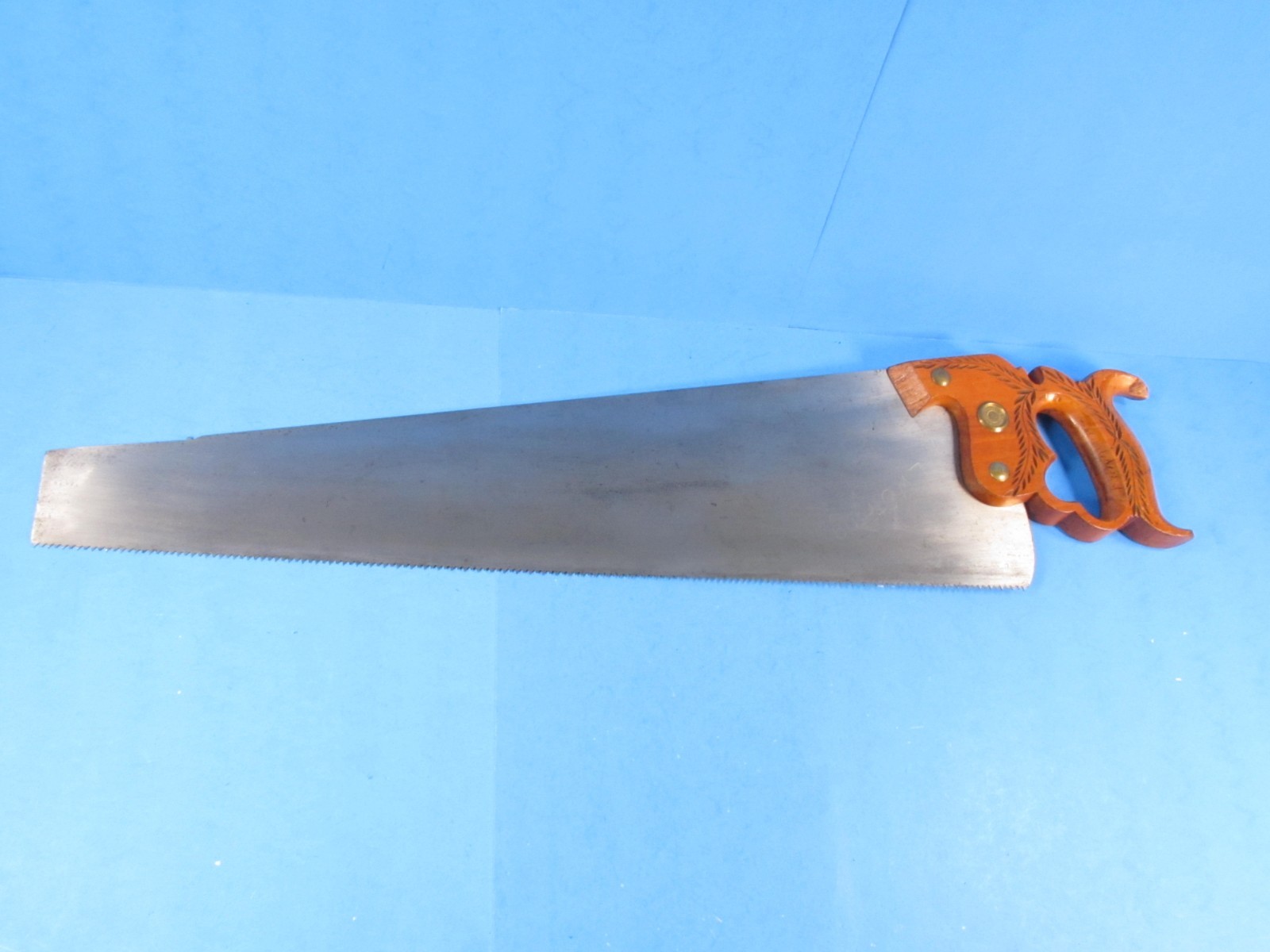

Photos from current listings. Actual item, color, and included accessories may vary.
Hand Saw Buying Guide
A hand saw is a manual cutting tool where tooth geometry, steel hardness, and plate tension determine speed, accuracy, and longevity. The primary trade-off is between traditional taper-ground, sharpened-tooth saws that cut fast but require maintenance and hardened-tooth saws that stay sharp longer but cannot be resharpened. Choose a taper-ground carbon-steel saw if you value cut quality and resharpening; choose a hardened-tooth saw for low-maintenance general carpentry.


At a glance
- Category
- Woodworking Hand Tools & Chisels
- Data updated
- Nov 20, 2026
Current offers
Highlights
- Tooth pitch (TPI) controls speed vs finish: 7-8 TPI rips fast, 10-12 TPI crosscuts cleanly, 15+ TPI for fine joinery.
- Taper-ground plates reduce binding by thinning toward the back; flat-ground plates are stiffer but need more set.
- Hardened-tooth saws (impulse-hardened) hold an edge 3-5x longer but cannot be filed; traditional saws are resharpened with a saw file.
- Crosscut teeth are bevel-filed at 15-20° and rip teeth are filed straight across at 90°; using the wrong saw tears grain.
Best use cases
- Best fit: 7-8 TPI rip saw for cutting along grain in rough stock; skip it for fine furniture joinery where a 10-12 TPI crosscut or dovetail saw is correct.
- Best fit: 10-12 TPI crosscut saw for framing and general carpentry; wrong fit for flush-cutting dowels or fine trim—use a 15+ TPI fine saw.
- Best fit: Traditional taper-ground saw (e.g., Disston No. 12 style) for woodworkers who will sharpen and set teeth; skip if you never plan to maintain a saw.
- Best fit: Hardened-tooth toolbox saw for occasional DIY and construction lumber; wrong fit for furniture-grade joinery needing resharpening and fine finish.
Buying tips
- Match TPI to task: 7-8 TPI for ripping, 10-12 TPI for crosscut framing, 15-20 TPI for fine joinery and trim.
- Choose blade length by stock thickness: 20-22 in for general bench work, 24-26 in for thick timber and two-handed ripping.
- Prefer taper-ground carbon-steel plates for resharpening and smooth cuts; choose impulse-hardened teeth only for low-maintenance use.
- Check tooth set: crosscut saws need 0.005-0.010 in set per side; excessive set wanders, insufficient set binds.
Specs
| Tooth Pitch | 7-20 TPI (task-dependent) |
|---|---|
| Blade Material | Carbon steel vs hardened steel |
| Grind Type | Taper-ground vs flat-ground |
| Blade Length | 20-26 in typical range |
Related searches
What to check before buying
- Measure your typical stock: under 2 in thick, a 20-22 in saw suffices; over 3 in, choose 24-26 in for full stroke.
- Confirm you have a saw file and saw set if buying a resharpenable saw; hardened-tooth saws need neither.
- Verify handle fit: traditional apple or beech handles with three-finger grip reduce fatigue; test hand size against grip circumference.
- Check replacement blade or sharpening service availability for your saw model before committing to a traditional plate.
FAQ
Data sources: eBay / Amazon listings and product attribute feeds Data updated Nov 20, 2026.
Some links on this page are affiliate links. If you buy after clicking one, we may earn a commission at no extra cost to you. This does not change which products appear here or their order. Affiliate disclosure.