Photos from current listings. Actual item, color, and included accessories may vary.
Woodworking Chisel Buying Guide
Woodworking chisels are the benchmark hand tool for paring, chopping, and carving joinery, but the segment splits sharply between hardened high-carbon steel bench chisels for mallet work and softer, short-handled carving gouges for hand pressure. The primary trade-off is steel hardness versus toughness: harder edges (RC 60-62) hold a keen paring bevel longer but chip under mortise chopping, while tougher edges (RC 58-60) survive mallet strikes but need more frequent honing. The decision rule is simple: buy bench chisels with flat backs, full tangs, and steel rated RC 59-62 for joinery; buy short-handled carving gouges in a canvas roll when the work is hand-guided shaping, not mallet-driven stock removal.


At a glance
- Category
- Woodworking Hand Tools & Chisels
- Data updated
- Nov 20, 2026
Current offers
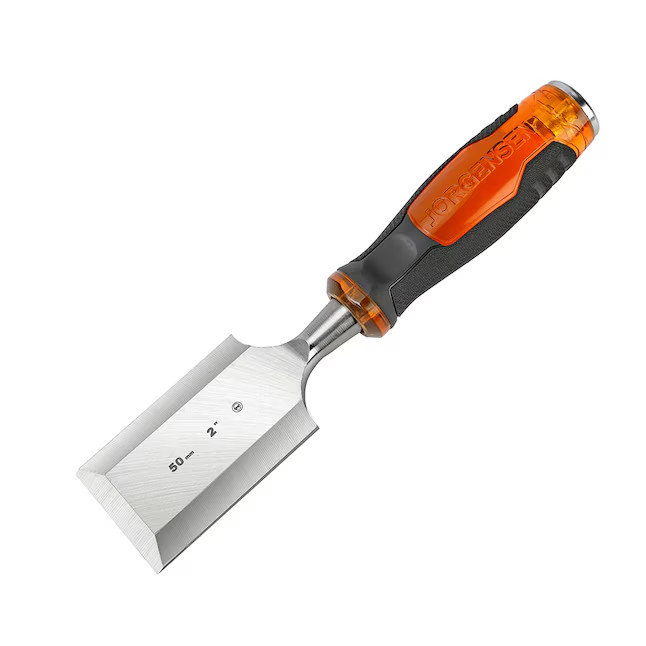 Jorgensen 2-in Woodworking Chisel$26.50
 View on eBay
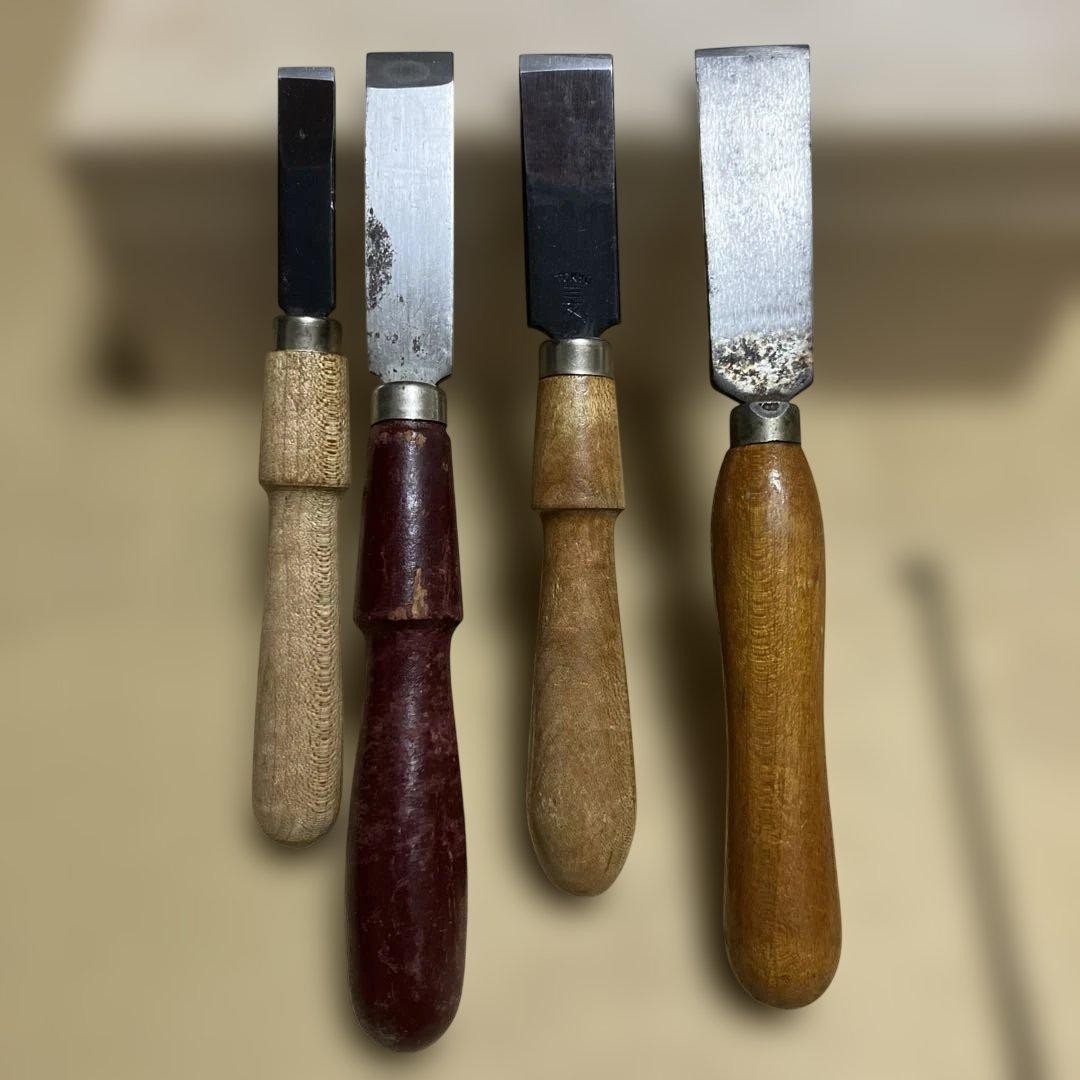 Japanese Woodworking Chisel Set 4 Piece Set Used$102.22View on eBay
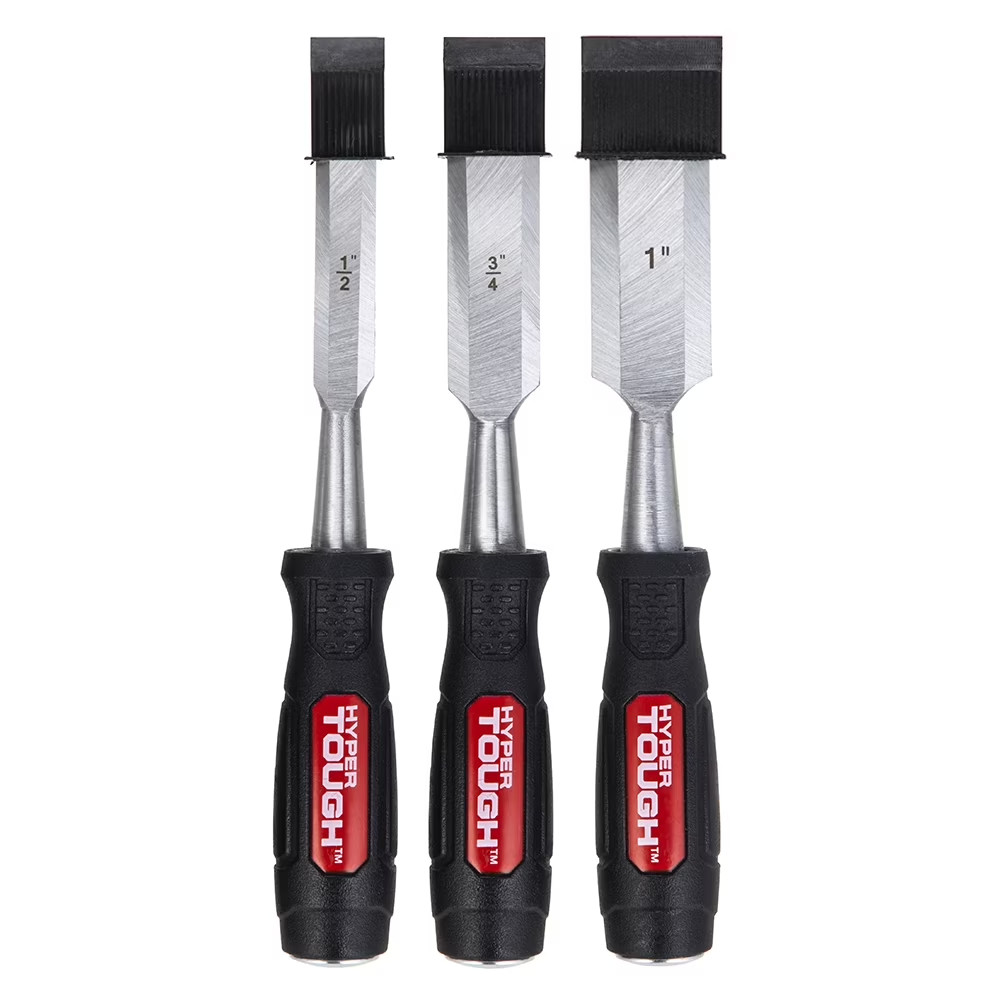 3 Piece Wood Chisel Set with Metal Striking Caps for Woodworking and Carving$8.30View on eBay
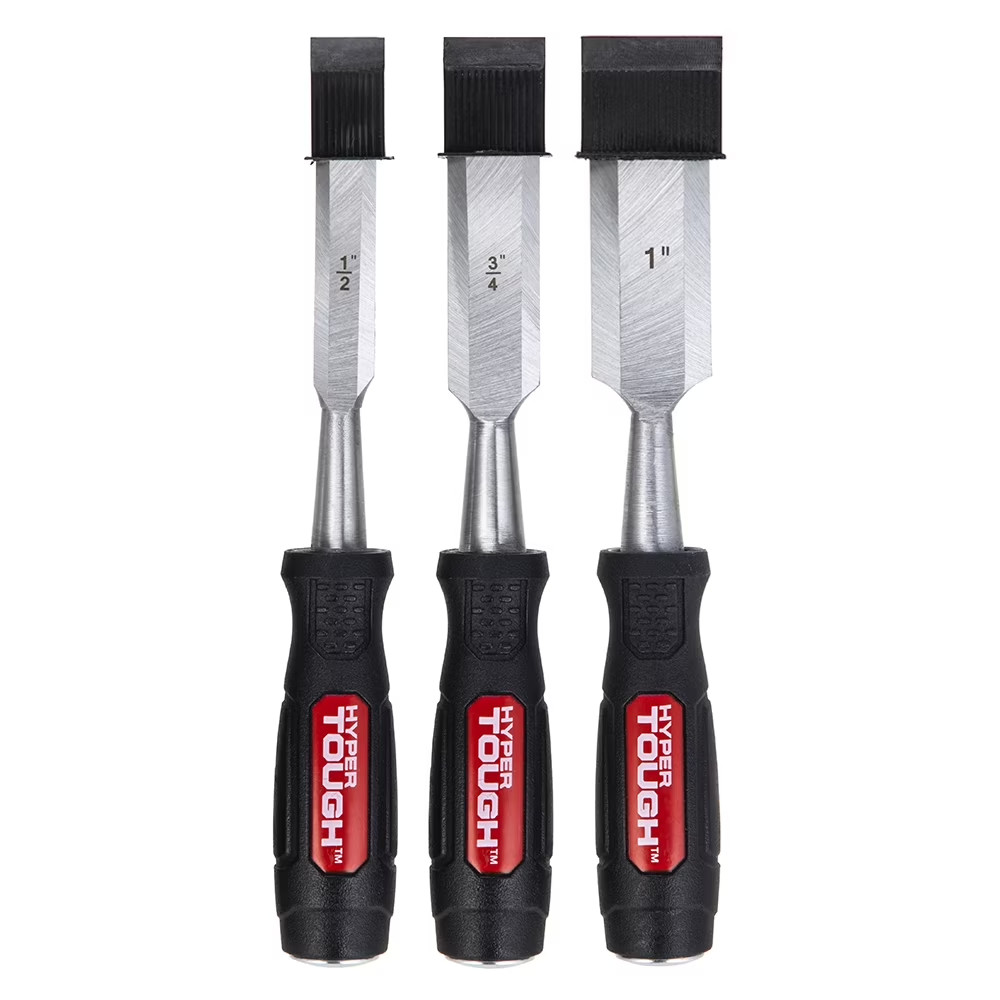 3 Piece Wood Chisel Set with Metal Striking Caps for Woodworking and Carving$8.71View on eBay
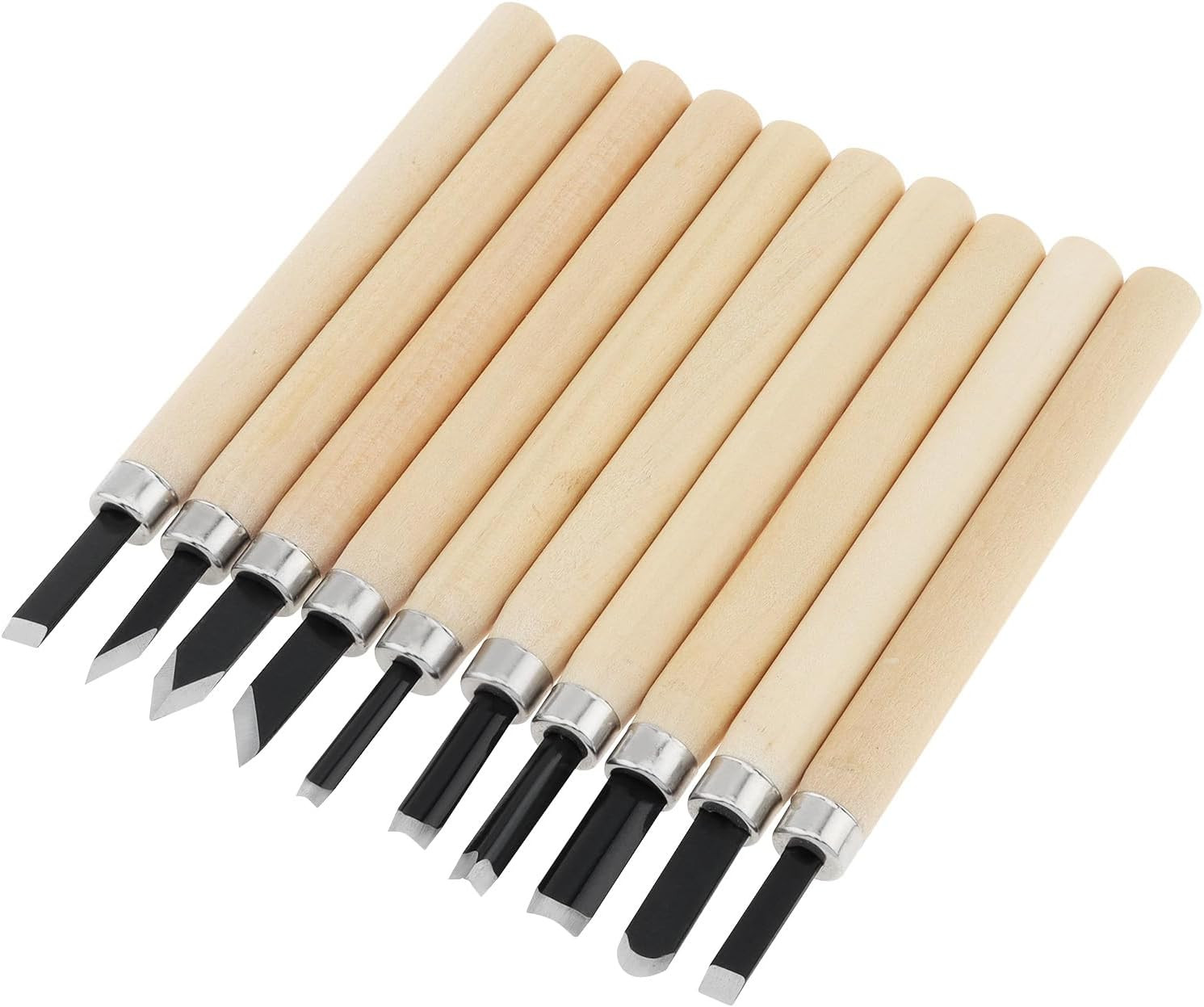 10pcs Professional Wood Carving Chisel Set - Carbon Steel Woodworking Tools, Pow$10.48View on eBay
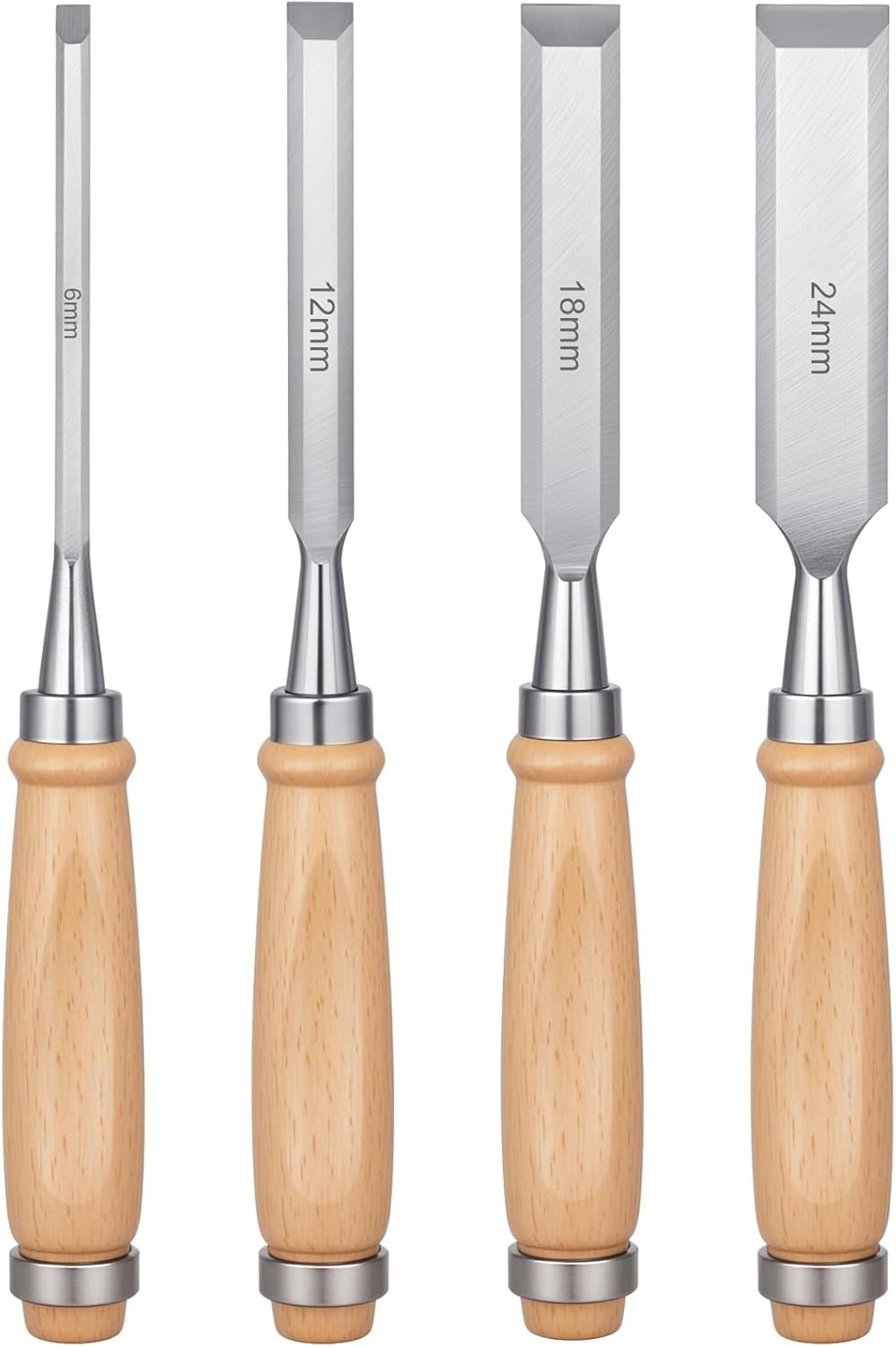 ⭐NEW⭐ 4-Piece Wood Chisel Set, Professional Wood Woodworking Tools$12.99View on eBay
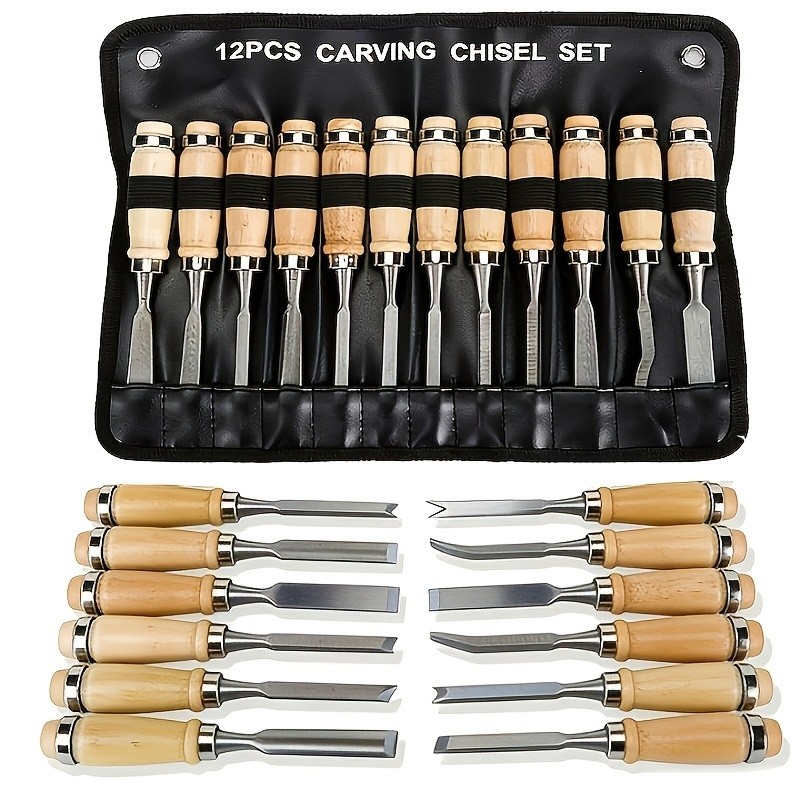 Wood Carving Tool Set 12 Chisels With Canvas Box, Woodworking Wooden Chisels,Woo$15.50View on eBay
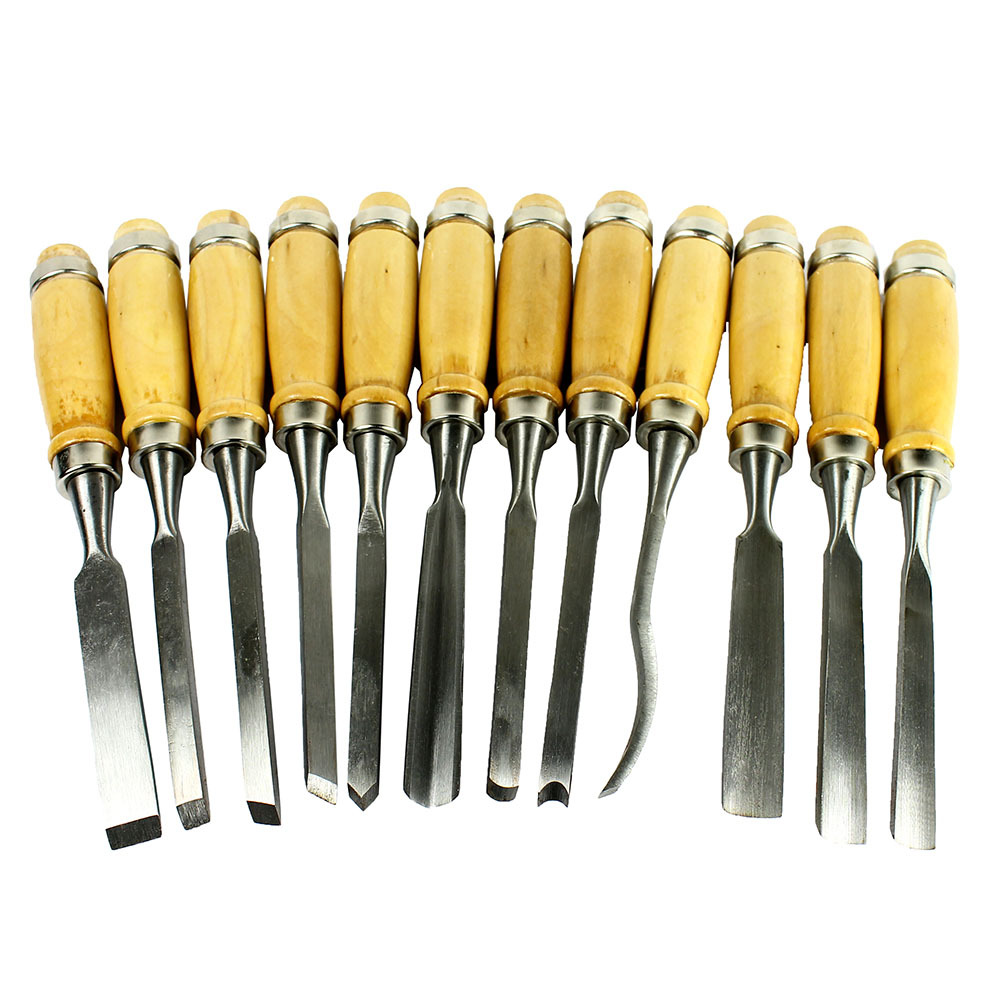 12 Piece Wood Carving Hand Chisel Tool Set Professional Woodworking Gouges Steel$20.92View on eBay
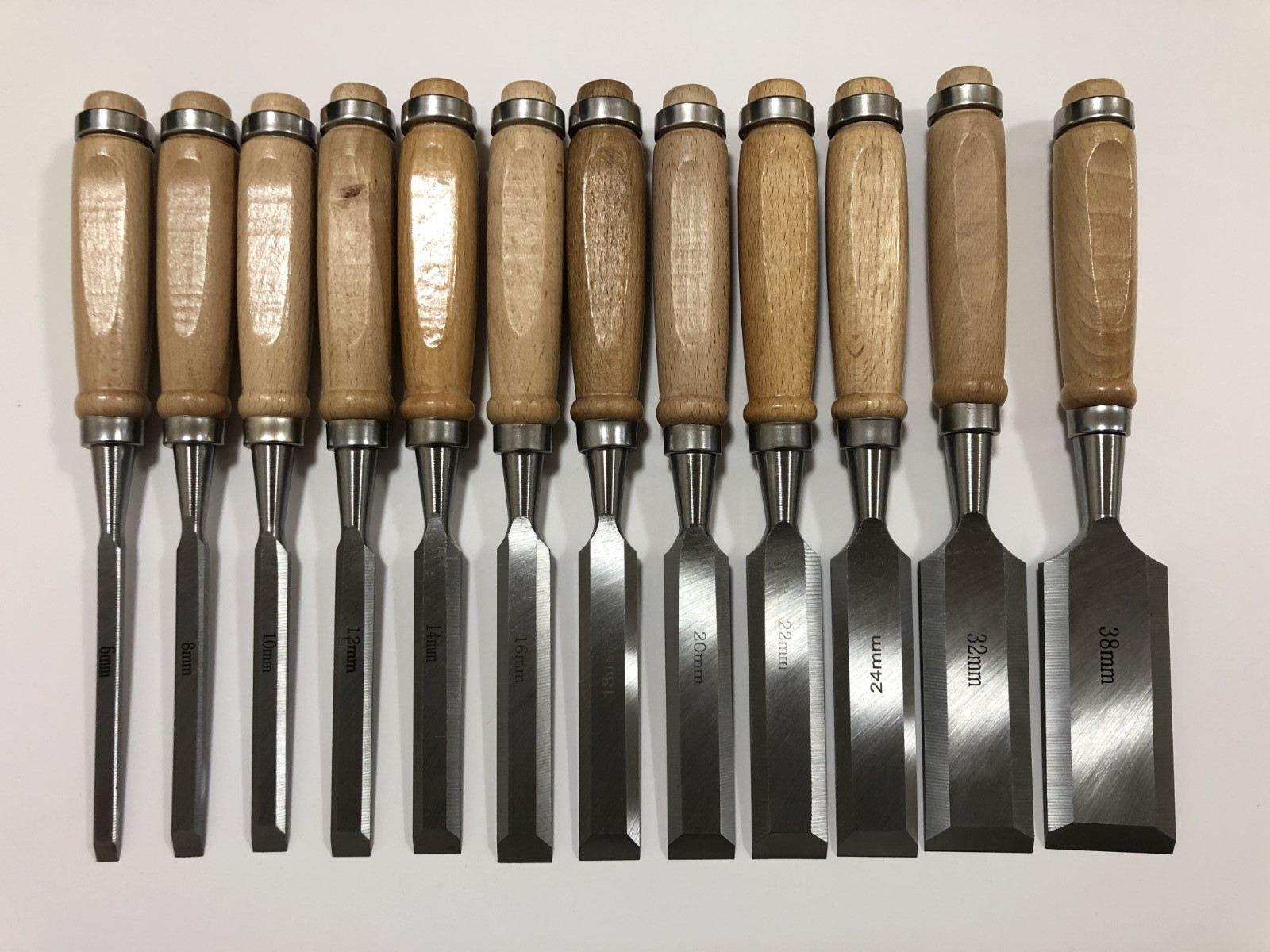 Vintage Japanese Nomi Oire Chisel Set of 12 Unused Woodworking Tools from Japan$73.89View on eBay
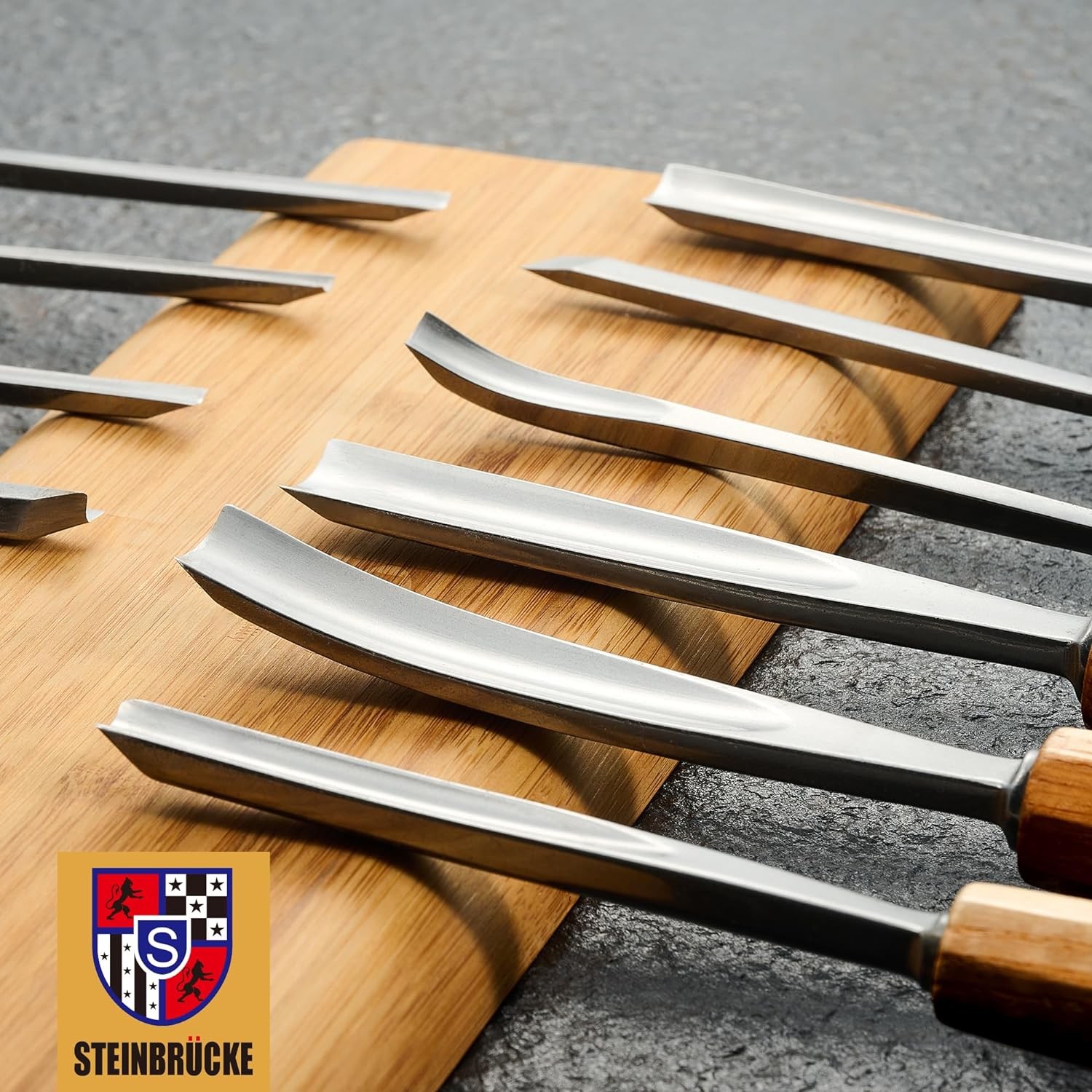 Wood Carving Hand Chisel Tool Set 12pcs Professional Woodworking Gouges Tools US$79.99View on eBay
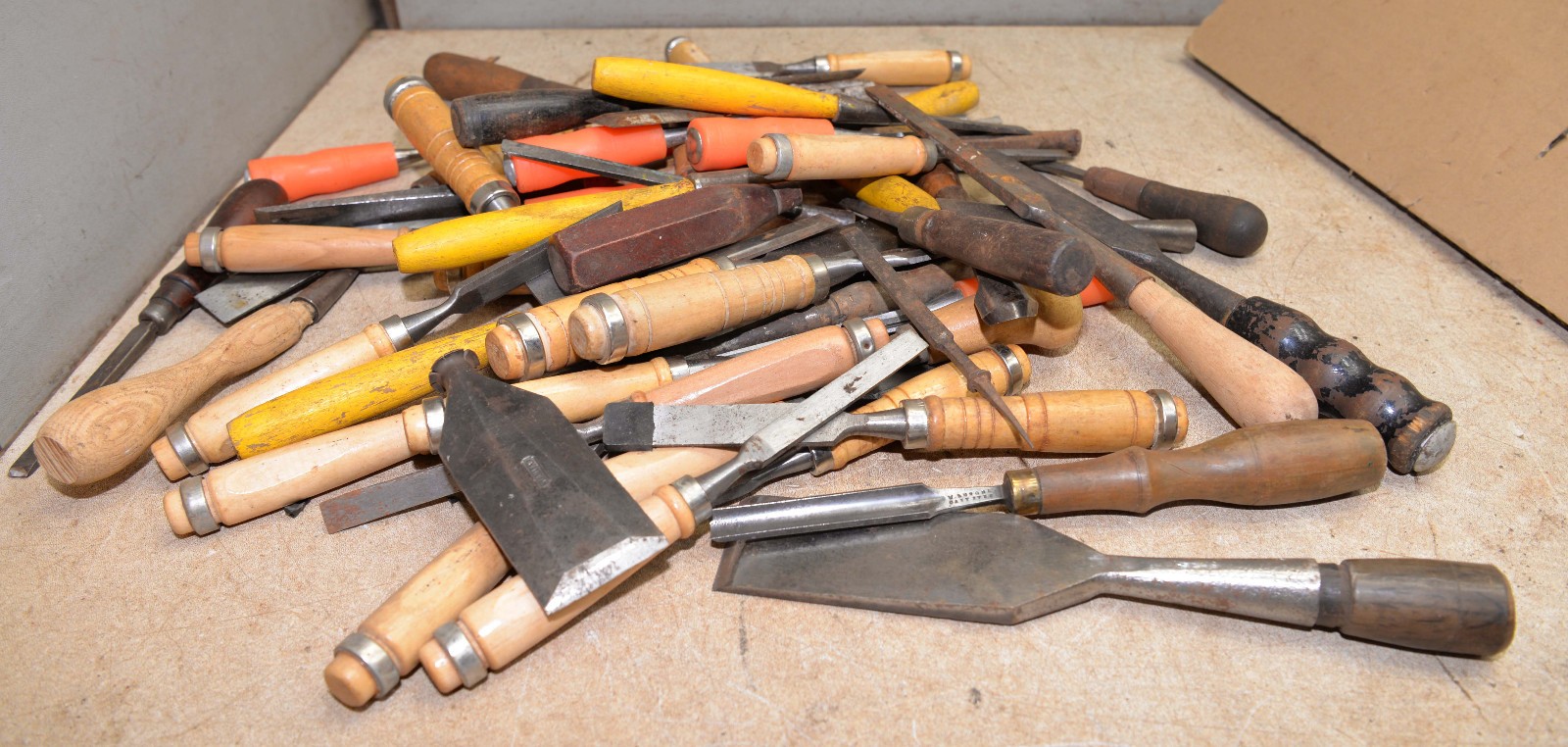 50 vintage wood carving chisels & gouge collectible woodworking huge tool lot$169.99View on eBay
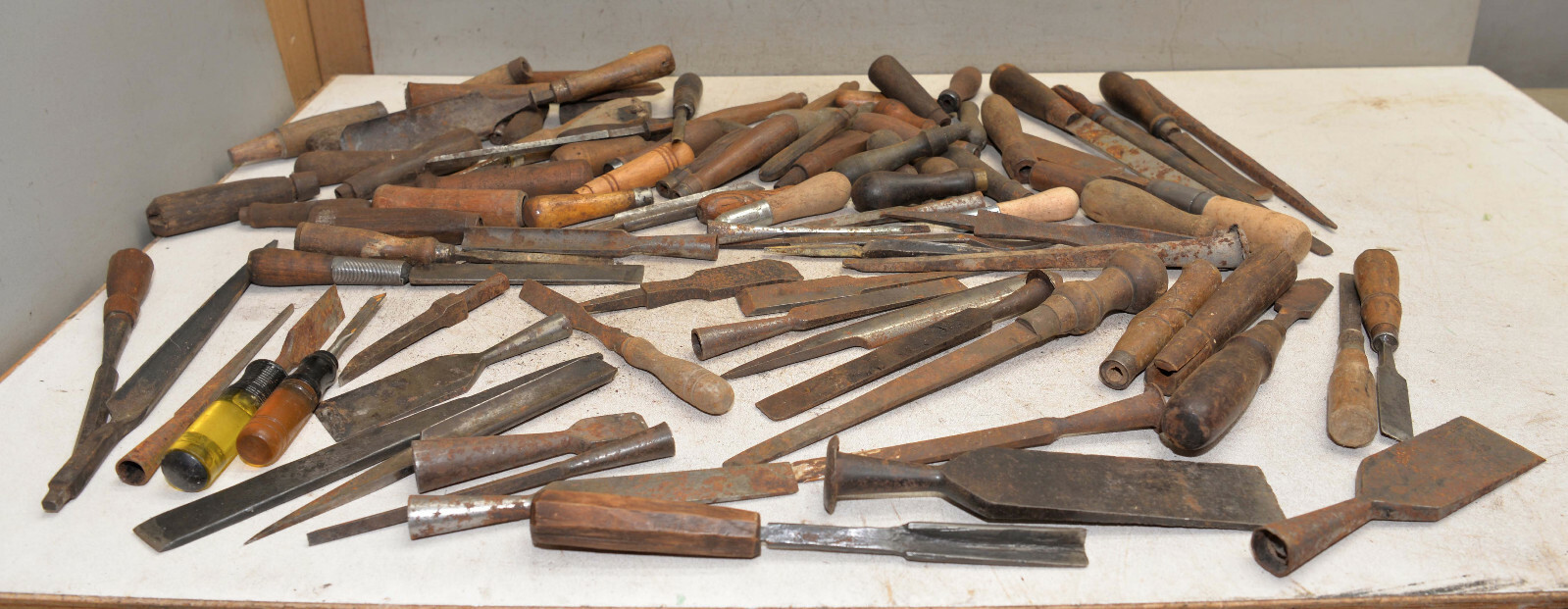 100 + pcs chisel heads & handles collectible vintage woodworking tools parts lot$289.99Last checked Nov 17, 2026View on eBay
Highlights
- Bench chisel steel is rated on the Rockwell C scale: RC 59–62 balances edge retention and toughness for mallet chopping, while RC 63+ edges are for paring only and chip in hard maple.
- Japanese chisels use a laminated blade with a hard high-carbon steel cutting layer forge-welded to a soft iron body, giving a keen edge that sharpens fast but demands a flat, shock-free mallet.
- Handle construction separates durable from disposable: full-tang blades with ferrule-and-hoop reinforcement survive mallet strikes, while short round tangs set in unfinished wood handles are for hand pressure only.
- Carving gouges are sized by sweep number (curvature) and width in millimeters; a 12-piece set spanning sweeps #3–#9 in 6–20 mm widths covers relief and detail work without duplicate profiles.
Best use cases
- Best fit: furniture joinery and dovetail chopping — pick a 4–7 piece bench chisel set (6, 12, 19, 25 mm plus 32 mm) with hornbeam or ash handles, steel hoops, and RC 59–62 blades. Skip short carving gouges here; they lack the length and mass for mallet work.
- Best fit: relief carving and sculpting — choose a 12-piece short-handled gouge set with sweeps #3–#9 in 6–20 mm widths and a canvas roll. Skip long bench chisels; their length and flat blades cannot cut concave profiles.
- Best fit: site carpentry and timber framing — buy heavy 25–50 mm bevelled-edge chisels with steel striking caps and full tangs. Skip Japanese laminated chisels on job sites; a stray nail or metal strike can crack the hard laminated edge.
Buying tips
- Match the set to the widest joint: a 25 mm (1 in) chisel covers most mortises and hinge recesses, so any bench set missing 25 mm forces a separate purchase — confirm the width list before buying.
- For mallet work, require a steel hoop on the handle end and a ferrule at the blade; unhooped handles split at the crown within moderate chopping use.
- Japanese chisels are sized by blade width in millimeters (typically 3–42 mm) and are designed for a wooden genno hammer, not a steel mallet — a steel hammer dents the handle crown and can crack the lamination.
- A canvas roll set of 12 gouges is a starter kit, not a lifetime tool: check that gouges are full-fluted carbon steel, not stamped sheet metal, and that handles are seated with ferrules.
Specs
| Steel Hardness | RC 59-62 bench / RC 63+ paring |
|---|---|
| Blade Construction | Laminated Japanese vs solid Western |
| Handle Type | Hooped full-tang vs short carving |
| Set Sizing | 6-32 mm bench / #3-#9 sweeps |
Related searches
What to check before buying
- Measure your sharpening setup first: bench chisels 6–32 mm fit common honing guides and 200/1000/6000 grit stones; a 50 mm framing chisel needs a wider stone or a side-clamping guide.
- Confirm your mallet type before buying Japanese chisels: wooden genno for laminated blades, dead-blow or wooden mallet for Western bench chisels, never a steel hammer on hooped or unhooped handles.
- Check bench height and vise clearance: long-pattern bench chisels (blade plus 130–150 mm handle) need roughly 200 mm of clearance above the vise jaw for paring.
- For carving sets, verify the roll holds all pieces with edge protection; loose gouges in a drawer chip each other's edges, so a stitched canvas roll with individual slots is a functional requirement.
FAQ
Data sources: eBay / Amazon listings and product attribute feeds Data updated Nov 20, 2026.
Some links on this page are affiliate links. If you buy after clicking one, we may earn a commission at no extra cost to you. This does not change which products appear here or their order. Affiliate disclosure.