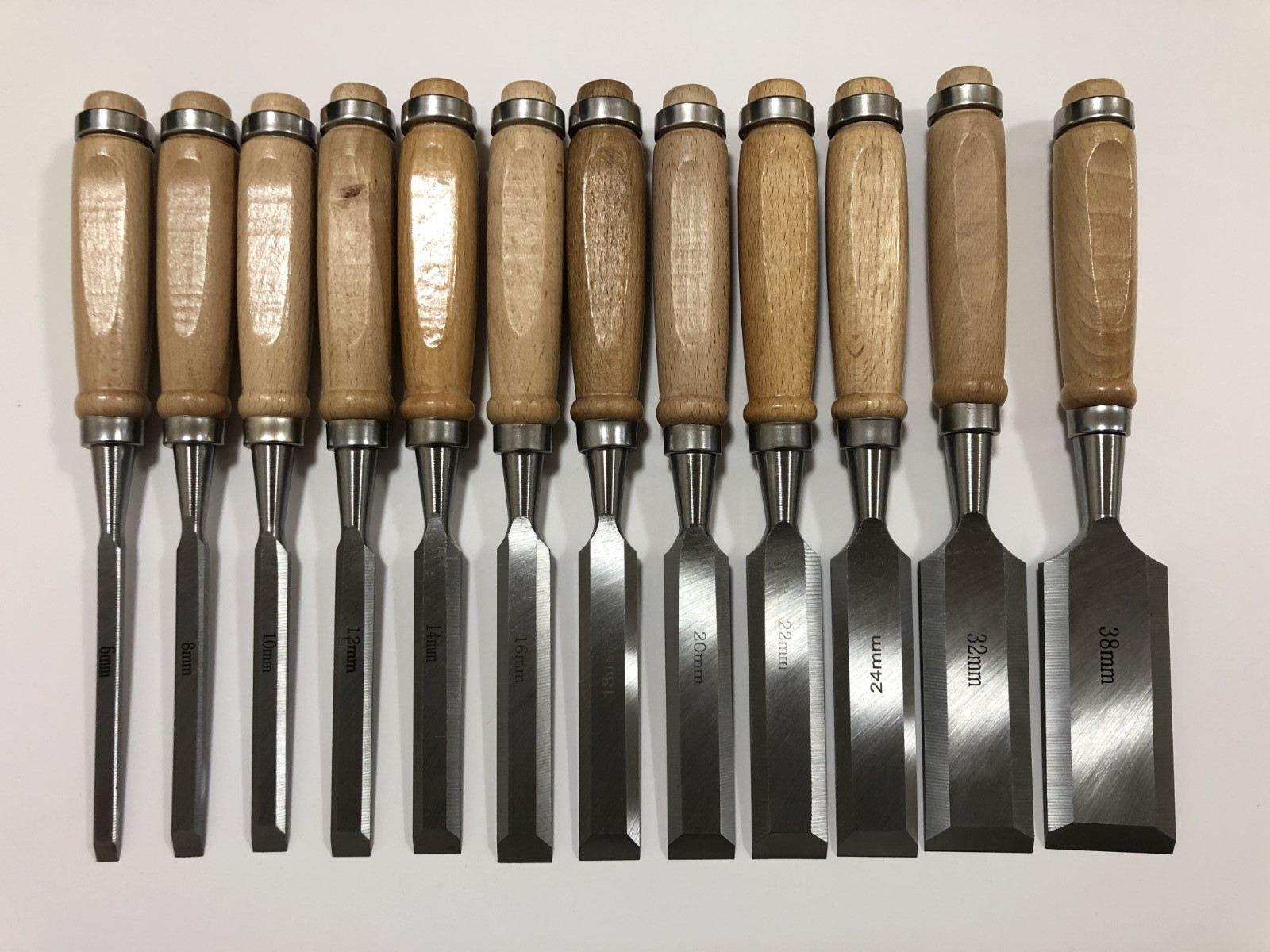

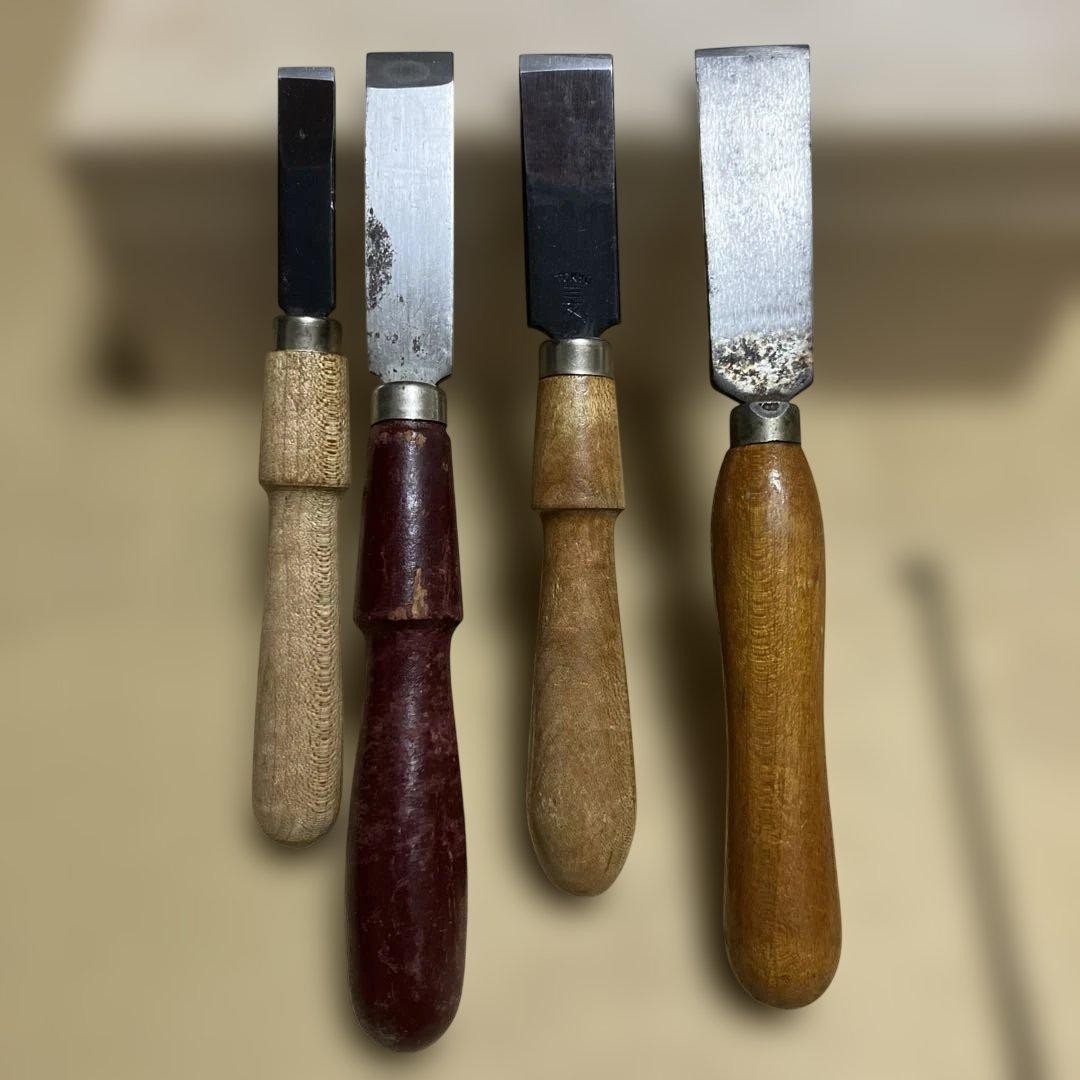
Photos from current listings. Actual item, color, and included accessories may vary.
Japanese Chisel Buying Guide
Japanese chisels (nomi) are laminated high-carbon steel blades forge-welded to a softer iron body, delivering a keener edge and faster honing than Western chrome-vanadium chisels—but they demand a flat, shock-free technique and careful water-stone maintenance. The core trade-off is blade steel and hollow-ground flatness versus handle durability: white-paper steel takes the sharpest edge but chips under prying, while blue-paper and oirenomi patterns trade a little sharpness for toughness. Buy a set whose blade widths span your joinery (typically 3–24 mm) and whose handles are hooped for mallet work; skip bargain 'set of 12' lots with unknown steel and no flat-back guarantee.


At a glance
- Category
- Woodworking Hand Tools & Chisels
- Data updated
- Nov 20, 2026
Current offers
Highlights
- White-paper (shirogami) steel ranks highest for edge keenness but is brittle; blue-paper (aogami) adds chromium/tungsten for toughness in mortise and heavy paring.
- Oirenomi (bench chisels) have a flat, square blade for paring and chopping; mukomachinomi (mortise) are thicker with a tapered side for deep, accurate mortises.
- Traditional hooped handles (shinogi or gumi) accept a genno hammer; unhooped kaku handles suit hand-pressure paring only and split under mallet blows.
- Laminated construction: a 1–2 mm high-carbon steel layer forge-welded to soft iron—the soft body absorbs shock and lets the back hollow (ura) be flattened with minimal stone wear.
Best use cases
- Best fit: furniture joinery and dovetails—choose an oirenomi set spanning 3–12 mm in blue-paper steel with hooped handles for mallet chopping.
- Best fit: timber-frame and deep mortising—pick a mukomachinomi in 6–12 mm with a thick blade and reinforced hoop; skip bench chisels, which flex and snap in deep mortises.
- Wrong fit: site carpentry and nail-embedded reclaimed wood—Japanese laminated edges chip on hidden fasteners; use a Western chrome-vanadium beater chisel instead.
- Wrong fit: buyers who will not maintain water stones—white-paper steel dulls fast and needs 1000/6000-grit honing; choose blue-paper or a Western alloy if you only strop.
Buying tips
- Match blade width to joinery: 3–6 mm for dovetail pins, 6–12 mm for general paring, 12–24 mm for mortises and tenon cheeks—build a set around your most-used width rather than buying a fixed 12-piece lot.
- Choose steel by task: white-paper for fine paring and softwoods, blue-paper for hardwoods and mallet work; avoid unmarked 'high-carbon' lots with no paper-steel designation.
- Check the ura (back hollow): a shallow, even hollow means less flattening work; a deep or off-center hollow signals poor grinding and hours on a coarse stone.
- Handle grade matters: hooped handles with a steel ring for mallet use; solid white-oak or red-oak handles without a hoop are paring-only and will split under a genno.
Specs
| Steel Type | White-paper / Blue-paper laminated |
|---|---|
| Chisel Pattern | Oirenomi bench / Mukomachinomi mortise |
| Handle Hoop | Hooped (mallet) / Unhooped (paring) |
| Blade Width Range | 3–24 mm joinery sizing |
Related searches
What to check before buying
- Measure your mallet or genno weight: Japanese chisels are designed for a 250–500 g genno; a heavy Western claw hammer will mushroom the hoop and split the handle.
- Confirm you own water stones (1000- and 6000-grit) and a flattening plate—laminated blades need flat stones; oil stones cut too slowly on hard steel.
- Check blade width against your joinery layout: a 12 mm chisel cannot clean a 6 mm dovetail pin, so verify the set's smallest and largest widths before buying.
- For vintage or used sets, inspect for a chipped edge, a hollow worn through the ura, and a loose hoop—these are not restorable without regrinding the whole blade.
FAQ
Data sources: eBay / Amazon listings and product attribute feeds Data updated Nov 20, 2026.
Some links on this page are affiliate links. If you buy after clicking one, we may earn a commission at no extra cost to you. This does not change which products appear here or their order. Affiliate disclosure.