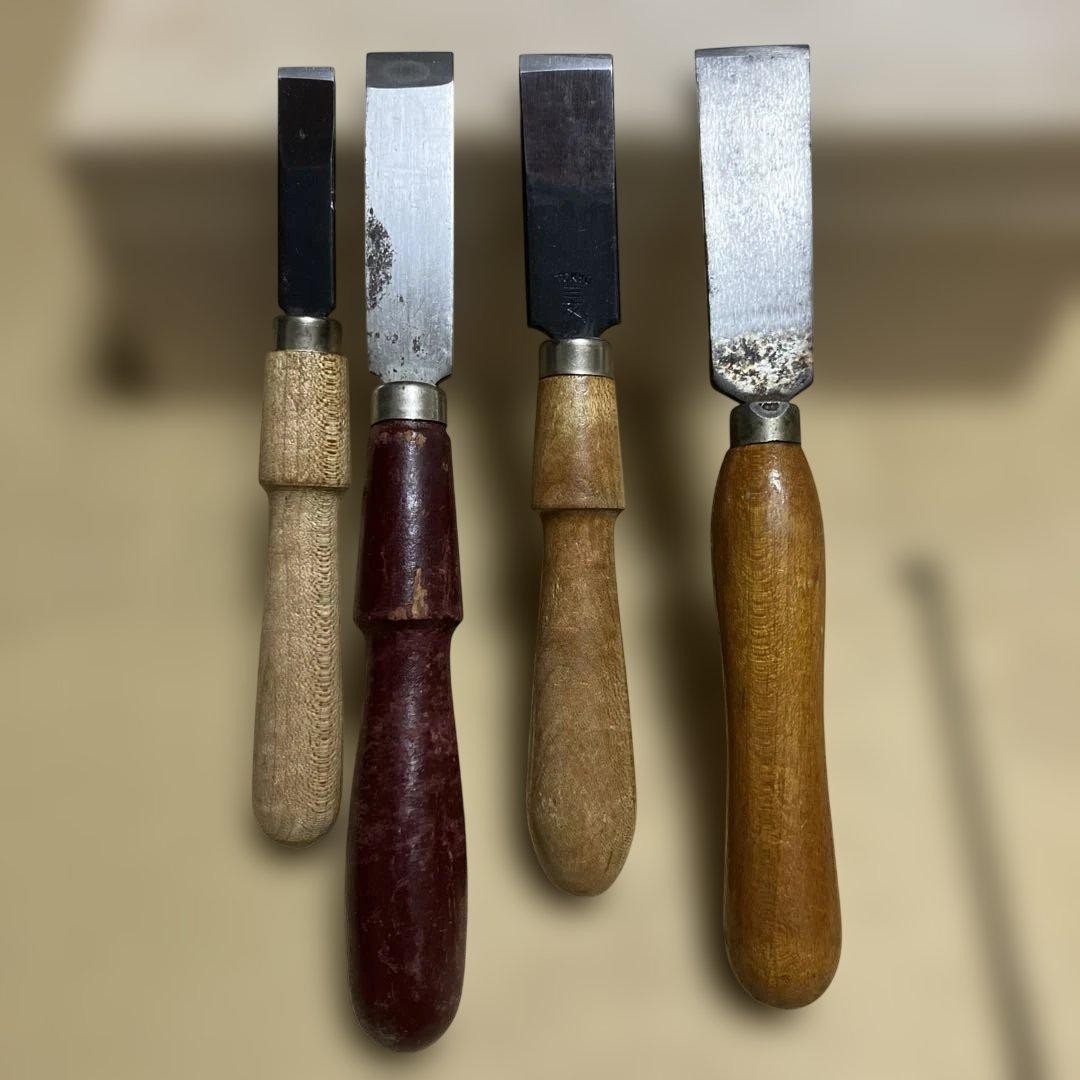

Photos from current listings. Actual item, color, and included accessories may vary.
Japanese Woodworking Chisel Set Buying Guide
Japanese chisels (nomi) are laminated high-carbon steel blades forge-welded to a softer iron body, ground with a hollow ura to speed flattening and reduce friction. The core trade-off is steel hardness versus brittleness: white paper steel takes a keener edge but chips under abuse, while blue paper steel and high-speed steel tolerate rougher use. Buy a set only if the blade backs are flat and the ura is shallow and even; hollow-ground or gappy backs mean a lifetime of flattening work.


At a glance
- Category
- Woodworking Hand Tools & Chisels
- Data updated
- Nov 20, 2026
Current offers
Highlights
- Laminated construction: hard steel cutting layer (60-67 HRC) forge-welded to low-carbon iron body absorbs shock and lets the blade flex without snapping.
- Steel grade drives durability: White Paper #1 is hardest and most brittle, Blue Paper #1/#2 adds alloying for chip resistance, High-Speed Steel holds edge in abrasive hardwoods.
- Handle type changes striking method: white oak handles with hoops are for genno hammer use; red/black lacquered or without-hoop handles are for hand pressure only.
- Ura (back hollow) must be shallow and centered; deep or off-center hollows leave narrow side lands that rock and prevent full back contact.
Best use cases
- Best fit: furniture joinery in soft and medium hardwoods (pine, cherry, walnut) with a 3-5 piece set of Blue Paper #2 bench chisels struck with a 375-450 g genno.
- Wrong fit: site carpentry or demolition where nails and grit are common; choose high-speed steel or Western chisels with full tangs instead of brittle white paper blades.
- Best fit: timber framing and deep mortising with a 7-12 piece oire nomi set that includes 24 mm, 30 mm, and 36 mm sizes for large joinery.
- Wrong fit: a beginner buying a 12-piece set before learning sharpening; start with 3 sizes (9, 15, 24 mm) and a flattening plate.
Buying tips
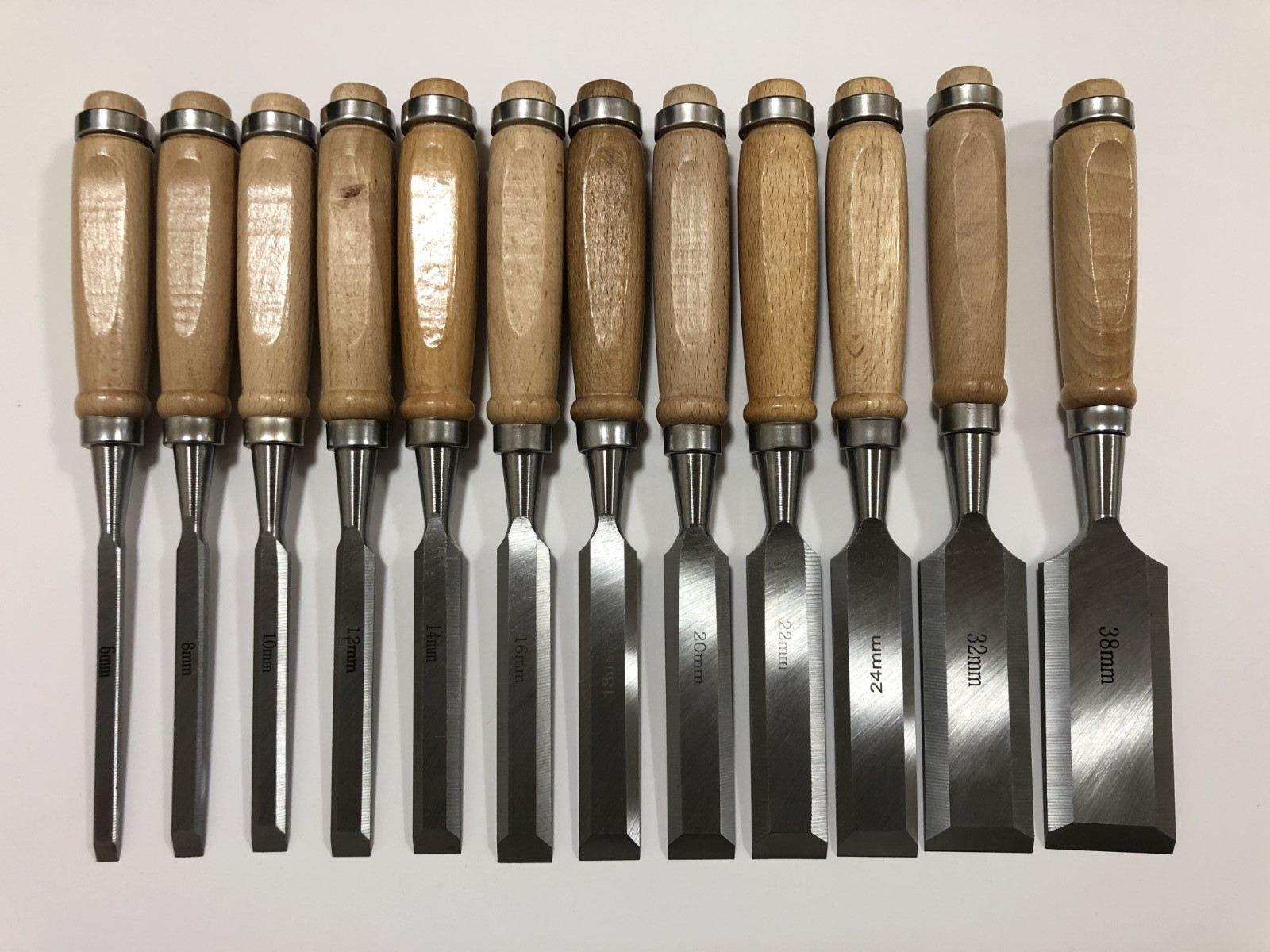
- Match set size to joinery: 3-piece (9/15/24 mm) covers most furniture; 5-7 piece adds 6, 12, 18, 30 mm; 10-12 piece adds 36-42 mm for timber work.
- Check steel grade before purchase: White Paper #1 (60-61 HRC) for paring and softwoods, Blue Paper #1/#2 (62-64 HRC) for general bench work, HSS for abrasive exotics.
- Verify lamination line: the hard steel layer should be visible as a straight transition at the bevel; a wavy or high transition means uneven hardening and weak edge support.
- Handle diameter should suit your grip: 30-34 mm for hammer use with a hoop, 28-30 mm for hand pressure; too-thick handles reduce control in fine paring.
Specs
| Steel Grade | White #1 / Blue #1-2 / HSS |
|---|---|
| Blade Construction | Laminated hard steel on iron body |
| Handle Type | Hooped oak / lacquered no-hoop |
| Set Size | 3 / 5 / 7 / 10 / 12 piece |
Related searches
What to check before buying
- Measure your bench height and clearance for a genno hammer swing; you need at least 60 cm above the work for a 375 g hammer.
- Confirm you have a flattening plate (diamond or glass with 120-400 grit) and a honing guide or stones; Japanese chisels require back flattening before first use.
- Check handle hoop condition on used sets: rust under the hoop or split oak means the handle will fail under hammer blows.
- Measure blade widths against your joinery plans: Japanese chisels are metric; a 15 mm is not interchangeable with a 5/8-inch Western chisel (15.9 mm).
FAQ
Data sources: eBay / Amazon listings and product attribute feeds Data updated Nov 20, 2026.
Some links on this page are affiliate links. If you buy after clicking one, we may earn a commission at no extra cost to you. This does not change which products appear here or their order. Affiliate disclosure.