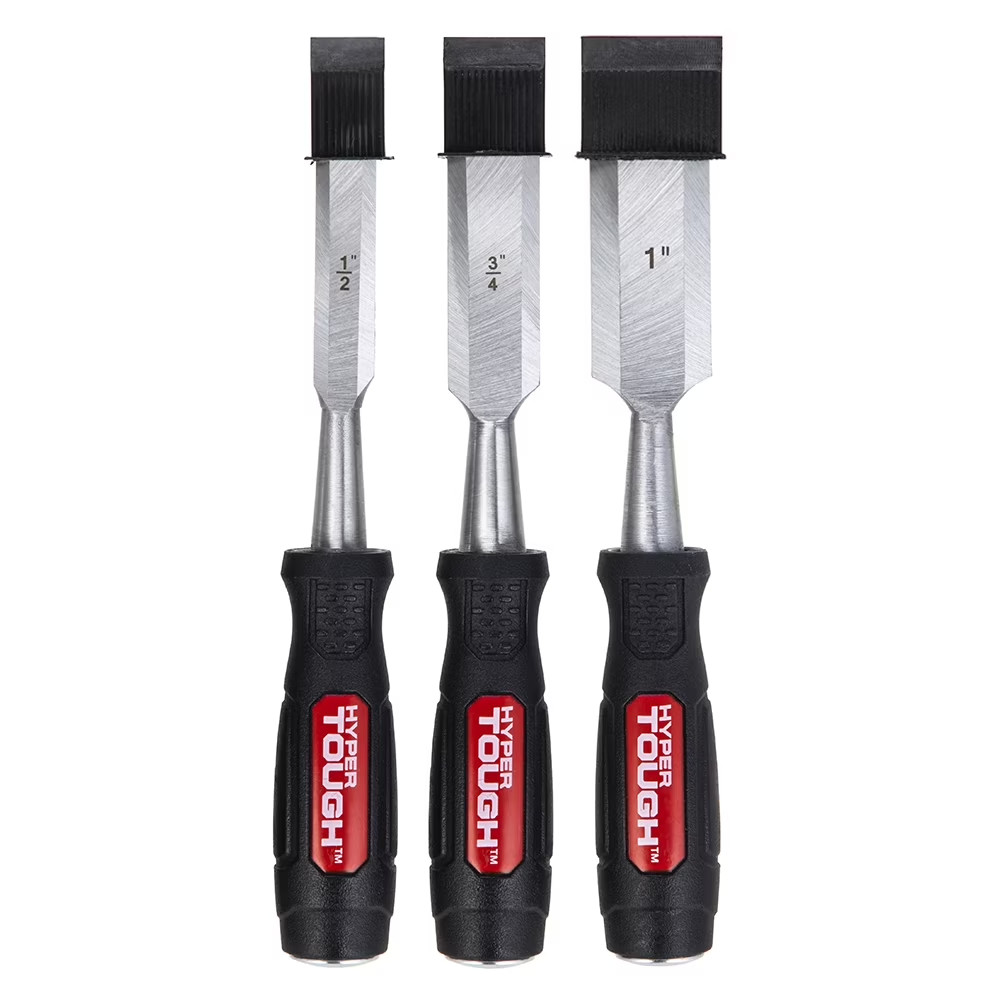

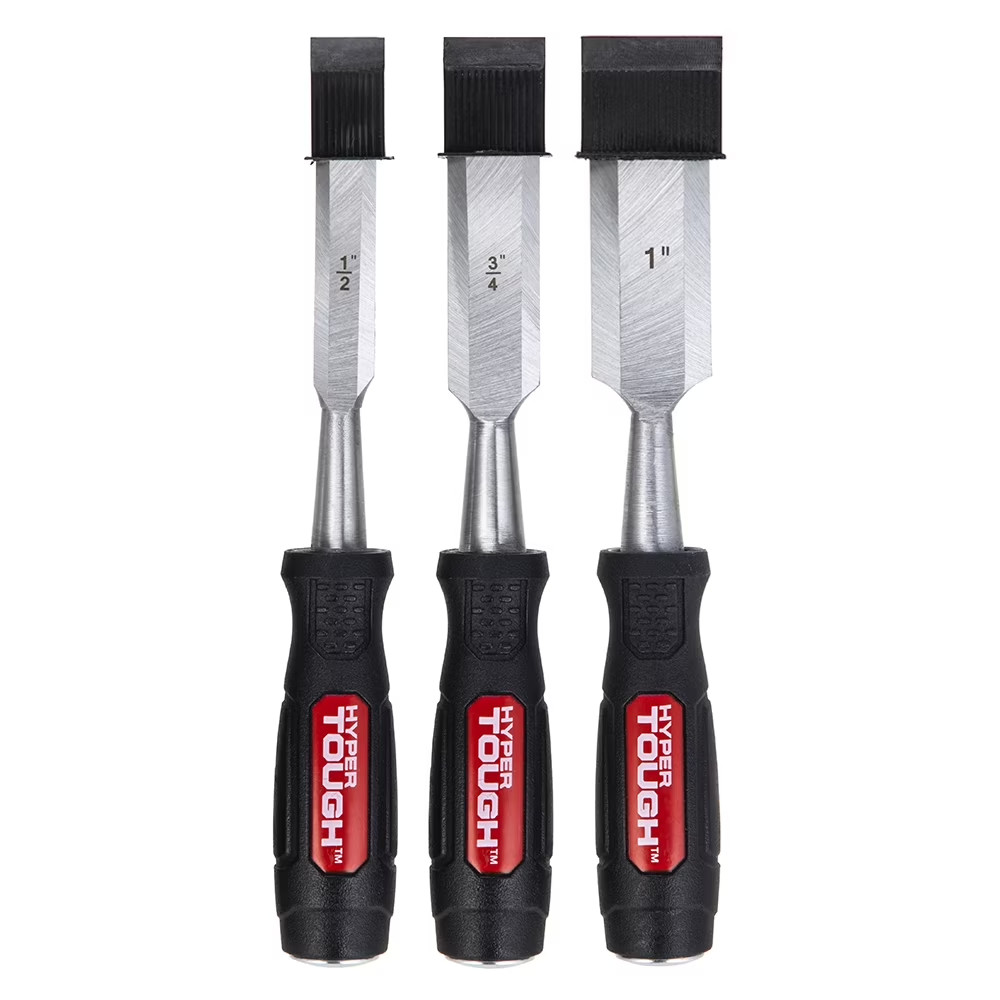
Photos from current listings. Actual item, color, and included accessories may vary.
Metal Chisel Set Buying Guide
A metal chisel set means woodworking chisels with steel blades and high-impact handles capped by a metal striking ring or plate, built to survive mallet blows. The core trade-off is steel hardness vs. toughness and handle shock transfer: harder edges last longer but chip, while softer steel and shock-absorbing handles tolerate abuse. Buy a set with through-tang construction and hardened steel (58–62 HRC) for mallet work, and skip socket-handle or plastic-hilt carving chisels if you plan to strike.


At a glance
- Category
- Woodworking Hand Tools & Chisels
- Data updated
- Nov 20, 2026
Current offers
Highlights
- Through-tang blades run full length into the handle and are safest under mallet blows; short-tang or socket chisels are for hand pressure only.
- Striking caps are hardened steel rings or plates that distribute mallet force; all-plastic or wooden tops mushroom and split under repeated strikes.
- Blade steel hardness of 58–62 HRC (high-carbon or Cr-V) balances edge retention and chip resistance; above 63 HRC edges crack under lateral stress.
- Handle materials differ: ash/hickory absorb shock with metal caps; acetate or plastic handles crack at the cap when struck off-center.
Best use cases
- Furniture joinery and mortise chopping: pick a bevel-edge or firmer set with through-tang steel and metal striking caps, 6–12 mm to 25 mm widths, not carving gouges.
- Construction and site carpentry: choose heavy firmer chisels with steel butt caps and thick blades for prying and hard strikes; skip delicate bevel-edge paring sets.
- Fine paring and dovetail cleanup: use a bevel-edge set with thin 0.8–1.2 mm lands; skip thick firmer chisels that cannot enter dovetail corners.
Buying tips
- Match bevel width to joint scale: dovetails need 6–12 mm chisels with thin lands; mortises need widths matching your mortise chisel or router bit.
- For mallet use, require a through-tang blade plus a hardened steel striking ring; short-tang chisels with plastic ferrules are hand-pressure only.
- Buy a set as handle style first: ash/hickory with steel caps for striking; acetate or polypropylene only if you will not use a mallet.
- Sharpening setup matters more than set size: budget for a honing guide and 300–1000–6000 grit stones; any 58–62 HRC blade will take a keen edge.
Specs
| Blade Steel | High-carbon / Cr-V, 58–62 HRC |
|---|---|
| Tang Type | Through-tang vs short-tang |
| Striking Cap | Hardened steel ring/plate vs bare top |
| Handle Material | Ash/hickory vs acetate/plastic |
Related searches
What to check before buying
- Handle diameter must fit your grip and mallet face: 25–32 mm handles suit most hands; oversized handles reduce control in tight joinery.
- Confirm striking cap type before use: steel ring/plate caps tolerate mallet blows; wooden or plastic tops require a soft-face mallet or hand pressure only.
- Blade thickness matters for clearance: 2.5–3.5 mm thick blades need wider kerfs; 1.5–2 mm bevel-edge blades suit fine dovetail sockets.
- Check set width coverage for your work: 6, 12, 19, 25, 32 mm is a general-purpose range; add 3–4 mm only for miniature joinery.
FAQ
Data sources: eBay / Amazon listings and product attribute feeds Data updated Nov 20, 2026.
Some links on this page are affiliate links. If you buy after clicking one, we may earn a commission at no extra cost to you. This does not change which products appear here or their order. Affiliate disclosure.