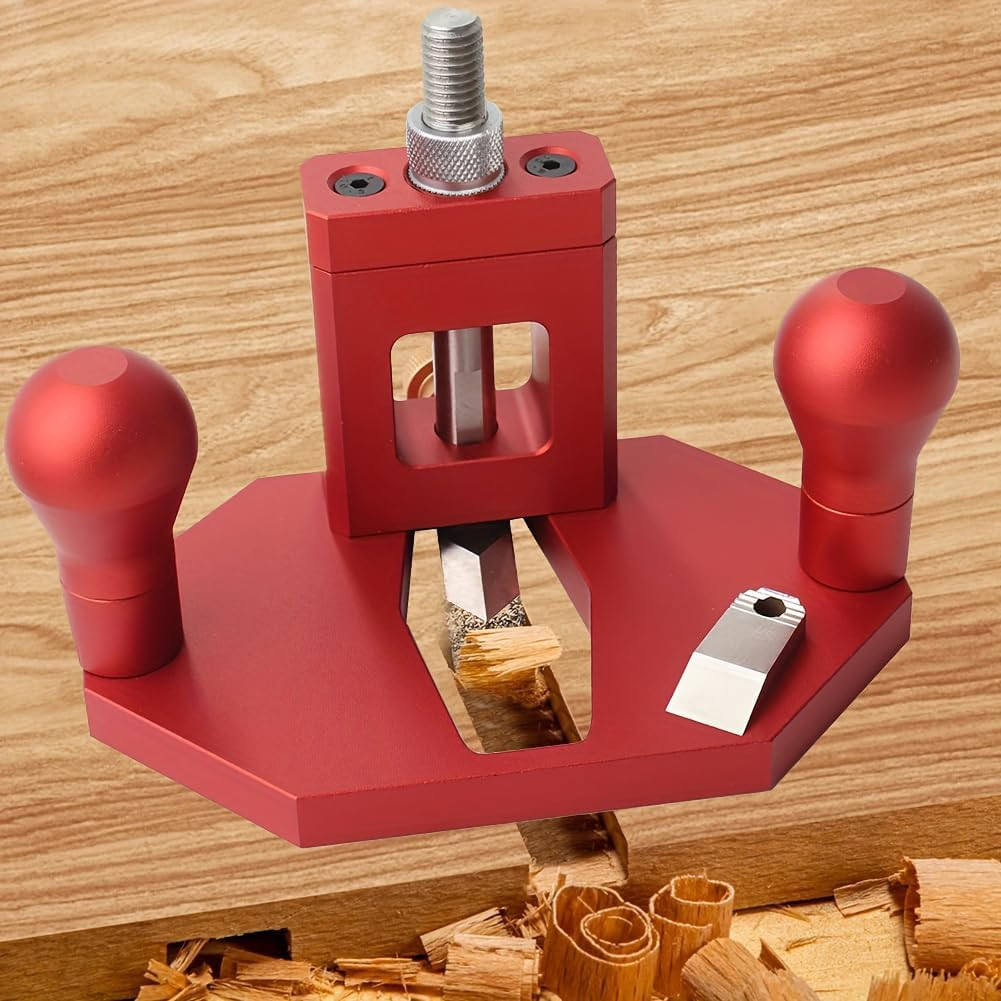

Photos from current listings. Actual item, color, and included accessories may vary.
Wood Plane Buying Guide
A wood plane is a hand tool that shaves thin, controlled shavings from timber using a sharpened steel iron bedded in a rigid body. The core trade-off is body rigidity versus adjustability: cast iron and bronze bodies hold flatness and damp vibration, while wooden or thin stamped bodies flex and lose setting under load. Choose a plane whose sole and frog are machined or cast—not folded sheet metal—and whose iron takes and holds a 25–30° bevel.


At a glance
- Category
- Woodworking Hand Tools & Chisels
- Data updated
- Nov 20, 2026
Current offers
Highlights
- Body material decides flatness retention: cast iron and bronze resist deflection and stay flat; stamped steel and soft aluminum flex, causing chatter on hardwoods.
- Bench plane sizes follow the Stanley numbering system—No. 4 (smoother), No. 5 (jack), No. 7 (jointer)—with sole length setting the maximum straightening span.
- Frog type separates tiers: a machined, adjustable frog seats the iron flat and controls mouth opening; a fixed or pressed frog limits blade support and fine mouth adjustment.
- Iron steel grade drives edge life: O1 and A2 tool steel hold a keen edge longer than generic high-carbon steel, while PM-V11 and similar powder steels resist abrasion in hard exotics.
Best use cases
- Choose a No. 4 or No. 4½ smoother (9–10 in sole) for final surface prep and tear-out control on furniture panels; skip long jointers if you only flatten short boards.
- Pick a No. 5 jack (14 in sole) as the single-plane shop workhorse for stock removal and edge truing; a No. 3 or block plane alone is too short for jointing.
- Use a router plane for hinge mortises, dados, and cleaning up tenon cheeks; a standard bench plane cannot regulate depth in a localized recess.
- Skip low-angle block planes for heavy end-grain work on dense exotics unless the iron is A2 or PM steel; standard 25° bevels dull fast on end grain.
Buying tips
- Match sole length to task: 9–10 in for smoothing, 14–15 in for jack work, 22–24 in for jointing edges longer than 3 ft.
- Demand a machined or ground sole flat within a few thousandths of an inch; folded or painted soles will rock and produce inconsistent shavings.
- Prefer adjustable frogs with a tight mouth for fine work; a fixed mouth is acceptable only for rough stock removal where tear-out is tolerable.
- Check iron thickness: 1/8 in (3 mm) or thicker irons resist chatter better than thin 1/16 in blades, especially in bevel-down bench planes.
Specs
| Body Material | Cast iron / bronze / wood / aluminum |
|---|---|
| Plane Type | Bench / block / router / specialty |
| Sole Length | 6–24 in by bench plane number |
| Iron Steel | Carbon / O1 / A2 / PM tool steel |
Related searches
What to check before buying
- Measure your workpiece: a smoother suits boards under 3 ft, while edge-jointing boards over 4 ft demands a No. 7-length sole.
- Confirm bench height and vise clearance: long jointers need 24 in of forward stroke room and a stable surface to register the sole.
- Verify iron bevel angle suits your wood: 25° for softwoods, 30–35° micro-bevel for hardwoods and figured grain to reduce tear-out.
- Check that the plane includes a cap iron (chip breaker) and adjustable frog; missing cap irons cause shavings to jam and tear the surface.
FAQ
Data sources: eBay / Amazon listings and product attribute feeds Data updated Nov 20, 2026.
Some links on this page are affiliate links. If you buy after clicking one, we may earn a commission at no extra cost to you. This does not change which products appear here or their order. Affiliate disclosure.