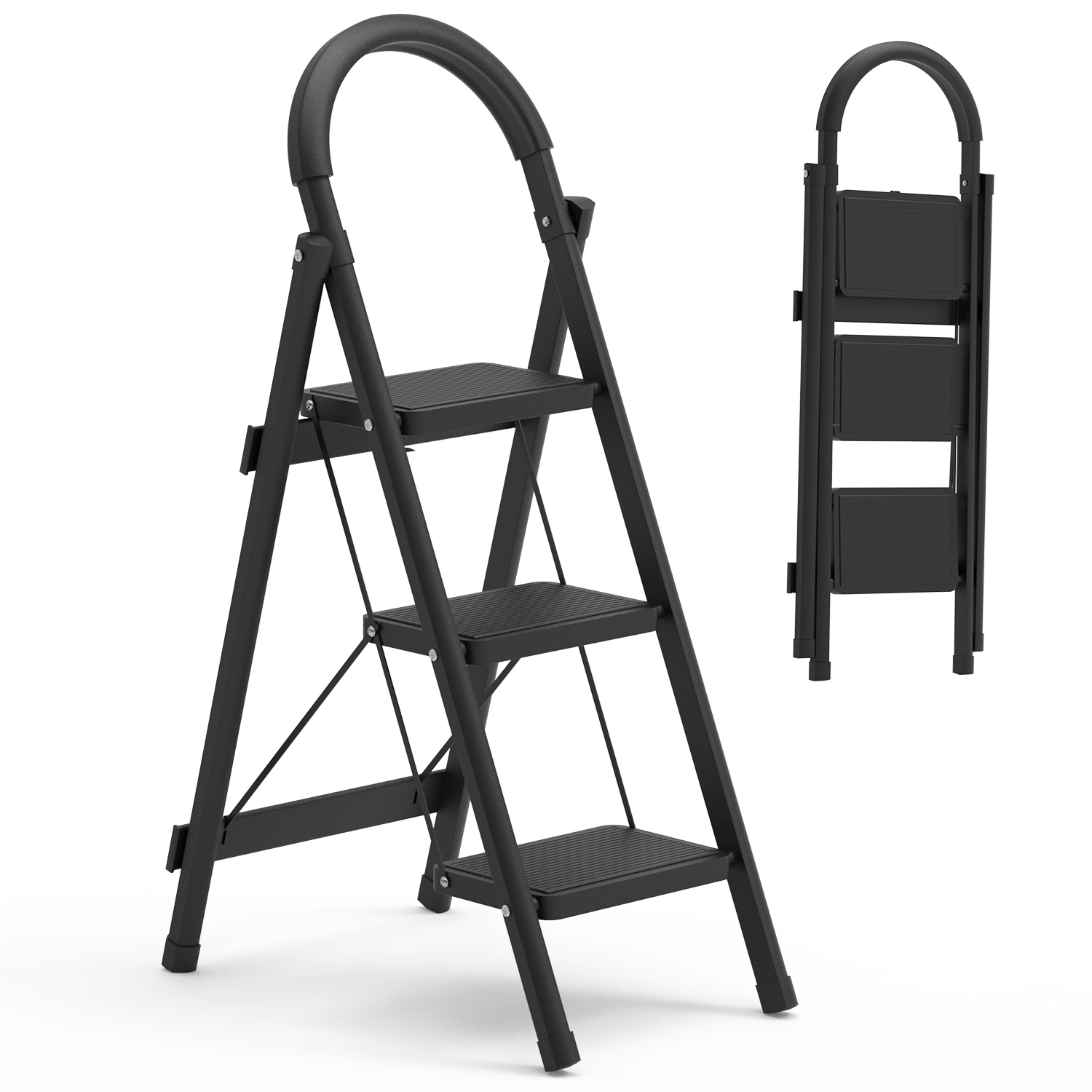

Photos from current listings. Actual item, color, and included accessories may vary.
Foldable Ladder Buying Guide
A foldable ladder is a compact, temporary access platform that trades fixed structural mass for portability via hinges, locking joints, and lightweight materials. The core trade-off is load capacity and stability versus folded size and weight: stamped-steel or aluminum step stools with rated capacities of 300–330 lb are durable household tools, while thin-gauge plastic or unrated hinges are convenience compromises. The decision rule: buy only ladders with a published ANSI Type rating (Type III 200 lb, Type II 225 lb, Type I 250 lb, Type IA 300 lb) and a locking mechanism that engages on every hinge.


At a glance
- Category
- Home Repair
- Data updated
- Nov 20, 2026
Current offers
Highlights
- ANSI Type ratings (III 200 lb, II 225 lb, I 250 lb, IA 300 lb, IAA 375 lb) are the only reliable load benchmark; '330 lb' marketing claims without a Type rating are unverified.
- Step stools rated 300–330 lb typically use stamped steel or die-cast aluminum steps with riveted or welded hinge brackets, not plastic hinges.
- Locking design separates safe from unsafe: spring-loaded auto-lock hinges that engage at every step position prevent accidental folding under load.
- Wide anti-slip pedals (minimum 12 in wide, textured or rubber-treaded) and non-marring feet are the key stability features for indoor household use.
Best use cases
- Best fit: 2–3 step foldable stool with 300+ lb rating and auto-lock hinges for kitchen, closet, and office reach tasks up to ~24 in platform height.
- Best fit: 4-step folding ladder with Type IA (300 lb) rating and handgrip for garage, pantry, and light outdoor maintenance—skip 2-step models if you regularly reach above 30 in.
- Wrong fit: thin plastic or unrated '330 lb' dropship stools for standing on hard tile or using near stairs—choose ANSI-rated steel or aluminum with rubber feet instead.
- Wrong fit: folding ladders for permanent attic or roof access—those require fixed ladders or extension ladders with full ANSI duty ratings and wall anchoring.
Buying tips
- Match ANSI Type to user + tools: Type II (225 lb) handles most adults; Type IA (300 lb) adds margin for carrying paint or tools; ignore unrated '330 lb' claims.
- Measure folded depth and width before buying: 3-step stools typically fold to 2–4 in deep, but hinge brackets can add 1–2 in—confirm it fits your closet or under-bed gap.
- Check platform height vs. your reach: standard 3-step stool gives ~24 in top platform, ideal for 8–9 ft ceilings; a 2-step (~17 in) suits lower cabinets only.
- Prefer aluminum for portability (lighter, rust-proof) and steel for max stability (heavier, more rigid); both are durable if hinges are metal and auto-locking.
Specs
| ANSI Duty Rating | Type III 200 lb to Type IAA 375 lb |
|---|---|
| Material | Aluminum / stamped steel / plastic |
| Step Count | 2-step to 4-step folding |
| Hinge Lock | Auto-lock metal hinge vs. friction |
Related searches
What to check before buying
- Measure your storage gap: folded depth plus 1 in clearance; typical 3-step stools need 2–5 in of depth.
- Check floor type: rubber or non-marring feet on hard tile/wood; add anti-slip pads if feet are hard plastic.
- Confirm user weight + carried load is under the ANSI Type rating (Type II 225 lb, Type IA 300 lb).
- Verify hinge locks: every step position should click and lock; test before first use and never stand on an unlocked hinge.
FAQ
Data sources: eBay / Amazon listings and product attribute feeds Data updated Nov 20, 2026.
Some links on this page are affiliate links. If you buy after clicking one, we may earn a commission at no extra cost to you. This does not change which products appear here or their order. Affiliate disclosure.