Photos from current listings. Actual item, color, and included accessories may vary.
Picture Hanging Nail Buying Guide
Picture hanging nails are hardened steel fasteners designed to drive into wood studs, drywall, or plaster with minimal surface damage while holding frames securely via a small head or hook. The core trade-off is holding capacity versus wall damage: thin hardened nails and hardened-steel hooks resist bending and support more weight, while soft brads and wide heads tear drywall and fail under load. Choose a hardened, double-headed or hook-style nail rated by wire gauge and head geometry when hanging anything heavier than a light frame; skip soft, thin-shaft brads for loads above a few pounds.


At a glance
- Category
- Home Repair
- Data updated
- Nov 20, 2026
Current offers
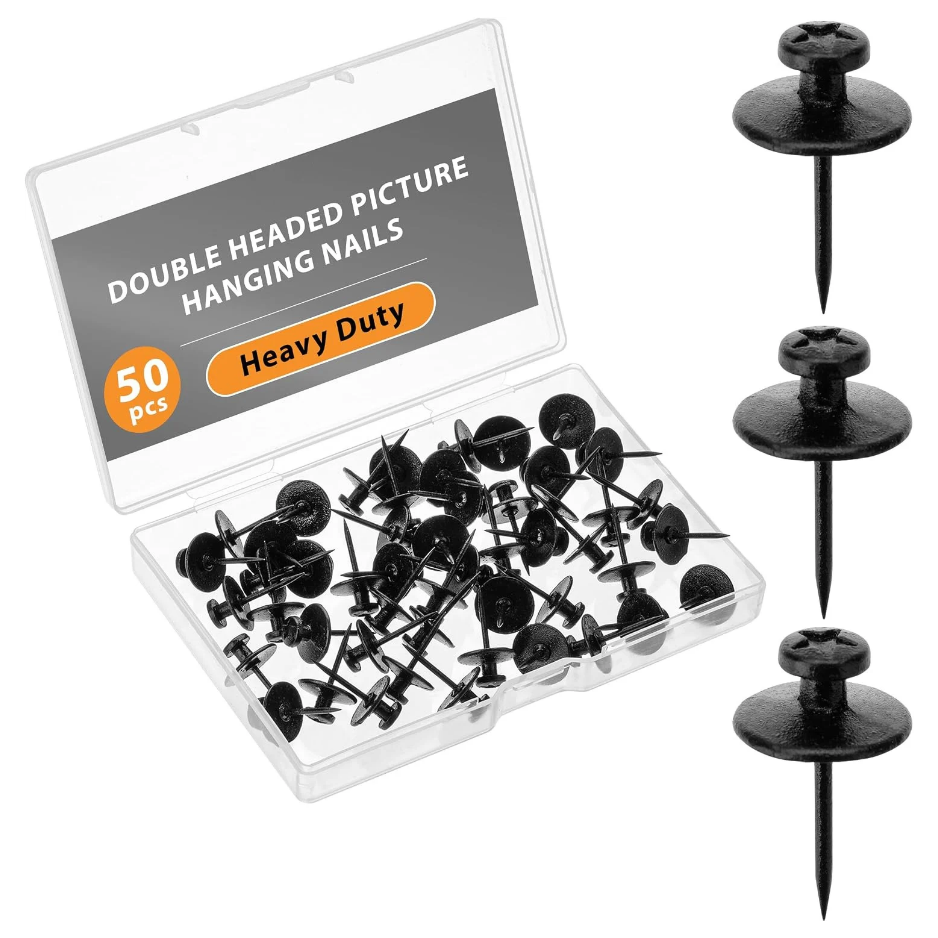 Double Headed Picture Hanging Nails 50 PCS, Black Wall For Frames, Photos, Artwork And Home Decor$52.99
 View on Mallflare
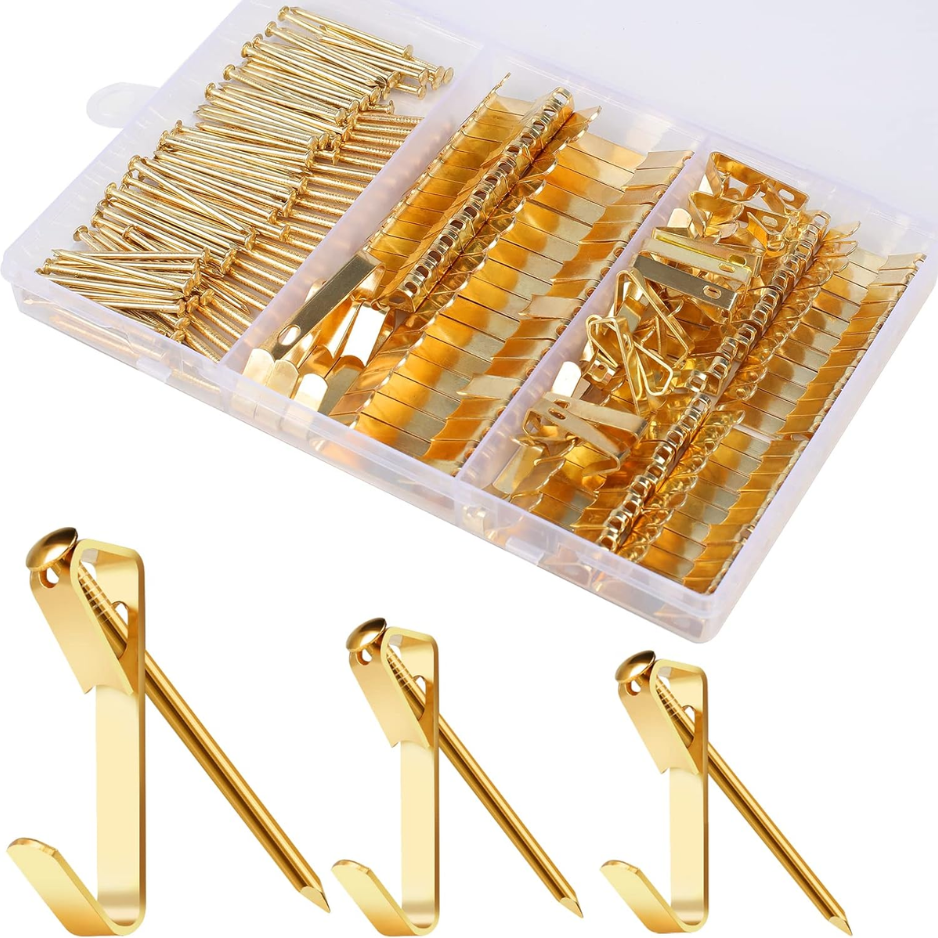 184 Pieces Picture Hanging Kit 20lb 30lb 50lb Hangers Metal Hooks With Nails For Drywall Wooden Wall Gold$36.99View on Mallflare
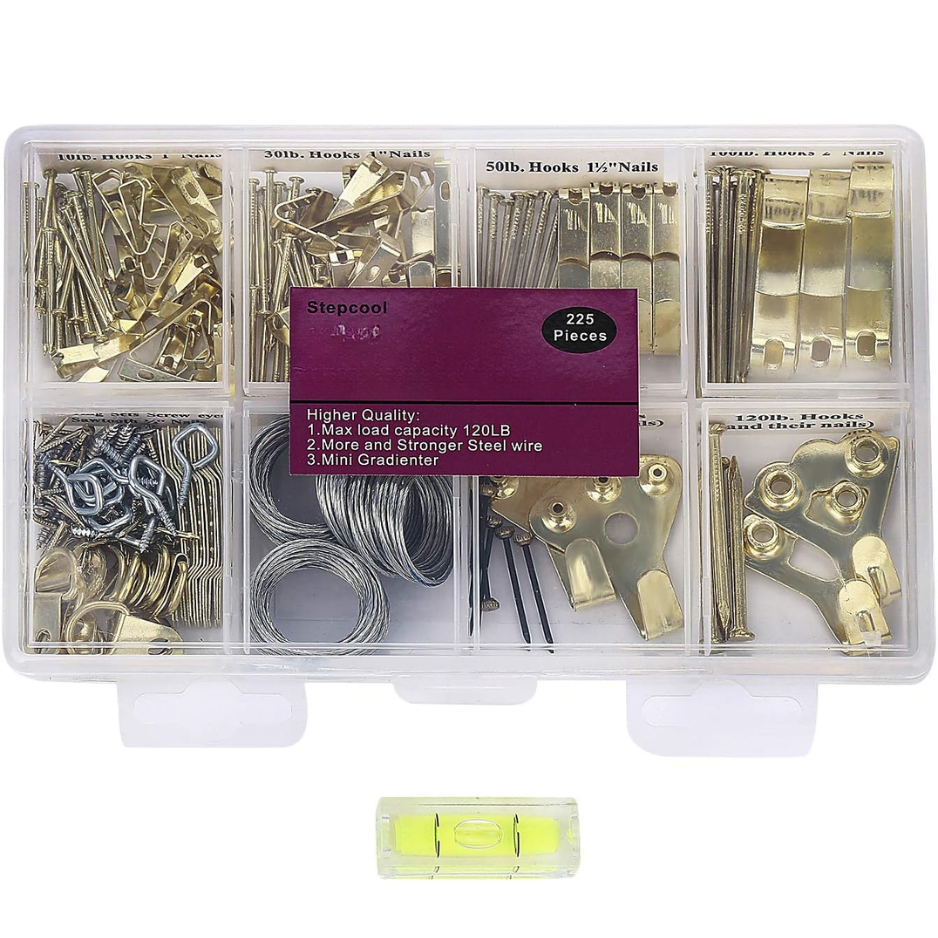 225pcs Picture Hanging Kit Heavy Duty Frame Hooks Hardware With Nails Wire Screw Eyes D Ring Sawtooth$44.99View on Mallflare
Highlights
- Hardened steel nails (rockwell-hardened, typically 50-55 HRC) resist bending under load, while soft mild-steel brads bend and pull out under the same weight.
- Double-headed picture nails have a second exposed head that lets you hammer flush and later pull the nail without damaging the wall or frame.
- Hook-style hangers distribute load through a hardened steel hook and nail pair; the hook's rated capacity (often 10-50 lb per hook) matters more than nail length.
- Shaft diameter and head width determine drywall bearing: thinner shafts (1.5-2 mm) cause less spalling, while wide heads or hooks spread load across a larger plaster/drywall area.
Best use cases
- Best fit: light to medium frames (under 10 lb) on drywall or plaster — use hardened double-headed nails or small hook hangers; skip soft brads that bend.
- Best fit: heavy frames and mirrors (10-50 lb) into wood studs — use hardened hook hangers or screw-eyes with nails rated for the load; skip nail-only hangers without a hook or stud anchor.
- Best fit: rental or plaster walls where damage must be minimal — use double-headed nails for easy extraction and small shaft diameter; skip wide-head or adhesive-only hangers on textured plaster.
- Wrong fit: brick, concrete, or tile — picture nails will not penetrate; use masonry anchors or drill-and-plug systems instead.
Buying tips
- Match nail length to wall thickness: 1 inch (25 mm) nails suit 1/2-inch drywall over studs; 1.5-2 inch nails reach studs through 5/8-inch drywall.
- Choose hardened steel (HRC 50+) over soft brads when hanging above 5 lb; soft nails bend and enlarge the hole, reducing holding power.
- Use double-headed nails when you may reposition frames — the second head allows extraction without wall damage or frame removal.
- For heavy loads, select hook hangers rated by weight (e.g., 20-50 lb) and install into studs or use self-drilling drywall anchors; nails alone are not rated for heavy mirrors.
Specs
| Nail Material | Hardened steel vs soft mild steel |
|---|---|
| Head Type | Double-headed / hook / flat |
| Shaft Diameter | 1.5-2 mm (light) to 2.5 mm |
| Load Rating | Light (<10 lb) to heavy (50 lb hook) |
Related searches
What to check before buying
- Measure wall substrate: drywall thickness (1/2 or 5/8 inch), presence of studs, and whether plaster or masonry requires different fasteners.
- Check frame hardware: D-rings, wire, or sawtooth hangers must align with nail or hook placement; wire length affects load angle.
- Confirm nail or hook rated capacity exceeds the combined frame and glass weight by at least 50% for safety.
- Verify drill or hammer compatibility: hardened nails may require pilot holes in hard plaster; hook hangers often need a small pilot hole.
FAQ
Data sources: eBay / Amazon listings and product attribute feeds Data updated Nov 20, 2026.
Some links on this page are affiliate links. If you buy after clicking one, we may earn a commission at no extra cost to you. This does not change which products appear here or their order. Affiliate disclosure.