Photos from current listings. Actual item, color, and included accessories may vary.
Home Repair Tool Kit Buying Guide
A home repair tool kit bundles the core hand tools for routine maintenance—screwdriving, hammering, measuring, and light cutting—into a portable case. The primary trade-off is piece-count marketing versus actual tool quality: high-count kits often pad with low-grade bits and sockets, while lower-count kits can hide thin, brittle steel. The decision rule: buy by tool-grade and case durability, not by piece count—any kit whose steel is unmarked (no CrV or S2) and whose case uses brittle plastic is a compromise, no matter how many pieces it claims.

At a glance
- Category
- Home Repair
- Data updated
- Nov 20, 2026
Current offers
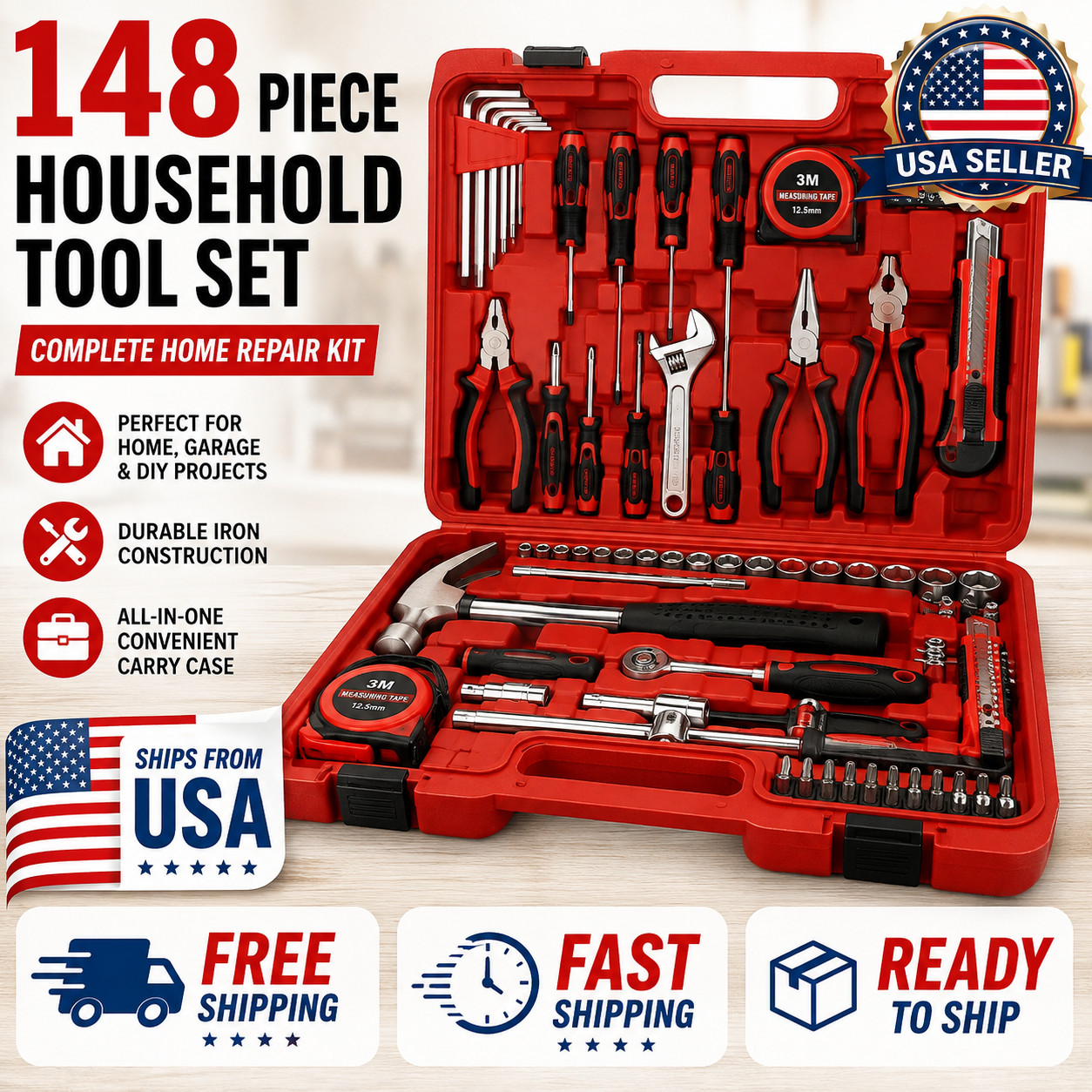 148pc Home Repair Tool Kit Household Hand Tools Set Maintenance DIY Red$18.00
 View on eBay
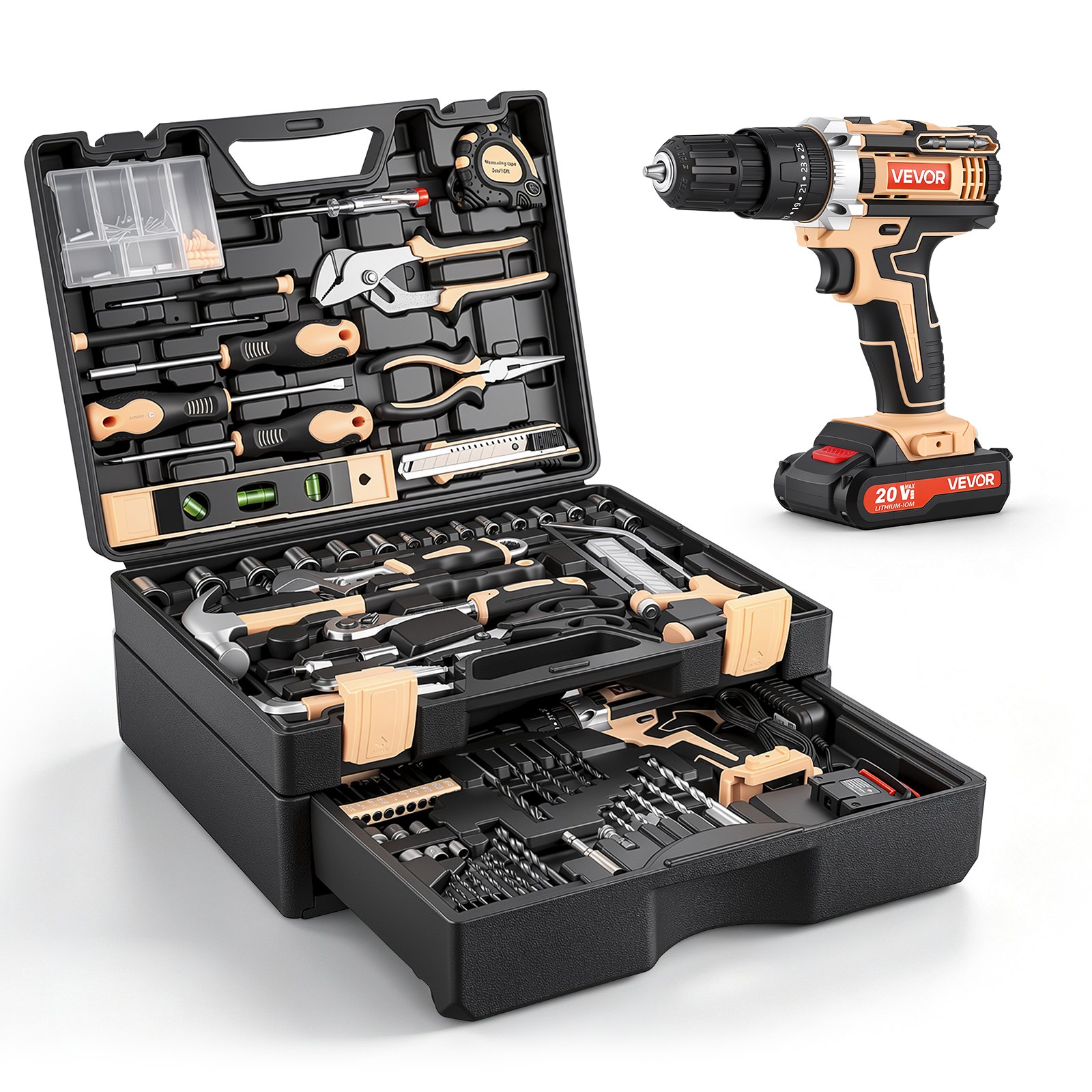 Tool Kit 318-Piece General Household Kit for Home Maintenance, For Everyday House Repairs, DIY Projects, with Portable Storage Case, High-Quality Steel, Cordless Drill, Bits, Hammer$98.99
 View on Mallflare
 205 Pieces Home Repair Tool Kit, General Household Tool Set with Plastic Toolbox$66.49Last checked Nov 18, 2026View on eBay
- 205 Pieces Home Repair Tool Kit, General Household Tool Set with Plastic Toolbox$69.34View on eBay
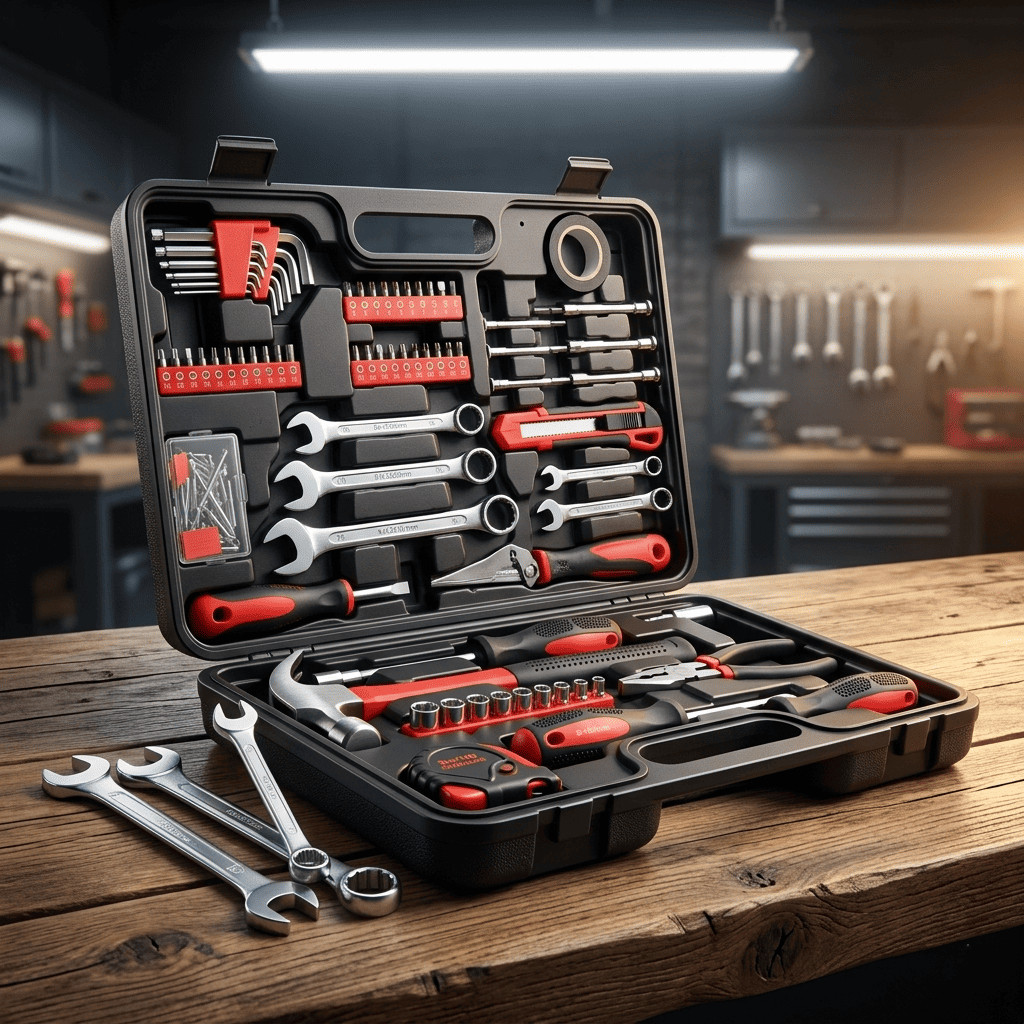 148Pcs Home Tool Kit Set General Household Repair Hand Tools Case Mechanical Red$19.58View on eBay
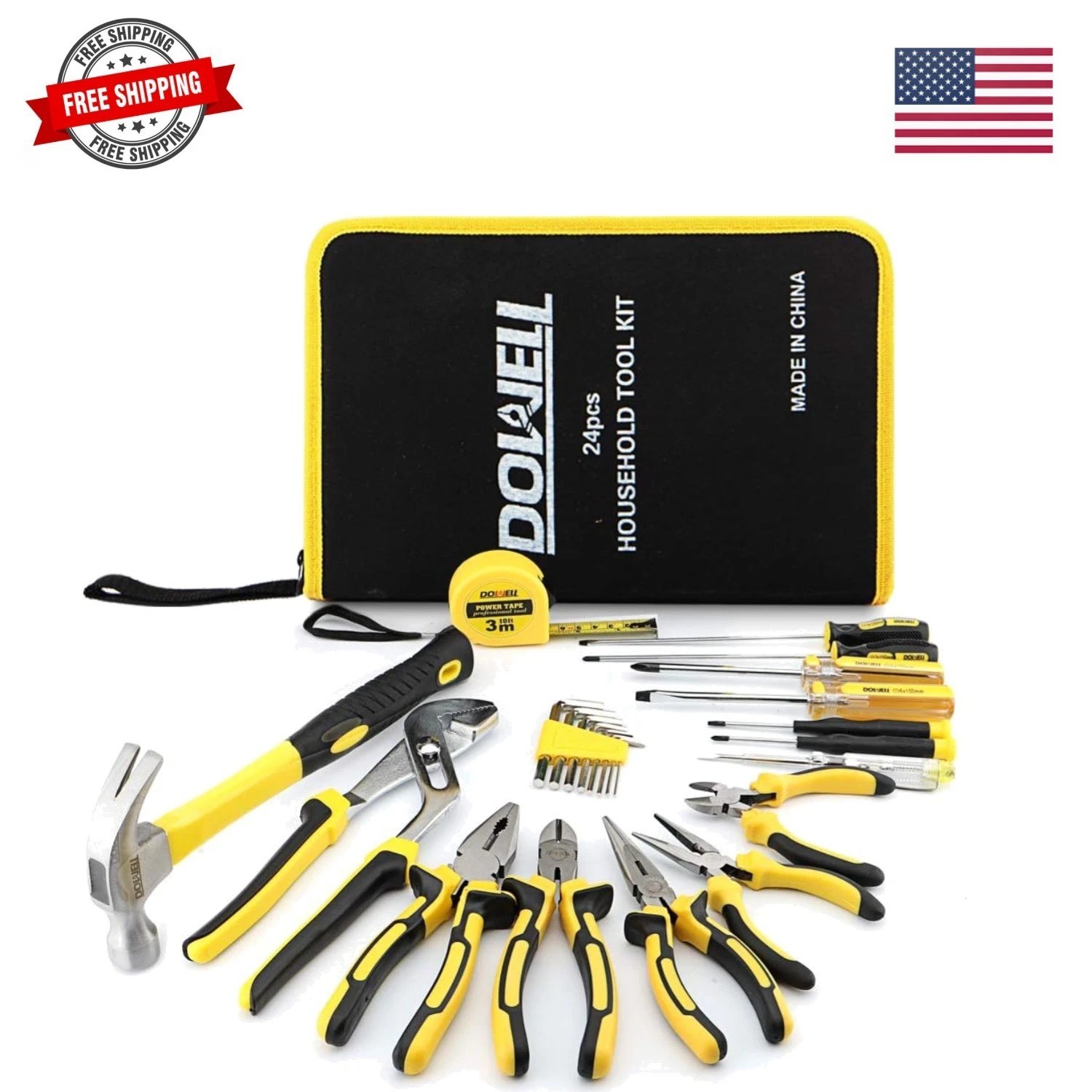 24 Pieces Homeowner Tool Set, Home Repair Hand Tool Kit with Portable Tool Bag$69.20View on eBay
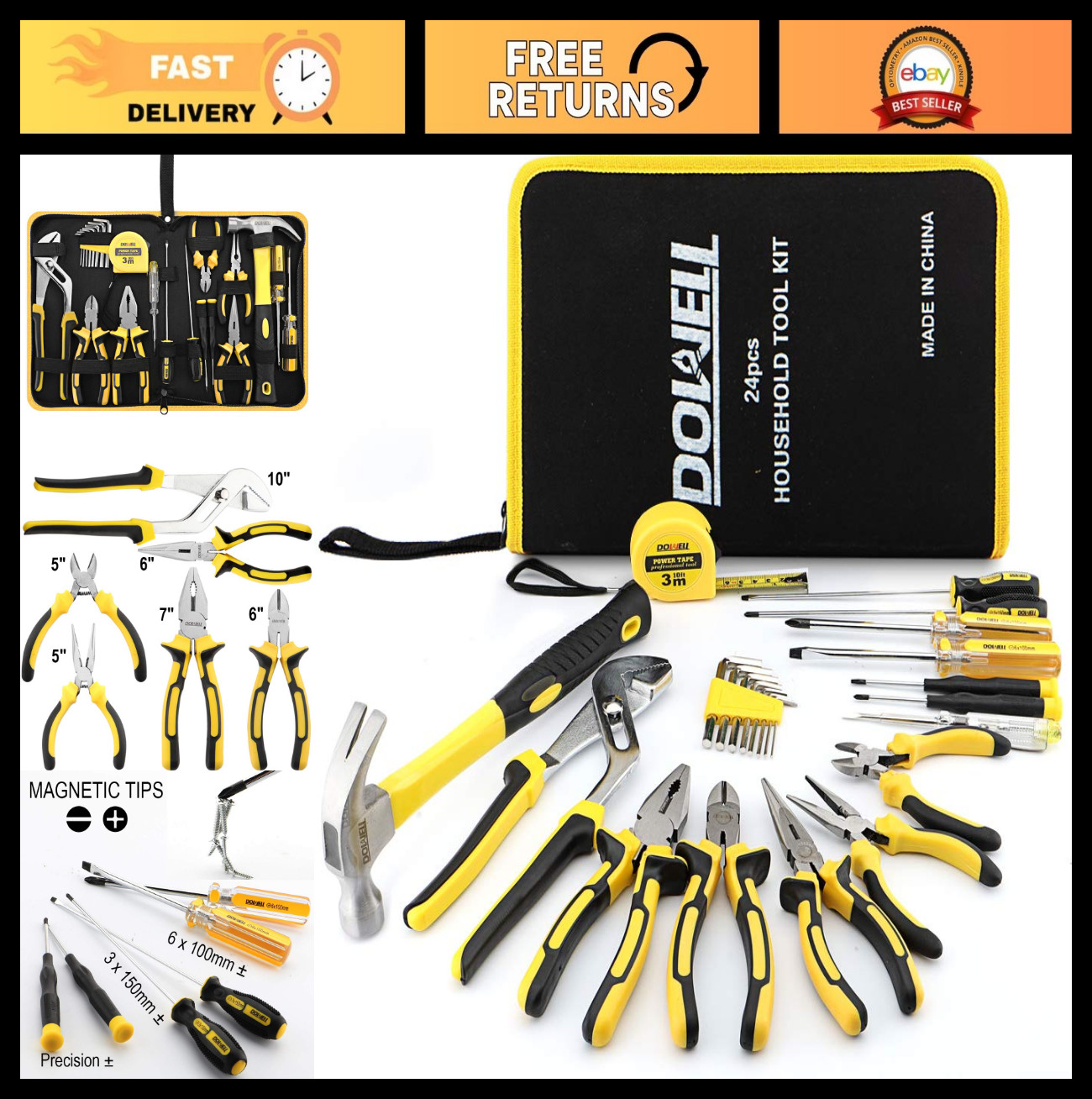 24-Piece Home Repair Tool Set with Portable Bag - Essential Hand Tools Kit$69.99View on eBay
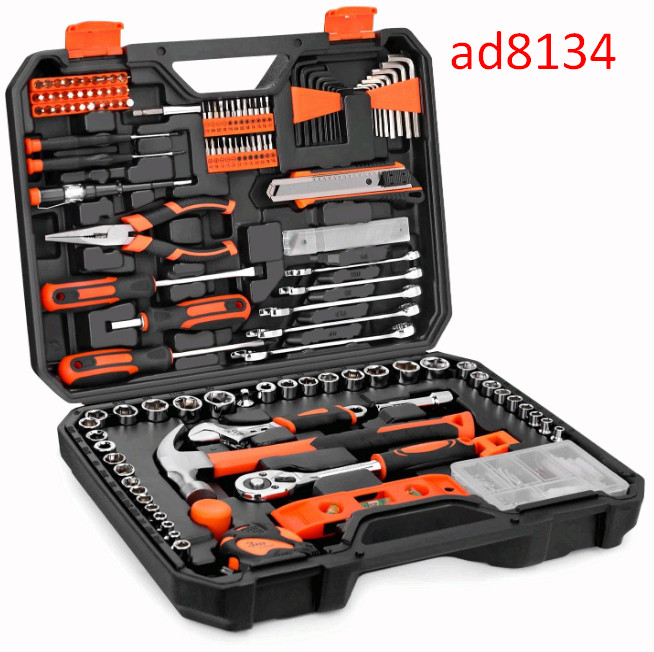 248-Piece Tool Set with Toolbox, Household Hand Tool Kit for Home Repair & DIY$69.99View on eBay
Highlights
- Bit and socket steel grade separates durable kits from disposable ones: chrome-vanadium (CrV) holds up to hand torque, while unmarked carbon steel rounds off at the first stubborn screw.
- Screwdriver tips should be heat-treated S2 or CrV; soft-tipped drivers cam out and strip screw heads, especially on Phillips #2 and Pozidriv fittings.
- Claw hammers in household kits run 8–16 oz; a 16 oz forged head with a fiberglass or hickory handle drives nails without the head loosening.
- Case construction matters as much as tools: polypropylene with metal latches survives drops, while brittle polystyrene hinges crack and spill the kit within months.
Best use cases
- Best fit: a 20–60 piece kit with CrV bits, S2 drivers, 16 oz hammer, and tape measure covers apartment and condo upkeep—skip 150+ piece kits that trade tool grade for filler bits.
- Best fit: a 100–250 piece kit in a rigid blow-mold case suits first-time homeowners handling furniture assembly, drywall anchors, and outlet plates—choose one with a ratcheting screwdriver and 6-in-1 driver.
- Wrong fit: a 500+ piece rolling chest is overkill for a single household—it duplicates sockets and wastes floor space; only pick a rolling 4-drawer kit if you also maintain vehicles or a workshop.
- Wrong fit: a 24-piece bag kit is for a glovebox or dorm, not for hanging shelves or plumbing repairs—it lacks a hammer, level, and adjustable wrench needed for wall work.
Buying tips
- Match piece count to task: 20–60 pieces for apartment basics, 100–250 for full home maintenance, and 500+ only for auto or workshop crossover—piece count above 250 mostly adds duplicate bits.
- Check steel markings on bits and sockets: CrV (chrome-vanadium) and S2 are the durable standards; unmarked 'high-carbon steel' is the budget compromise that strips.
- Prioritize a ratcheting screwdriver with a 1/4-inch hex bit holder and a 6-in-1 driver—these two tools handle most furniture and fixture fasteners faster than a fixed driver set.
- Verify case type: polypropylene blow-mold with metal or reinforced latches outlasts molded polystyrene; a soft bag is fine for light use but offers no drop protection for precision tools.
Specs
| Bit/Socket Steel | CrV or S2 vs unmarked carbon steel |
|---|---|
| Piece Count Tier | 20-60 basic / 100-250 full / 500+ workshop |
| Case Type | Polypropylene blow-mold / soft bag / rolling chest |
| Core Tools Included | Hammer, pliers, tape measure, level, drivers |
Related searches
What to check before buying
- Measure your storage spot—a 16-inch toolbox fits a shelf or under-sink cabinet, while rolling 4-drawer chests need 24+ inches of floor depth and clearance to open drawers.
- Confirm your fastener types: if your home has Pozidriv or Torx screws (common in European furniture and appliances), ensure the kit includes those bits, not just Phillips and flathead.
- Check handle ergonomics for your hand size—thick, rubberized grips reduce fatigue on long jobs, but slim handles fit tighter spaces like outlet boxes.
- Verify the kit includes a tape measure (16 ft minimum) and a torpedo level; these two are the most commonly omitted essentials in low-piece-count kits.
FAQ
Data sources: eBay / Amazon listings and product attribute feeds Data updated Nov 20, 2026.
Some links on this page are affiliate links. If you buy after clicking one, we may earn a commission at no extra cost to you. This does not change which products appear here or their order. Affiliate disclosure.