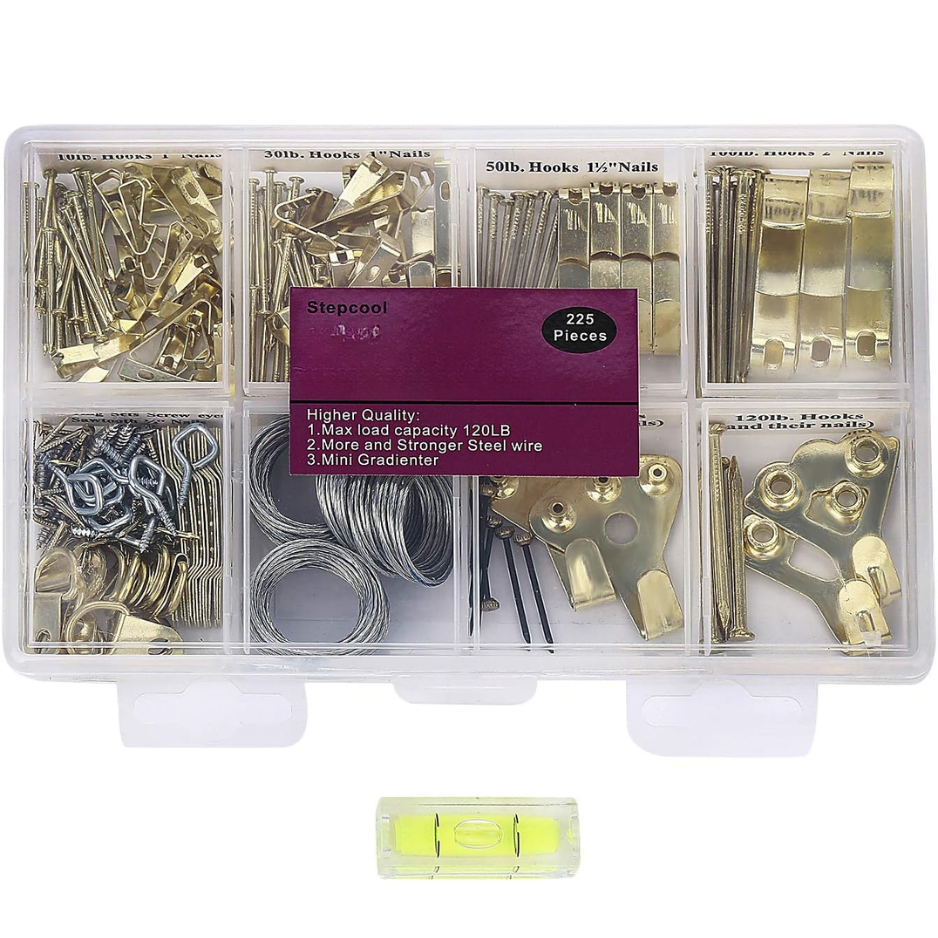

Photos from current listings. Actual item, color, and included accessories may vary.
Picture Hook Heavy Duty Buying Guide
Heavy-duty picture hooks are rated by weight capacity and nail geometry, not by piece count in a kit. The core trade-off is hardened-steel hook design with proper nail angle versus soft zinc-plated hooks that bend or pull out under load. Choose a hook whose listed capacity exceeds your frame weight by at least 1.5x and whose nail type matches your wall material.


At a glance
- Category
- Home Repair
- Data updated
- Nov 20, 2026
Current offers
Highlights
- Hardened steel hooks with angled nails (30-45 degree) bite into drywall and plaster better than straight nails, resisting pull-out under shear load.
- Weight ratings are per hook on drywall; double the hook count for plaster or near-stud placement, and always anchor into studs for items over 50 lb.
- Sawtooth and D-ring hardware requires matching hook throat depth; a 1-inch hook throat fits most D-rings but sawtooth hangers need a narrower profile.
- Zinc-plated or brass-coated hooks resist rust in humid rooms; uncoated steel is for dry interior walls only and will stain wallpaper.
Best use cases
- Best fit: 10-30 lb framed art on drywall—pick 30-50 lb rated hardened-steel hooks with angled nails, two per frame for widths over 16 inches.
- Best fit: Mirrors or shelves up to 50 lb—use two hooks per item into studs or with self-drilling anchors; skip single-hook solutions.
- Wrong fit: Items over 50 lb or in plaster/lath—skip picture hooks entirely and use lag bolts into studs or toggle bolts rated for the load.
- Wrong fit: Hanging in bathrooms or kitchens without ventilation—avoid uncoated steel; choose brass or stainless hooks or use adhesive strips rated for wet rooms.
Buying tips
- Match hook capacity to frame weight: sum frame, glass, mat, and art; add 50% safety margin; use two hooks when the total exceeds 20 lb.
- For drywall, use hooks with a nail that angles downward and a hook that sits flush; for plaster, pre-drill a pilot hole to avoid cracking the key.
- Kit piece counts are misleading—focus on the number of rated hooks and nails, not wire or screw eyes; 225-piece kits often contain only 20-30 load-bearing hooks.
- Check hook throat depth against your hanging hardware: D-rings need at least 3/4 inch clearance; sawtooth hangers need a hook that sits tight to the wall.
Specs
| Hook Material | Hardened steel vs zinc-plated |
|---|---|
| Weight Capacity | 10-100 lb per hook (drywall) |
| Nail Type | Angled hardened vs straight |
| Wall Compatibility | Drywall / plaster / stud |
Related searches
What to check before buying
- Weigh the framed item fully assembled and confirm wall material (drywall, plaster, masonry) before selecting hook type and capacity.
- Measure the distance between D-rings or sawtooth center to set hook spacing; mark both hook points with a level.
- Verify wall stud locations with a stud finder; plan to hit studs for any item over 30 lb or use appropriate anchors.
- Confirm hook nail length does not exceed wall thickness plus 1/2 inch to avoid piercing plumbing or wiring; use a cable detector in older homes.
FAQ
Data sources: eBay / Amazon listings and product attribute feeds Data updated Nov 20, 2026.
Some links on this page are affiliate links. If you buy after clicking one, we may earn a commission at no extra cost to you. This does not change which products appear here or their order. Affiliate disclosure.