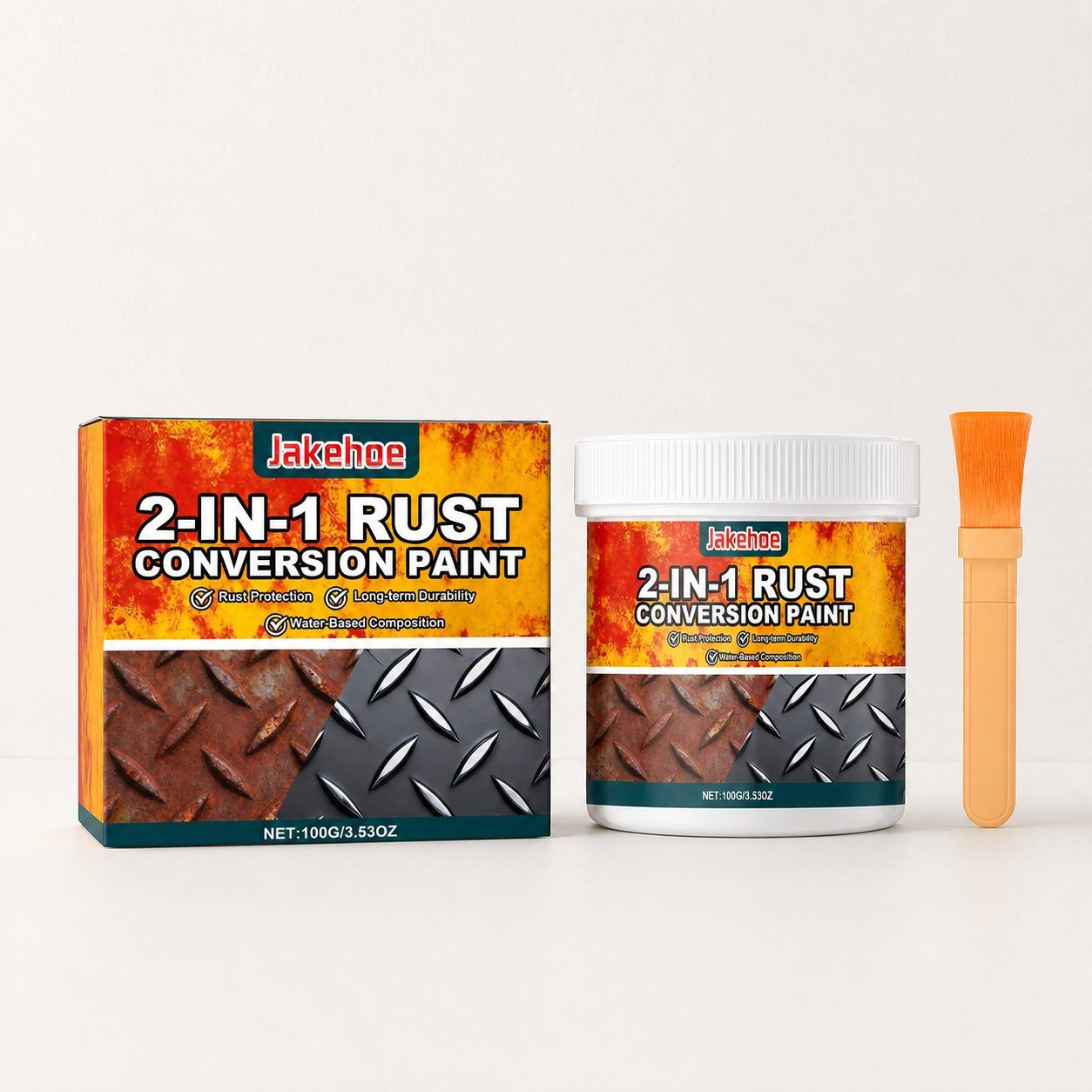

Photos from current listings. Actual item, color, and included accessories may vary.
Rust Converter Primer Buying Guide
Rust converter primers chemically neutralize iron oxide and leave a protective polymer layer that can be topcoated, unlike plain rust-preventive paints that only seal over active corrosion. The core trade-off is conversion chemistry strength versus surface tolerance: cheap latex-based converters fail on heavy scale, while solvent-borne or water-based acrylic converters with phosphoric acid or tannin conversion agents bond only to tightly bound rust. The decision rule is simple: choose a converter rated for tightly adhering rust and a dry film thickness of at least 2 mils, and skip any product that requires perfectly white-metal blasting—that is a primer, not a converter.


At a glance
- Category
- Painting & Finishing Supplies
- Data updated
- Nov 20, 2026
Current offers
Highlights
- True rust converters rely on phosphoric acid or tannin to convert red iron oxide into black iron phosphate or tannate; paints that simply seal rust are not converters.
- Water-based acrylic converters are low-VOC and brushable but typically need 24-48 hours to fully cure; solvent-borne epoxy or alkyd converters flash faster and tolerate oily substrates better.
- Dry film thickness matters more than wet volume: two coats at 2-3 mils DFT outperform one heavy coat, which traps solvent and fails adhesion.
- Kits marketed as 'converter plus topcoat' usually pair a phosphoric-acid converter with a zinc-phosphate or epoxy primer; single-bottle 'all-in-one' sprays are the weakest tier.
Best use cases
- Best fit: automotive chassis and frame rust—choose a solvent-borne phosphoric-acid converter, apply two thin coats, and topcoat with an epoxy or urethane within the recoat window.
- Best fit: garden tools and outdoor furniture with light surface rust—a water-based tannin converter brushed on and left as a black protective layer is sufficient without a topcoat.
- Wrong fit: structural steel with heavy flaking scale or pitting—skip converters entirely; abrasive blast or needle-scale to near-white metal and use a zinc-rich primer instead.
- Wrong fit: galvanized or aluminum surfaces—converters are formulated for ferrous oxide and will not bond; use an etch primer or direct-to-metal (DTM) coating.
Buying tips
- Match converter type to rust severity: phosphoric-acid converters for tightly adherent rust up to 1 mil thickness; tannin-based converters for light flash rust and damp environments.
- Buy by dry film thickness, not bottle size: aim for 2-3 mils DFT per coat and confirm the label states a recoat window (typically 2-24 hours) before topcoating.
- Check the topcoat compatibility: alkyd or epoxy topcoats over acid converters need full neutralization (pH 6-8) or the acid residue will blister the finish.
- Prefer converters that specify a minimum surface profile (typically 1-2 mils anchor pattern) and a maximum rust thickness—products with no stated limits are commodity acids in plastic bottles.
Specs
| Chemistry | Phosphoric acid vs tannin-based |
|---|---|
| Carrier | Water-based acrylic vs solvent epoxy |
| Rust Tolerance | Light flash rust to 1 mil DFT |
| Topcoat Window | 2-24 hr recoat / 24-48 hr cure |
Related searches
What to check before buying
- Measure rust thickness with a simple thumbnail or wire-brush test: if rust flakes off in sheets, the substrate is too far gone for a converter.
- Confirm ambient temperature and humidity at application: most converters require 50-90°F and below 85% RH to cure properly; cold or damp conditions stall the acid reaction.
- Verify the topcoat system: buy the converter and topcoat from compatible chemistries (epoxy over acid converter, urethane over epoxy) and respect the full recoat window.
- Check container and shelf life: phosphoric-acid converters in plastic bottles degrade in freeze-thaw cycles; metal or HDPE containers with a stated 2-year shelf life are safer.
FAQ
Data sources: eBay / Amazon listings and product attribute feeds Data updated Nov 20, 2026.
Some links on this page are affiliate links. If you buy after clicking one, we may earn a commission at no extra cost to you. This does not change which products appear here or their order. Affiliate disclosure.