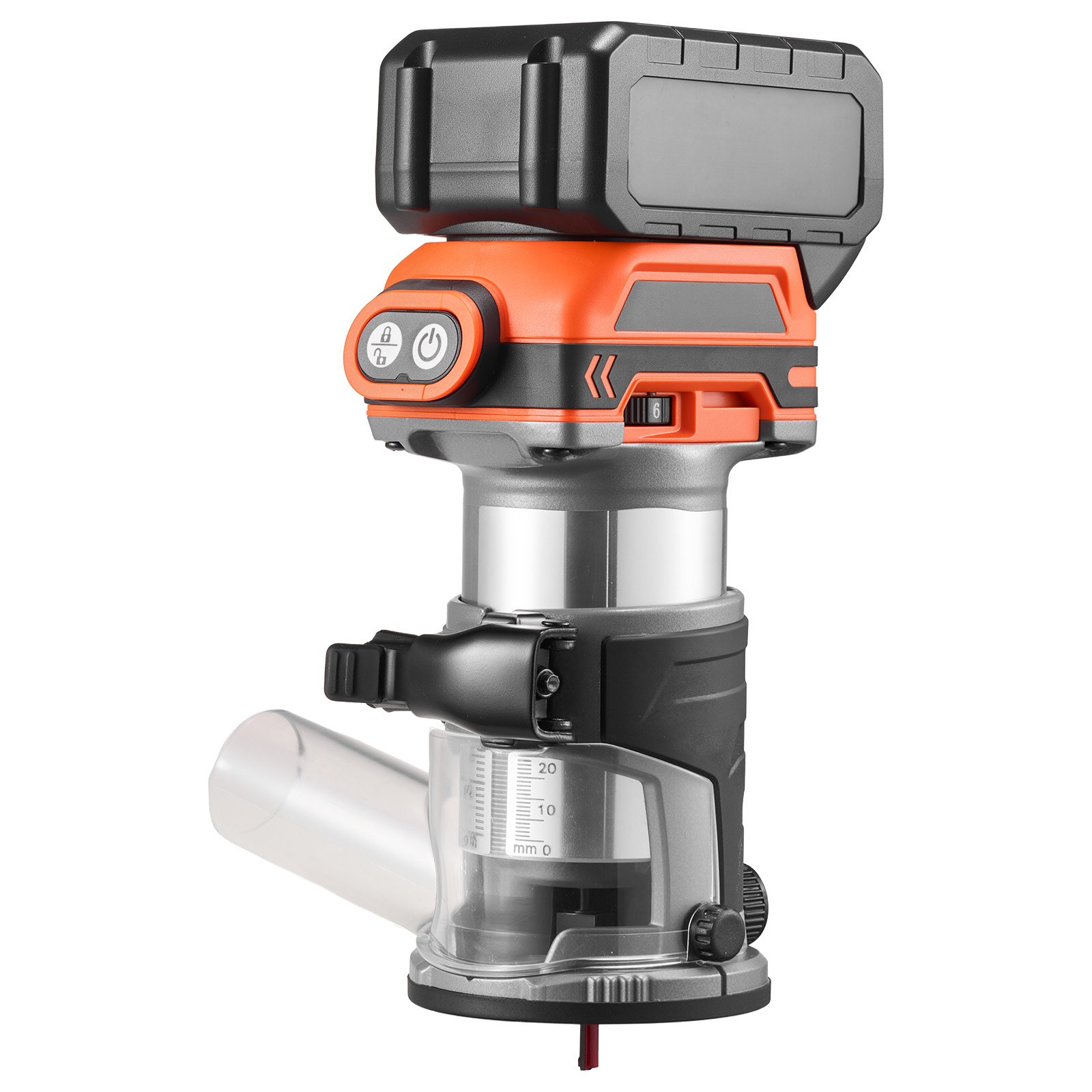

Photos from current listings. Actual item, color, and included accessories may vary.
Cordless Wood Router Buying Guide
A cordless wood router frees you from the cord for edge profiles, hinge mortises, and trim work, but the primary trade-off is battery platform lock-in versus the consistent torque and runtime of a corded model. The clear decision rule: buy a brushless, 18V-or-higher router that shares a battery family you already own; skip any brushed or sub-12V model for sustained hardwood routing.


At a glance
- Category
- Wood Routers & Carving Tools
- Data updated
- Nov 20, 2026
Current offers
Highlights
- Brushless motors deliver 20-30% more runtime and cooler operation than brushed motors, which is decisive for 1/4-inch collet routing in hardwood.
- 18V/20V max battery class is the practical minimum for palm routers; 12V models stall under load on 1/2-inch roundovers in oak.
- Variable speed (typically 10,000-30,000 RPM) is essential—hardwood and large bits need lower RPM, while small bits and softwood tolerate higher RPM.
- Fixed-base palm routers dominate the cordless segment; plunge-base cordless routers are rare and add weight that shortens battery runtime.
Best use cases
- Best fit: trim work, laminate flush-cutting, and edge profiles on installed cabinetry—pick a compact 18V brushless palm router with a fixed base and 1/4-inch collet.
- Best fit: hinge mortises and small joinery in a shop with an existing 18V battery ecosystem—choose the router body only if you already own compatible batteries and charger.
- Wrong fit: production routing of 1/2-inch shank bits or deep mortises in dense hardwood—skip cordless and use a corded 2+ HP plunge router instead.
- Wrong fit: occasional DIY with no existing battery platform—skip bare-tool listings and buy a kit with batteries and charger, or choose corded for lower total cost.
Buying tips
- Match the collet: 1/4-inch (6.35mm) is standard for cordless palm routers; 1/2-inch collets require a corded 2+ HP router for safe torque.
- Check bare-tool vs kit: bare-tool listings exclude battery and charger, so confirm your existing platform's voltage and mount before buying to avoid a dead-end purchase.
- Verify variable speed and soft-start: fixed-speed cordless routers are harder to control on startup and unsuitable for large-diameter bits.
- Prefer brushless over brushed: brushed motors wear out faster and lose torque under load, making them a poor choice for repeated hardwood routing.
Specs
| Motor Type | Brushless vs Brushed |
|---|---|
| Battery Class | 18V/20V max vs 12V |
| Collet Size | 1/4-inch (6.35mm) standard |
| Base Type | Fixed vs Plunge base |
Related searches
What to check before buying
- Measure your intended cut depth and bit diameter: palm routers typically handle up to 1-1/2-inch depth in softwood, less in hardwood.
- Confirm battery compatibility: the router must accept your existing 18V/20V battery platform's slide or stem mount and voltage.
- Check base opening and sub-base compatibility: aftermarket guide bushings and edge guides require a matched base plate diameter.
- Verify collet size and included wrenches: 1/4-inch collet is standard, but confirm the listing includes the collet and wrench set for immediate use.
FAQ
Data sources: eBay / Amazon listings and product attribute feeds Data updated Nov 20, 2026.
Some links on this page are affiliate links. If you buy after clicking one, we may earn a commission at no extra cost to you. This does not change which products appear here or their order. Affiliate disclosure.