Photos from current listings. Actual item, color, and included accessories may vary.
Router Bit Buying Guide
Router bits are the cutting interface between your router and the wood; the segment splits into solid carbide (durable, clean cuts, higher cost) versus carbide-tipped (tough, impact-resistant, budget-friendly) construction. The primary trade-off is shank diameter (1/4-inch hobby versus 1/2-inch production) and cutter geometry (flush-trim, spiral, straight, profile). Decision rule: buy solid carbide or high-grade tungsten-carbide-tipped bits with a 1/2-inch shank for daily production; choose 1/4-inch shank sets only for light trim work and laminate.

At a glance
- Category
- Wood Routers & Carving Tools
- Data updated
- Nov 20, 2026
Current offers
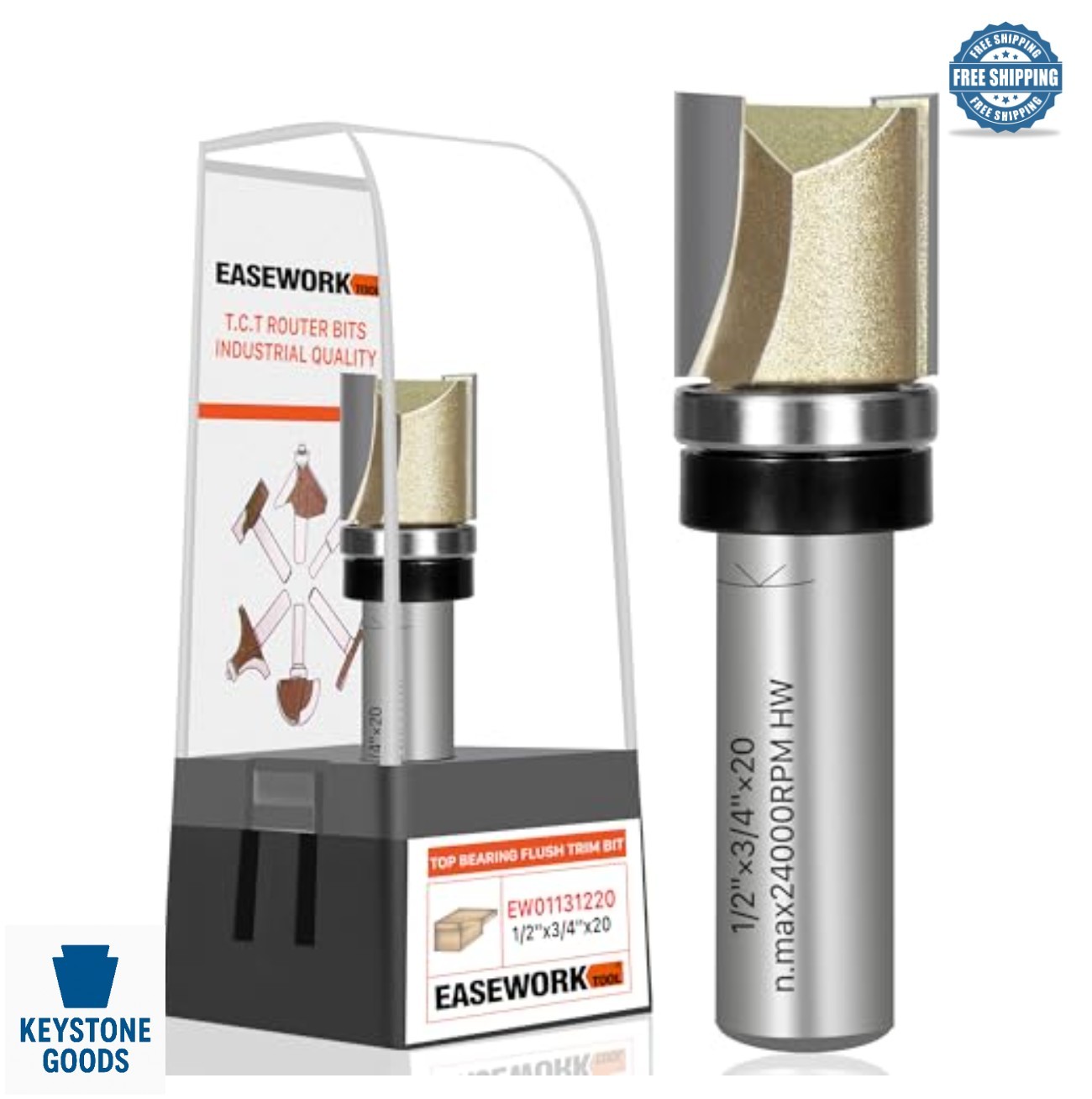 Flush Trim Router Bit 1/2 Shank Carbide Tipped 3/4 Dia Template Woodworking MDF$51.68
 View on eBay
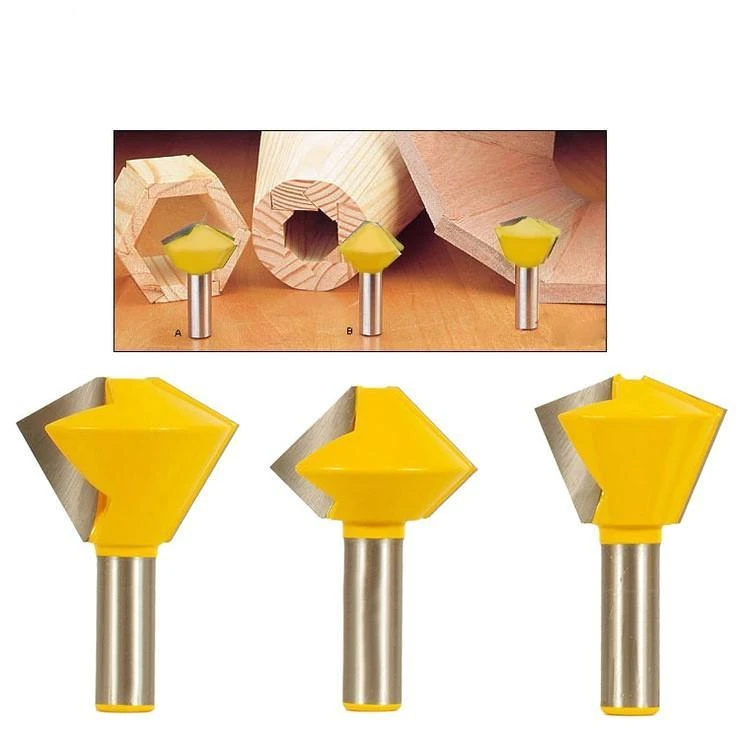 Bird's Mouth Router Bit$39.99
 View on Mallflare
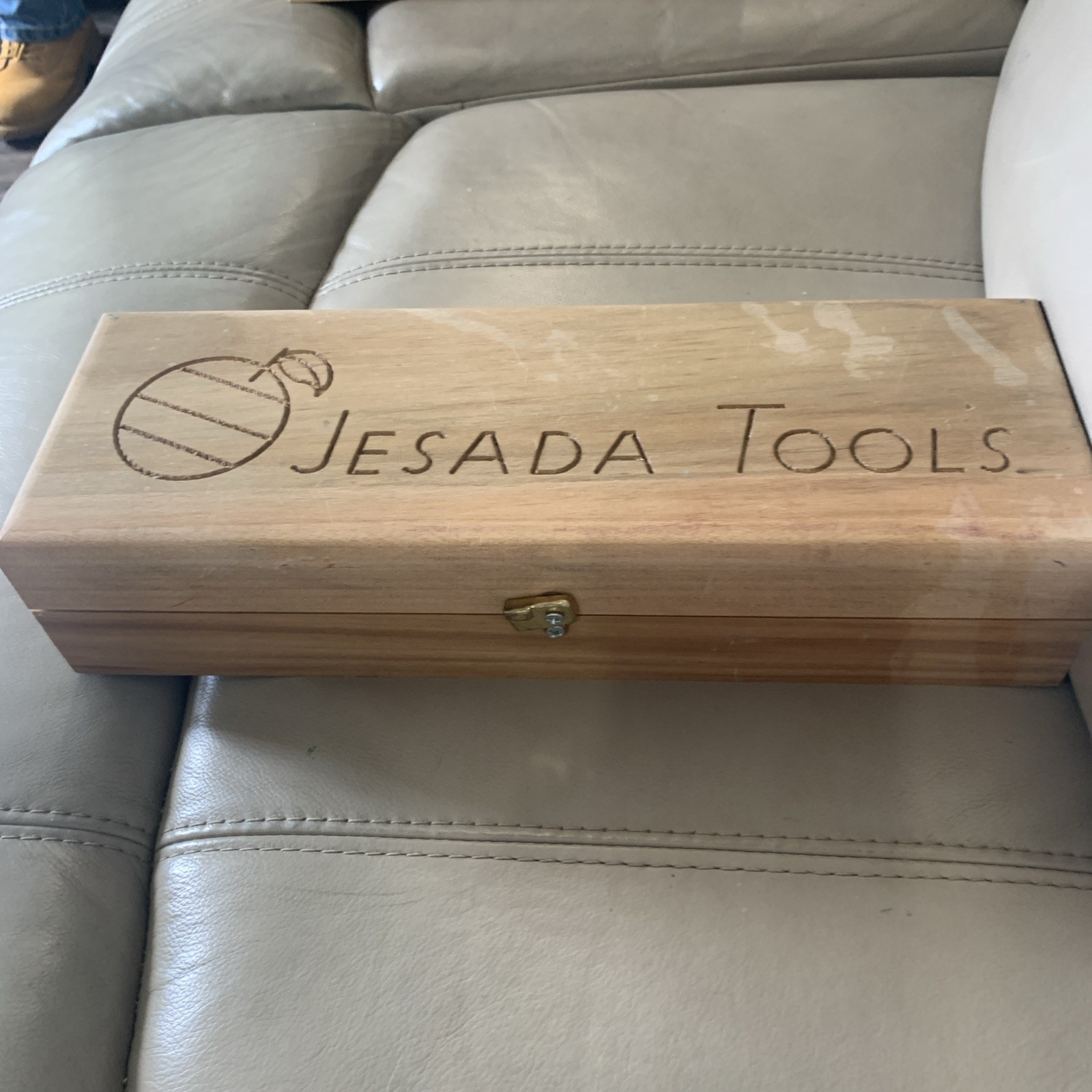 Jesada Tools 600-562 Ogee Kitchen Set Router Bits 1/2" Shank 5 Pc Set & Wood Box$200.00Open box · Last checked Nov 16, 2026View on eBay
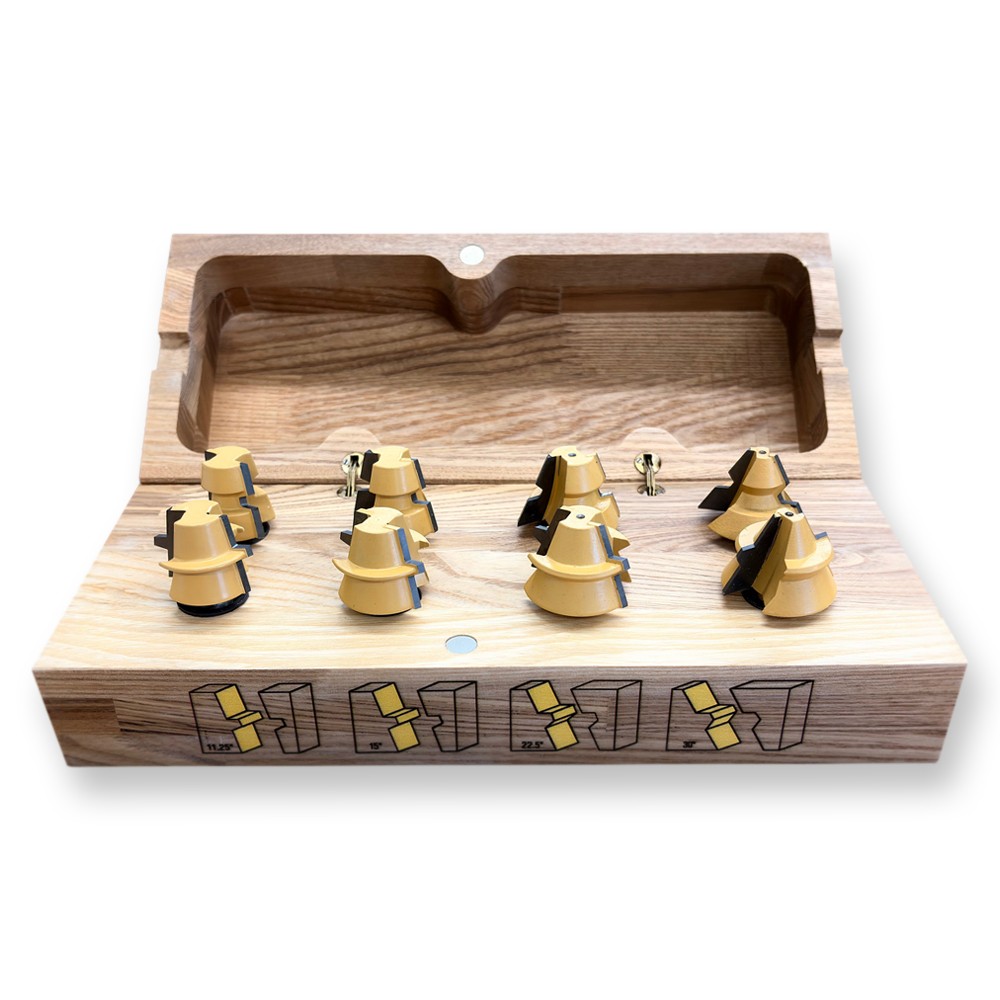 Sommerfeld 8-Pc Anglemaking Router Bit Woodworking Tool Set$223.46New · Last checked Nov 16, 2026View on eBay
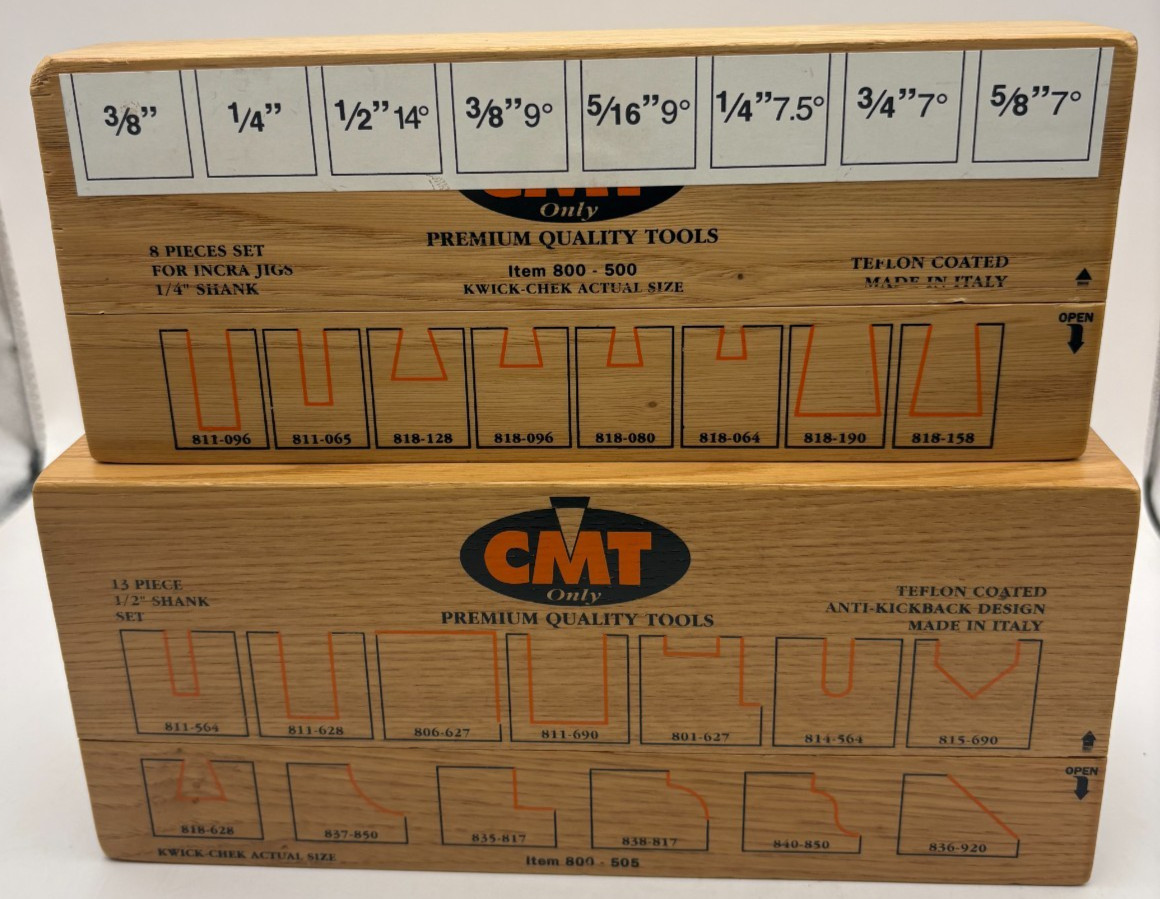 CMT Orange Tools Router Bit Master Sets - 800.500 & 500.505 Wooden Boxes$224.95Used · Last checked Nov 16, 2026View on eBay
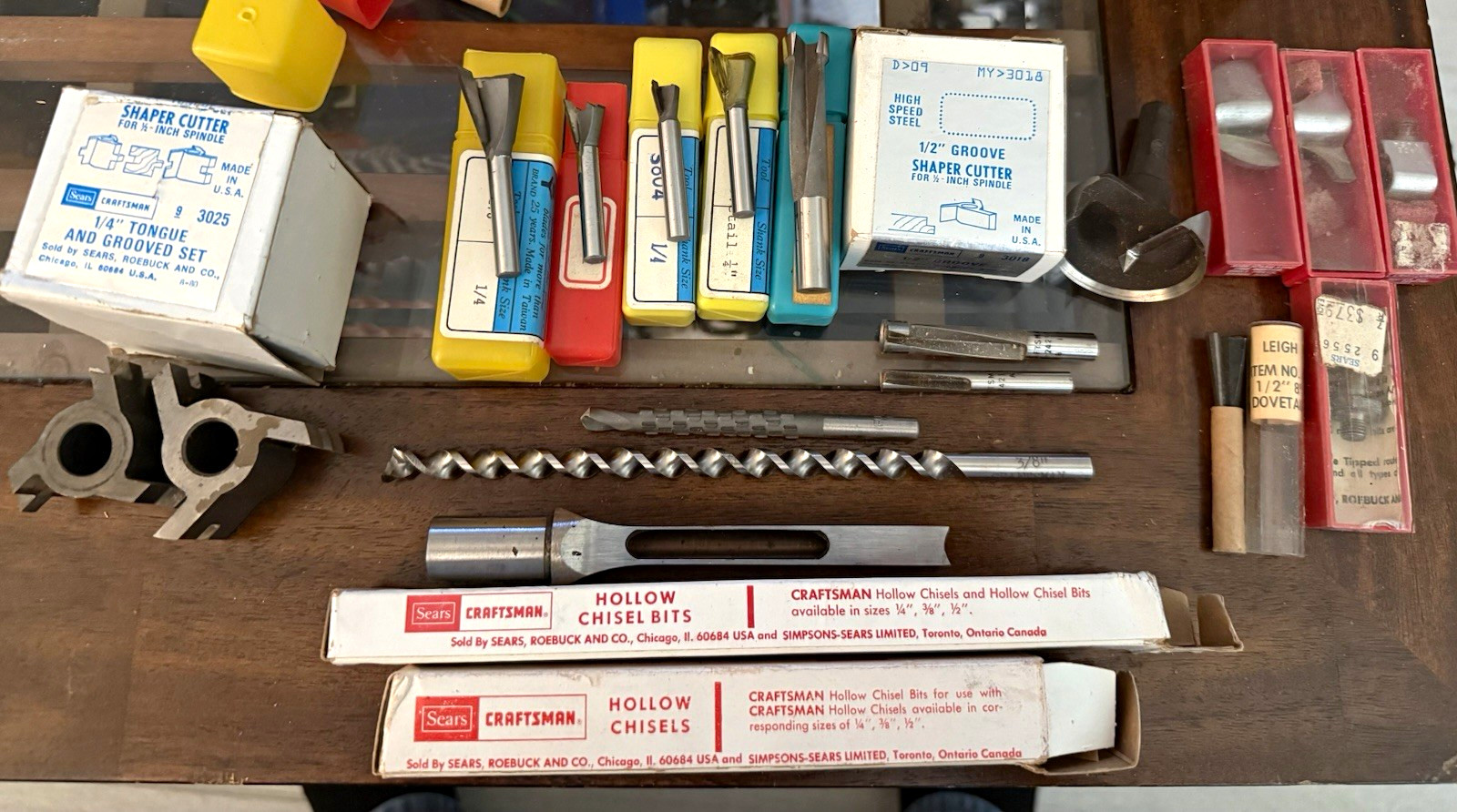 High quality SY Brand Router bits, variety of specialty chisel bits etc-Vintage$250.00Used · Last checked Nov 16, 2026View on eBay
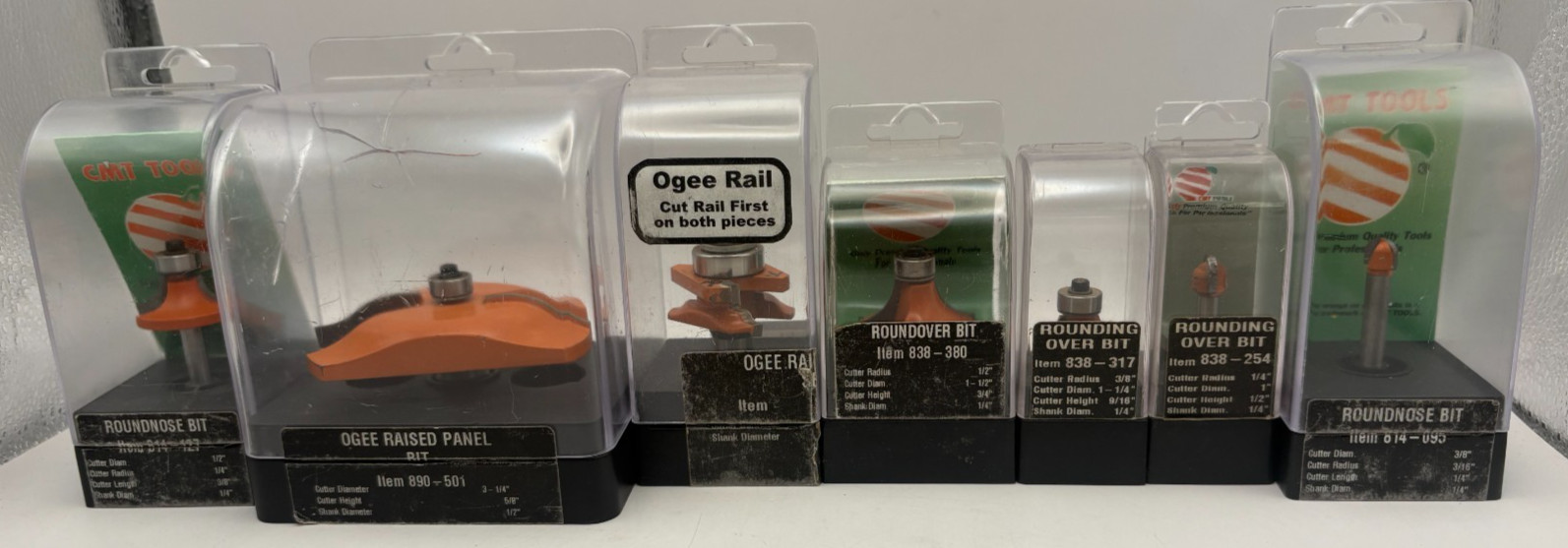 CMT Orange Tools & Katana Router Bits Huge Lot of 15 Woodworking Cabinetry Joint$284.95Used · Last checked Nov 16, 2026View on eBay
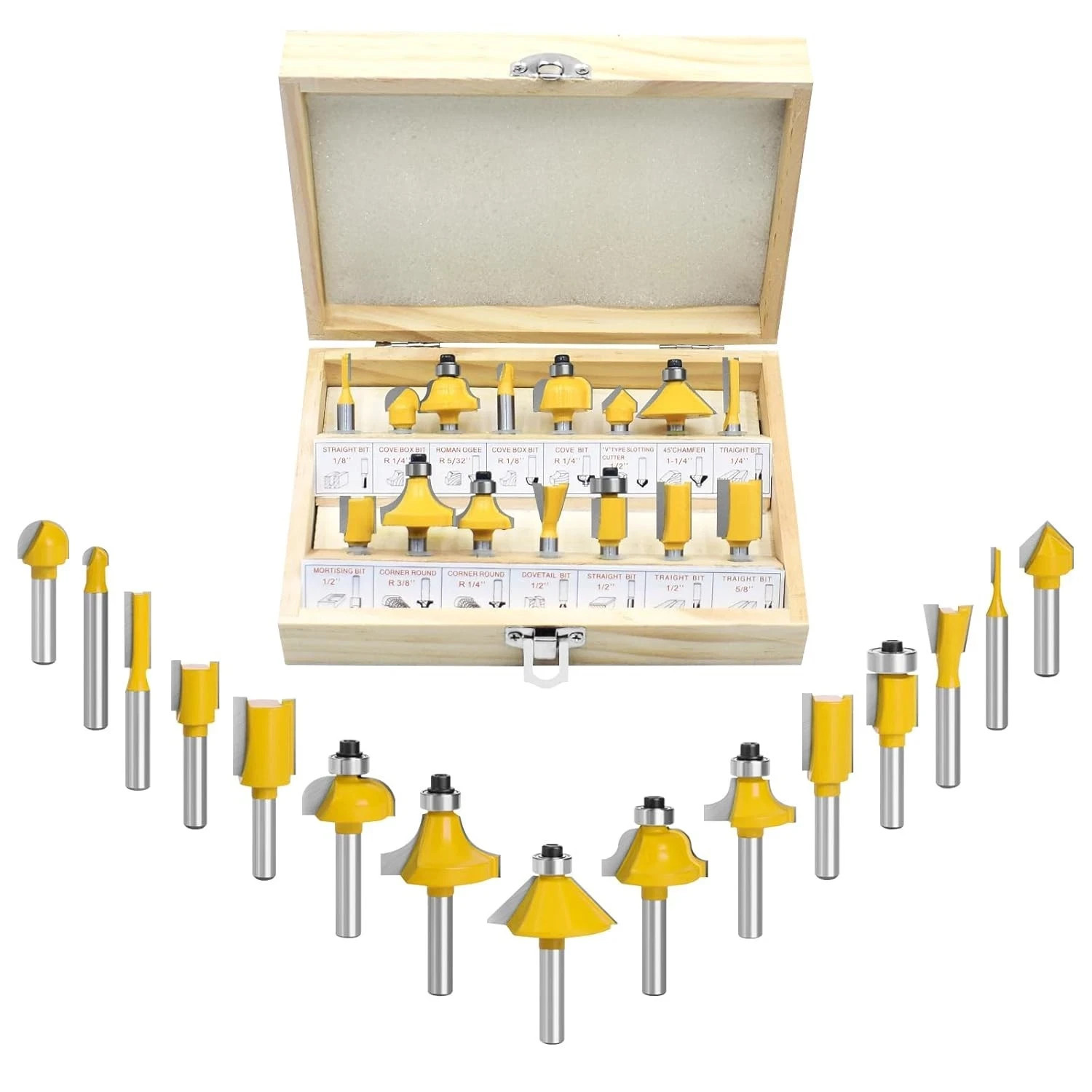 Router Bits Set of 15 Pieces 1/4 Inch Woodwork Tools for Beginners,Carbide...$45.00View on eBay
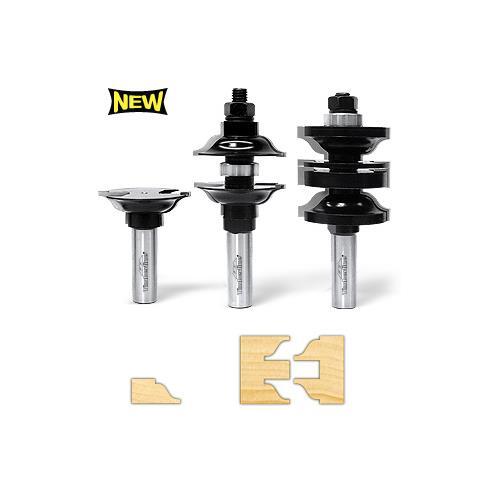 Timberline TRS-290 3-Piece Entry & Passage Door Making 1/2 Shk Router Bit Set$291.20New · Last checked Nov 16, 2026View on eBay
Highlights
- Solid carbide (often YG8 tungsten carbide) holds an edge 3-5x longer than high-speed steel and resists heat buildup at 20,000+ RPM.
- 1/2-inch shank bits have 4x the cross-section of 1/4-inch shanks, reducing chatter and deflection in deep cuts and hardwoods.
- Carbide-tipped bits braze a carbide cutter to a steel body: tougher against nails and knots but less sharp than solid carbide.
- Bearing-guided flush-trim bits use a top or bottom bearing to reference a template; bearing diameter must match cutter diameter for true flush work.
Best use cases
- Pick a 1/2-inch shank solid carbide set for router-table production, raised panels, and hardwood joinery; skip 1/4-inch shank bits in a table above 1-inch depth.
- Use 1/4-inch shank carbide-tipped sets for handheld laminate trimming, hinge mortising, and light edge profiles where maneuverability matters.
- Choose a top-bearing flush-trim bit for template routing on MDF and plywood; choose a bottom-bearing or pattern bit when the template sits above the workpiece.
- For CNC or high-volume routing, run solid carbide spiral bits; for occasional DIY profile cuts, a 15-piece carbide-tipped set covers common profiles at lower cost.
Buying tips
- Match shank to collet: a 1/2-inch router accepts 1/2-inch and (with a reducer sleeve) 1/4-inch bits; a 1/4-inch router cannot safely run 1/2-inch bits.
- For cuts deeper than 1/2 inch in hardwood, use a 1/2-inch shank; 1/4-inch shanks deflect and can snap under side load.
- Carbide grade matters: YG8 tungsten carbide (10% cobalt) balances toughness and wear resistance for wood; avoid unmarked 'carbide' claims.
- Bearing quality determines template accuracy: sealed ball-bearing guides outlast open bearings and resist dust; replace bearings when flush cuts wander.
Specs
| Shank Diameter | 1/4 in vs 1/2 in (collet match) |
|---|---|
| Cutter Material | Solid carbide vs carbide-tipped |
| Bearing Guide | Top / bottom / none (flush trim) |
| Bit Profile Type | Straight, flush-trim, round-over, spiral |
Related searches
router bitbest router bitsrouter bit for door hingesbest router bit setrouter bit for cutting plywoodrouter bits for salebest router bits for woodworkingrouter bit for cutting out windowssmall router bitslarge router bitsbest router bit for door hingesbest router bit for cutting circlesrouter bits for planing woodWhat to check before buying
- Confirm your router collet size (1/4-inch, 1/2-inch, or both) and whether a reducer sleeve is included.
- Measure your template guide bushing and bearing diameters to ensure the bit's bearing matches your routing plan.
- Check router RPM range: large-diameter bits (over 1 inch) require lower speeds (12,000-16,000 RPM) to avoid burn and vibration.
- Verify the bit's cutting diameter fits your intended profile depth and that the shank length clears your router base or table opening.
FAQ
Data sources: eBay / Amazon listings and product attribute feeds Data updated Nov 20, 2026.
Some links on this page are affiliate links. If you buy after clicking one, we may earn a commission at no extra cost to you. This does not change which products appear here or their order. Affiliate disclosure.