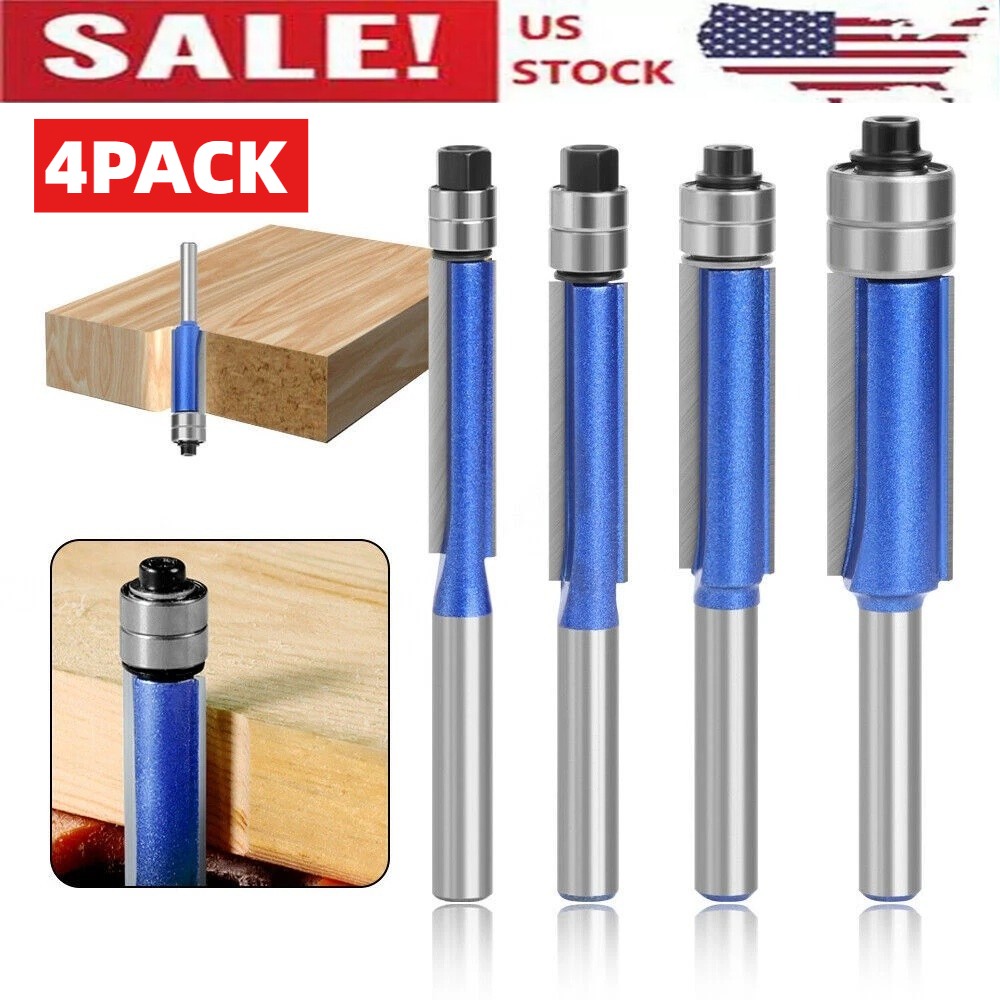

Photos from current listings. Actual item, color, and included accessories may vary.
1 4 Router Bit With Bearing Buying Guide
A 1/4-inch shank router bit with bearing is a guided cutting tool that uses a ball-bearing pilot to follow templates, jigs, or workpiece edges for flush trimming, template routing, and pattern work. The core trade-off is bearing quality and cutter geometry: sealed, precision-ground bearings and carbide cutters maintain accuracy and finish, while unsealed bearings and high-speed-steel cutters wear quickly and cause burn or chatter. Choose bits with sealed bearings, carbide tips, and a shank diameter matched to your collet; skip unsealed or HSS bits for production or hard-wood work.


At a glance
- Category
- Wood Routers & Carving Tools
- Data updated
- Nov 20, 2026
Current offers
Highlights
- Bearing pilot guides the cutter along templates for flush trim and pattern routing; sealed bearings resist dust and last longer than open bearings.
- 1/4-inch shank fits standard compact routers and trim routers; 1/2-inch shank bits are stronger but require a compatible collet.
- Carbide cutters outlast high-speed steel (HSS) by a wide margin in hardwood and abrasive materials; HSS is acceptable only for softwood and occasional use.
- Flush trim bits have the bearing at the top or bottom; top-bearing bits are ideal for template routing with the pattern on top of the workpiece.
Best use cases
- Best fit: template routing and flush trimming of hardwood or plywood edges using a top-bearing flush trim bit with a 1/4-inch shank in a trim router.
- Wrong fit: heavy stock removal or routing dense hardwoods with a 1/4-inch shank bit; step up to a 1/2-inch shank bit and a more powerful router.
- Best fit: light-duty edge trimming and pattern work with a carbide-tipped bit set; skip HSS bits if you rout abrasive materials or need long cutter life.
Buying tips
- Match shank diameter to your router collet: 1/4-inch shank fits most compact and trim routers; 1/2-inch shank requires a 1/2-inch collet and is stiffer for deep cuts.
- Choose sealed ball bearings over open bearings; sealed bearings keep dust out and maintain smooth rotation for accurate template following.
- Select carbide cutters for durability in hardwood, plywood, and abrasive materials; HSS is only economical for softwood and infrequent use.
- For template routing, a top-bearing flush trim bit lets the bearing ride on the template above the workpiece; bottom-bearing bits suit pattern routing with the template below.
Specs
| Shank Size | 1/4 in (6.35 mm) standard |
|---|---|
| Bearing Type | Sealed ball bearing vs open |
| Cutter Material | Carbide vs high-speed steel |
| Bearing Position | Top vs bottom pilot |
Related searches
What to check before buying
- Confirm your router accepts a 1/4-inch shank (collet size) and that the bit diameter clears your template and workpiece thickness.
- Check bearing placement: top-bearing for templates on top of the workpiece, bottom-bearing for templates underneath.
- Ensure the bit's cutting length covers the full thickness of material you plan to trim in one pass.
- Use a router with sufficient power for the material; compact trim routers suit light trimming, while larger routers handle deeper cuts and hardwood.
FAQ
Data sources: eBay / Amazon listings and product attribute feeds Data updated Nov 20, 2026.
Some links on this page are affiliate links. If you buy after clicking one, we may earn a commission at no extra cost to you. This does not change which products appear here or their order. Affiliate disclosure.