Photos from current listings. Actual item, color, and included accessories may vary.
Router Cutter Buying Guide
Router cutters are the cutting heads that turn a router into a shaping, joinery, or trimming tool, and the primary trade-off is carbide grade and shank geometry versus low-cost high-speed steel or undersized shanks. Durable cutters use micro-grain carbide tips brazed to steel bodies with precision-ground 1/2-inch shanks, while compromise bits use coarse carbide, 1/4-inch shanks, and loose tolerances that cause burn, chatter, and kickback. The decision rule: buy 1/2-inch shank, carbide-tipped or solid-carbide cutters sized to your router collet and material removal rate, and skip anything that forces a 1/4-inch shank on heavy profiles.

At a glance
- Category
- Wood Routers & Carving Tools
- Data updated
- Nov 20, 2026
Current offers
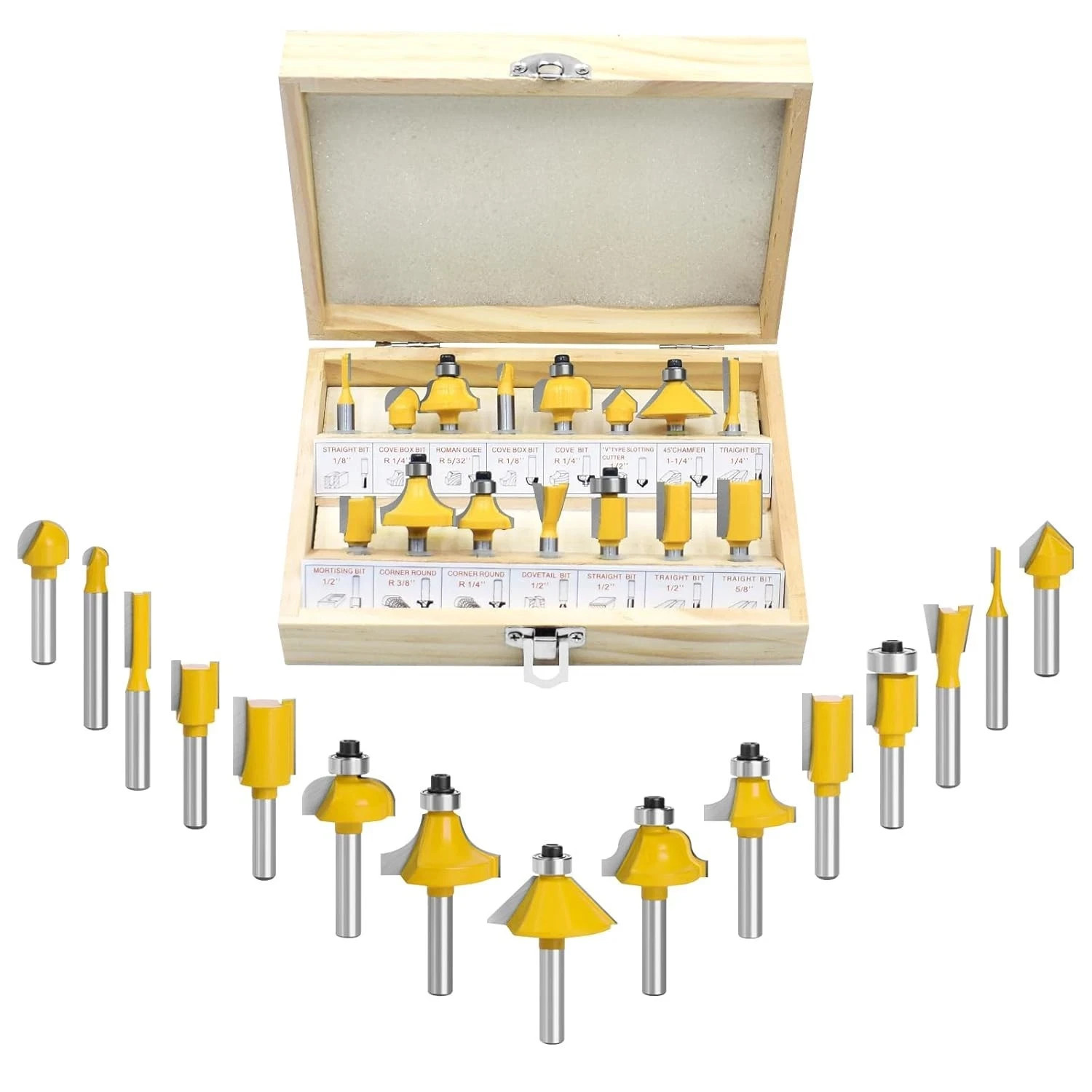 Router Bits Set of 15 Pieces 1/4 Inch Woodwork Tools for Beginners,Carbide...$45.00
 View on eBay
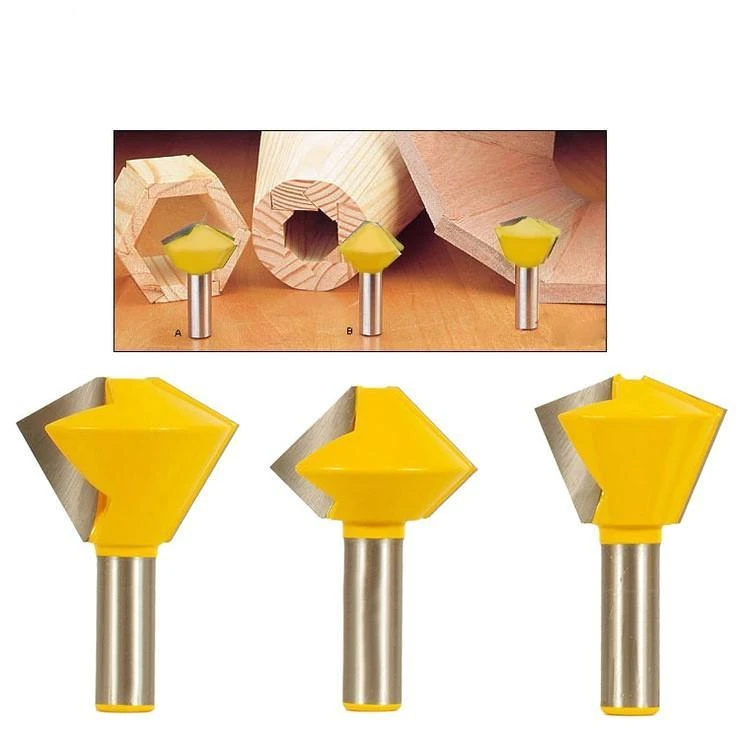 Bird's Mouth Router Bit$39.99
 View on Mallflare
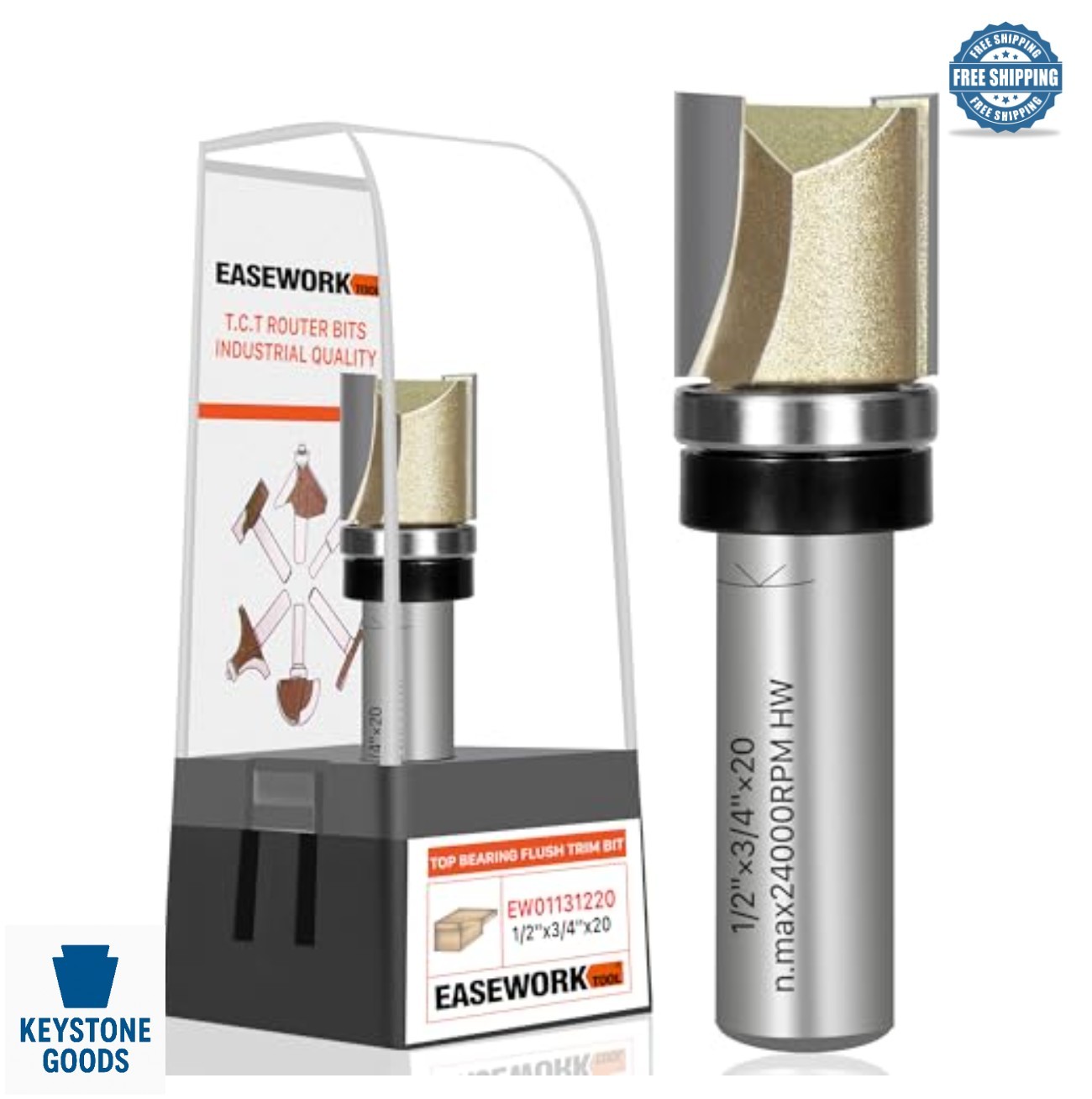 Flush Trim Router Bit 1/2 Shank Carbide Tipped 3/4 Dia Template Woodworking MDF$51.68View on eBay
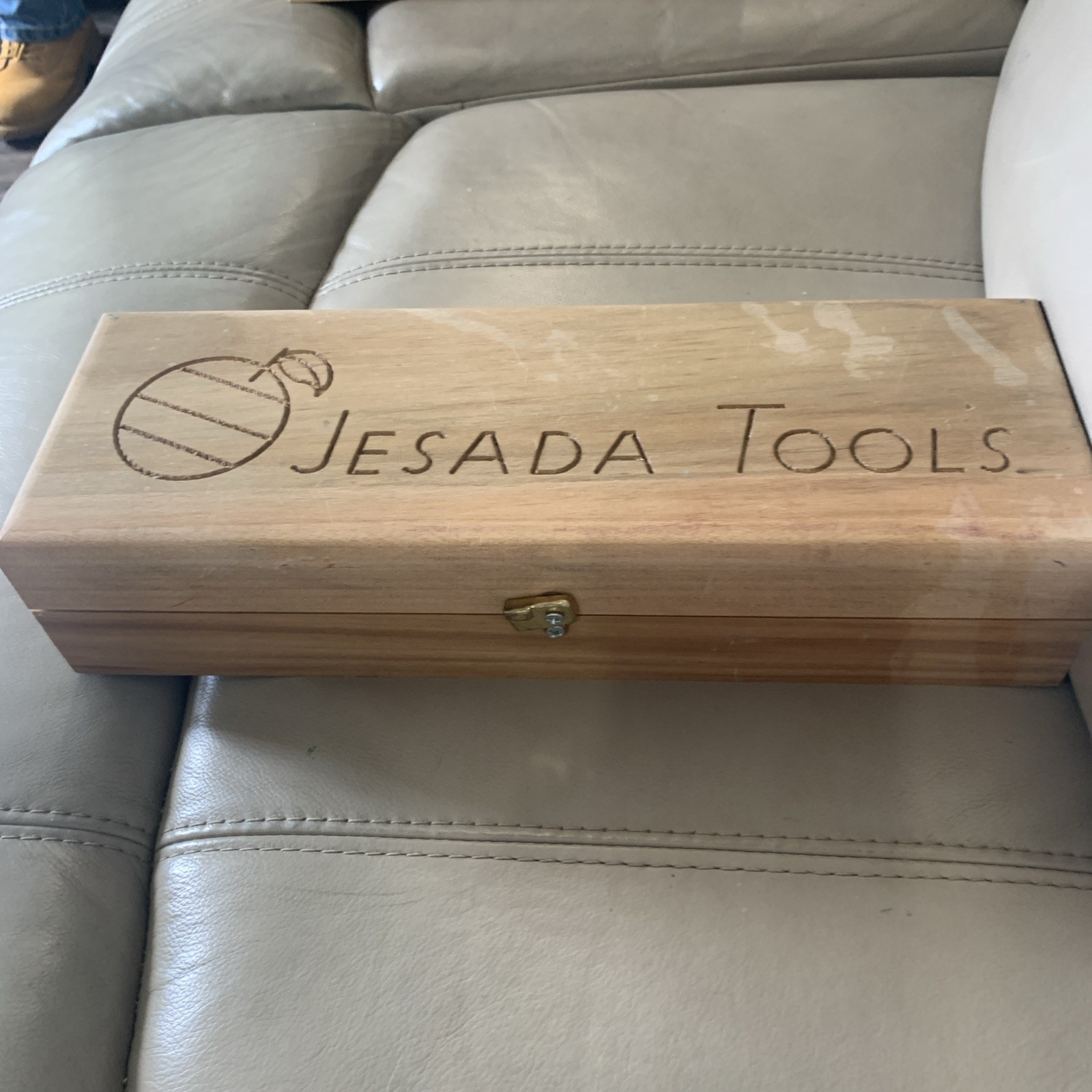 Jesada Tools 600-562 Ogee Kitchen Set Router Bits 1/2" Shank 5 Pc Set & Wood Box$200.00Open box · Last checked Nov 16, 2026View on eBay
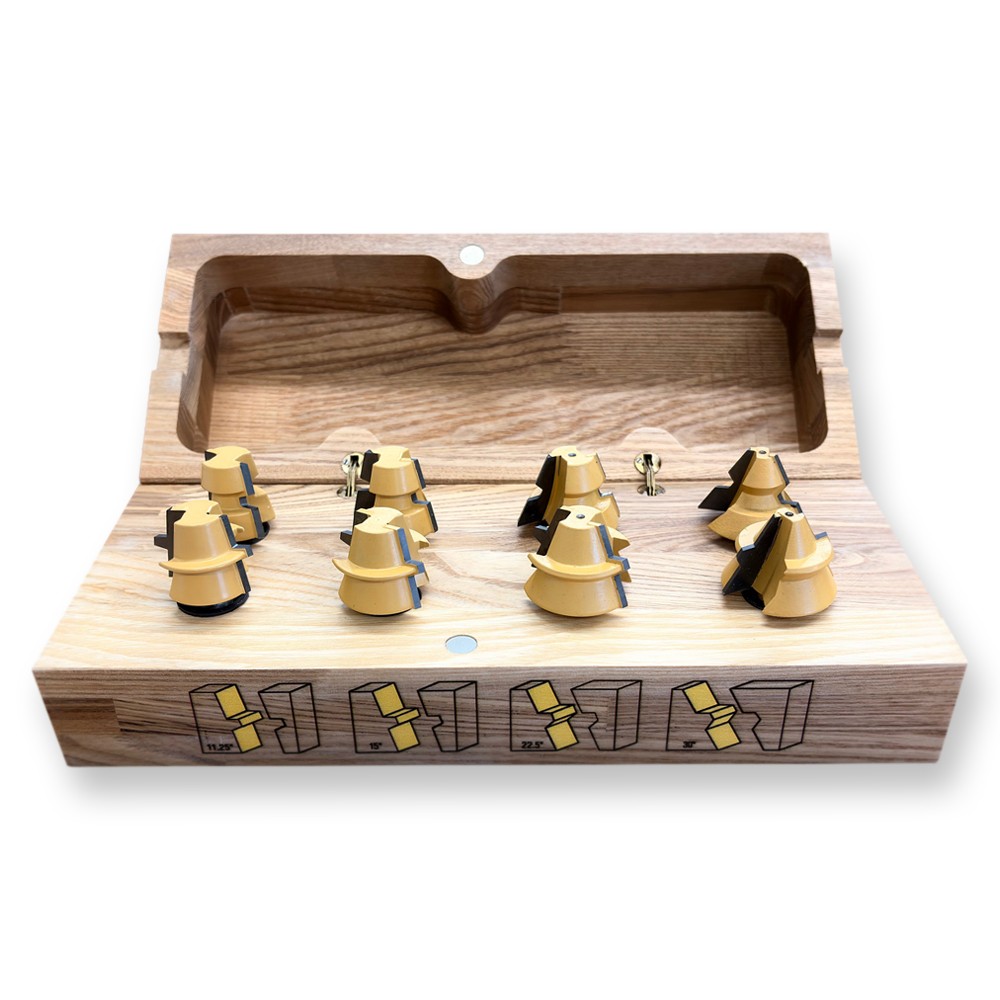 Sommerfeld 8-Pc Anglemaking Router Bit Woodworking Tool Set$223.46New · Last checked Nov 16, 2026View on eBay
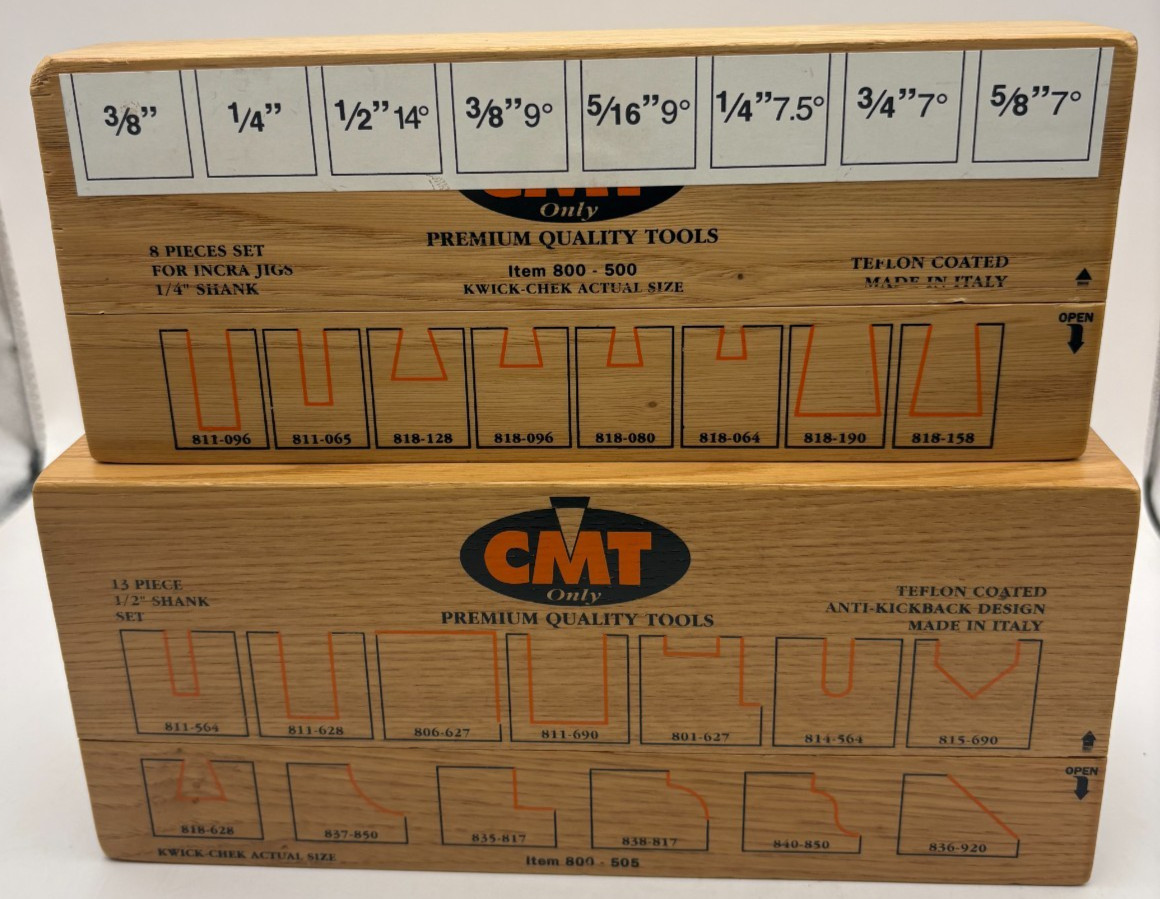 CMT Orange Tools Router Bit Master Sets - 800.500 & 500.505 Wooden Boxes$224.95Used · Last checked Nov 16, 2026View on eBay
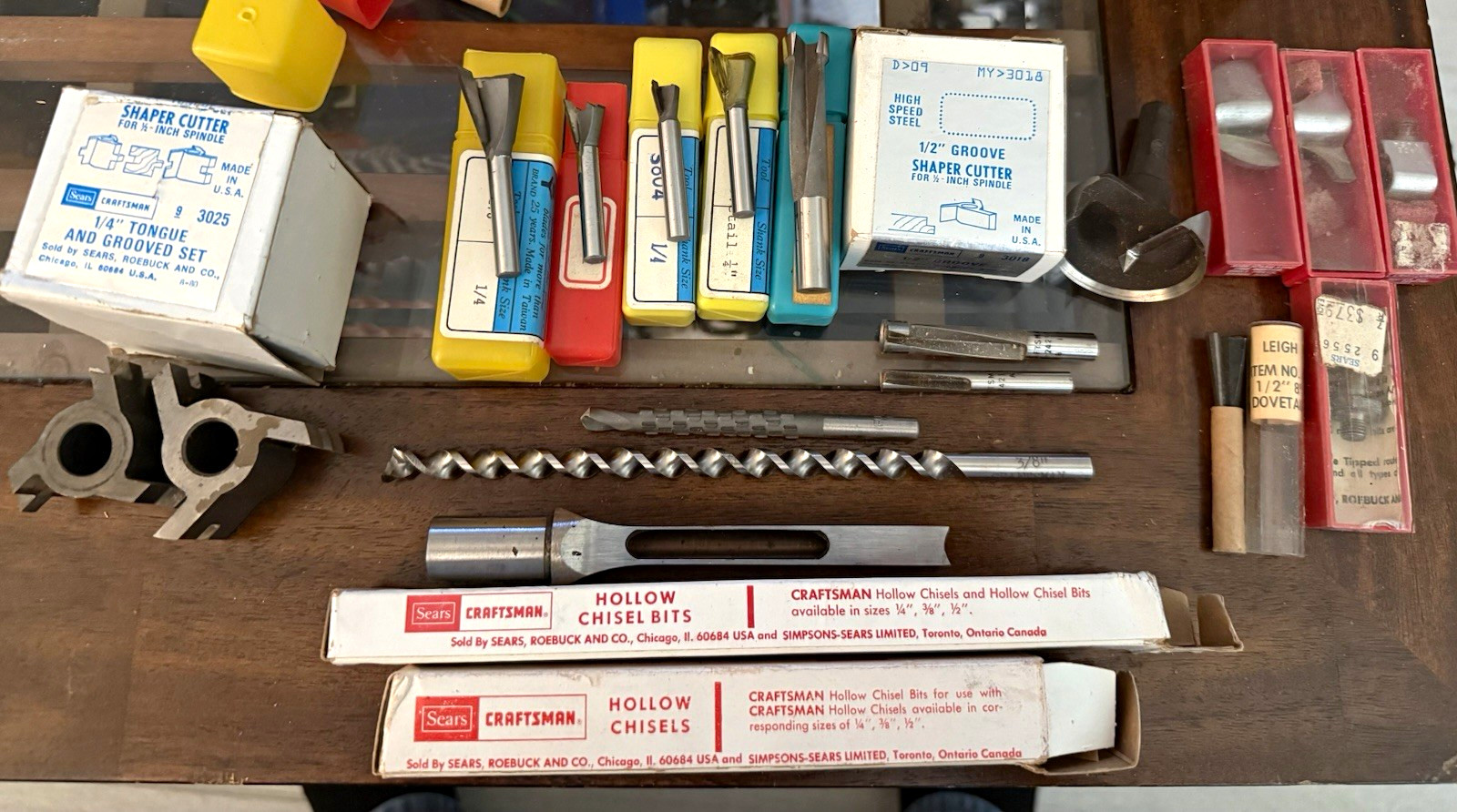 High quality SY Brand Router bits, variety of specialty chisel bits etc-Vintage$250.00Used · Last checked Nov 16, 2026View on eBay
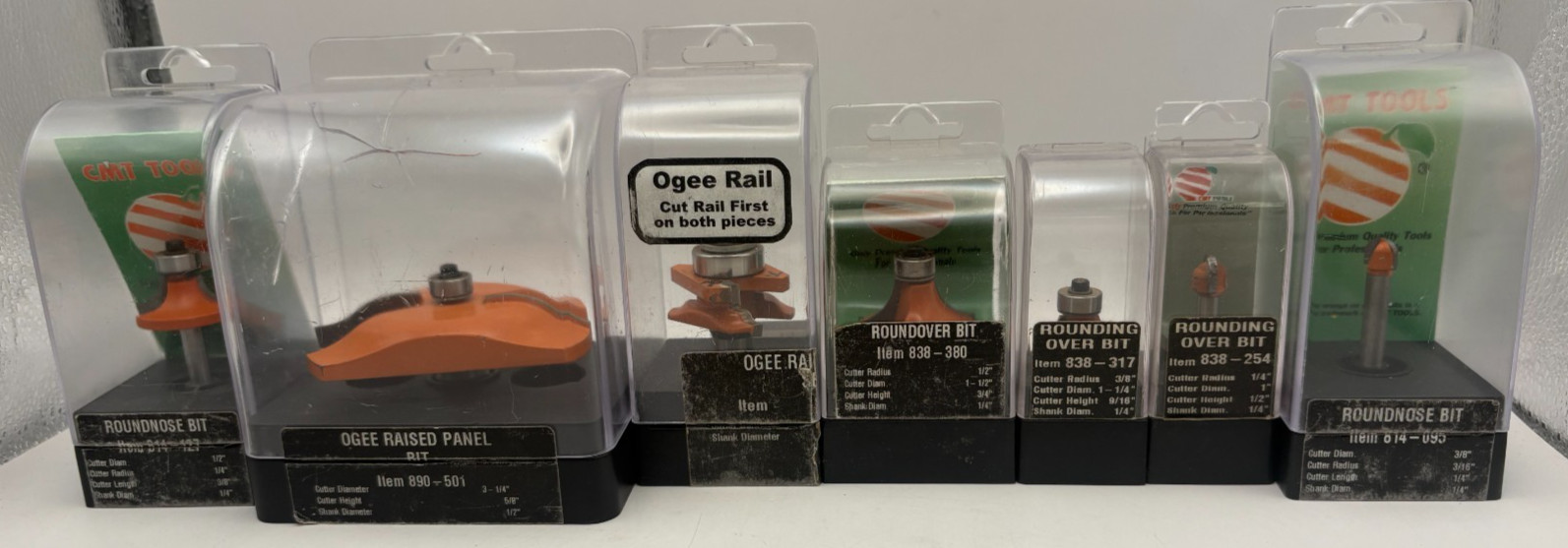 CMT Orange Tools & Katana Router Bits Huge Lot of 15 Woodworking Cabinetry Joint$284.95Used · Last checked Nov 16, 2026View on eBay
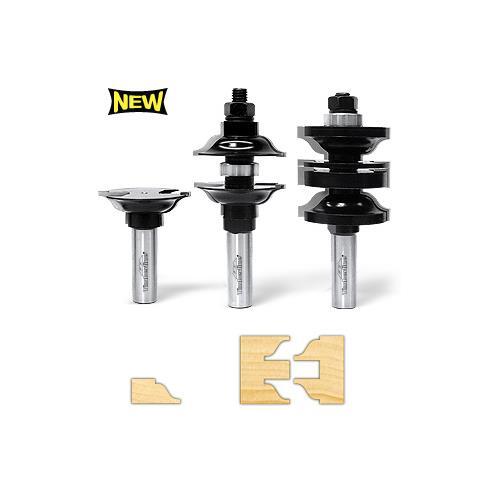 Timberline TRS-290 3-Piece Entry & Passage Door Making 1/2 Shk Router Bit Set$291.20New · Last checked Nov 16, 2026View on eBay
Highlights
- Shank diameter is the first durability gate: 1/2-inch shanks resist deflection and chatter under heavy cuts, while 1/4-inch shanks suit only light trim and small-profile work.
- Carbide grade separates pro from hobby bits: micro-grain carbide holds an edge 3-5x longer in MDF, plywood, and hardwoods than standard carbide or high-speed steel.
- Bearing-guided bits (flush trim, pattern, template) rely on sealed ball-bearing pilots; shielded bearings resist dust and last far longer than open bearings in router-table use.
- Multi-piece sets (ogee, door-making, angle-making) trade per-bit quality for coverage; matched sets with common grind and 1/2-inch shanks outperform mixed 1/4-inch bargain assortments.
Best use cases
- Cabinet and furniture joinery (dados, rabbets, rail-and-stile, ogee profiles): pick 1/2-inch shank carbide bits or matched joinery sets; skip 1/4-inch shank assortments that flex under deep cuts.
- Template and flush trimming of MDF, plywood, or laminate: choose a bearing-guided flush-trim bit with a 1/2-inch shank and top-or-bottom bearing to match your pattern side; skip bearingless straight bits for template work.
- Entry and passage door making: buy a dedicated 3-piece door-making set with 1/2-inch shanks and matched profile geometry; skip general-purpose 15-piece sets that lack door-specific cutters.
- Light edge rounding and small decorative profiles on a compact trim router: a 1/4-inch shank carbide roundover or chamfer bit is acceptable; skip 1/2-inch shank heavy sets that overload a trim router.
Buying tips
- Match shank to collet and cut load: use 1/2-inch shank cutters for anything deeper than 1/2 inch or wider than 3/4 inch in diameter; reserve 1/4-inch shank for trim routers and light profiles.
- Choose micro-grain carbide tips for MDF, plywood, and hardwoods; standard carbide is acceptable for softwood and occasional use, and high-speed steel only for very light, short runs.
- For pattern routing, select bits with sealed, shielded bearings and a bearing diameter equal to the cutter diameter for true flush trimming; replaceable bearings extend bit life.
- Buy matched profile sets (door-making, ogee, angle-making) in 1/2-inch shank for repeatable joinery; mixed 1/4-inch 15-piece sets are for exploration, not production.
Specs
| Shank Diameter | 1/2 in (heavy) vs 1/4 in (light) |
|---|---|
| Cutting Edge | Micro-grain carbide vs standard carbide |
| Bit Guidance | Sealed ball-bearing vs bearingless |
| Set Coverage | Matched profile sets vs mixed assortments |
Related searches
What to check before buying
- Confirm your router collet size: 1/2-inch collet accepts 1/2-inch shanks directly; 1/4-inch collets need a reducer sleeve or limit you to 1/4-inch shank bits.
- Measure the maximum cutter diameter your router base and table opening allow; large-diameter panel bits require a router table with a compatible insert ring.
- Check bearing placement (top vs bottom) against your template orientation: top-bearing bits ride the template above the workpiece; bottom-bearing bits ride a template below.
- Verify your router's variable-speed range handles large-diameter bits: bits over 1 inch diameter should run at reduced RPM per manufacturer speed charts.
FAQ
Data sources: eBay / Amazon listings and product attribute feeds Data updated Nov 20, 2026.
Some links on this page are affiliate links. If you buy after clicking one, we may earn a commission at no extra cost to you. This does not change which products appear here or their order. Affiliate disclosure.