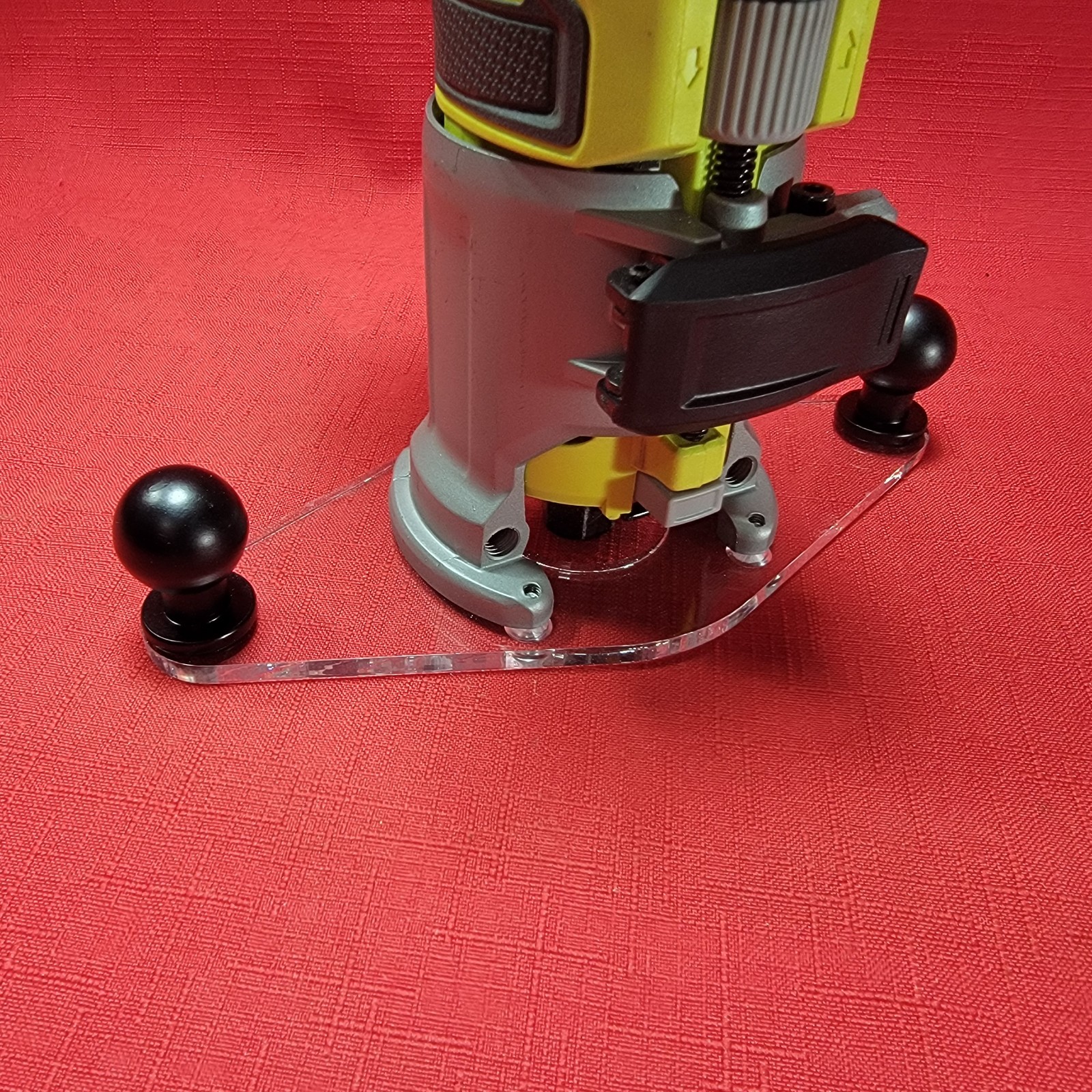

Photos from current listings. Actual item, color, and included accessories may vary.
Trim Router Buying Guide
A trim router is a compact, single-hand palm router (typically 1–1.75 HP, 1/4-inch collet) built for edge trimming, laminate work, hinge mortising, and light roundovers where a full-size router is too heavy. The core trade-off is fixed vs. plunge base and brushed vs. brushless motor: fixed bases are lighter and cheaper but require bit-height changes by releasing the motor, while plunge bases add repeatable depth control at a weight penalty. Buy a fixed-base kit with a 1/4-inch collet and at least 1 HP for most trim work; step up to a plunge or brushless model only when depth repeatability or runtime per charge is critical.


At a glance
- Category
- Wood Routers & Carving Tools
- Data updated
- Nov 20, 2026
Current offers
Highlights
- Trim routers use 1/4-inch collets (6mm on some metric imports); 1/2-inch collets are reserved for full-size routers and never fit trim-router motors.
- Motor power clusters at 1.0–1.25 HP for corded fixed-base models, with brushless cordless units delivering comparable torque at 18–20V battery platforms.
- Fixed bases adjust bit height by unlocking and sliding the motor; plunge bases add spring-loaded travel with a turret for repeatable depth stops on mortises.
- Base plate opening diameter must exceed the bit diameter plus clearance—most kits ship with a 1-3/16-inch center hole for standard roundover and flush-trim bits.
Best use cases
- Best fit: cabinet and countertop installers trimming laminate or edge banding—pick a fixed-base corded kit with a 1/4-inch collet and offset base for edge access.
- Best fit: furniture makers cutting hinge mortises and shallow dados—choose a plunge-base trim router for depth repeatability; skip fixed-only kits for this task.
- Wrong fit: routing raised-panel doors or heavy hardwood edge profiles—upgrade to a 1/2-inch collet full-size router (2+ HP); trim routers lack the torque and bit capacity.
- Wrong fit: production shops running all day cordless—choose a corded trim router or a brushless model with two high-capacity batteries; brushed cordless units overheat under continuous load.
Buying tips
- Match collet size first: 1/4-inch (6.35mm) is the trim-router standard—buy 1/2-inch-shank bits only if you own a full-size router, since adapters add runout.
- For cordless, stay within one battery platform: an 18V/20V brushless trim router with a 4.0Ah+ pack delivers roughly the runtime of a 1 HP corded unit for trim work.
- Check base plate compatibility: many trim routers accept aftermarket offset and tilt bases, but hole patterns are brand-specific—confirm your model's base mounting screw spacing before buying accessories.
- Prefer variable-speed (10,000–30,000 RPM) if you cut plastics or laminate; single-speed fixed routers can burn edges at low feed rates on heat-sensitive materials.
Specs
| Motor Type | Brushed corded vs brushless cordless |
|---|---|
| Collet Size | 1/4 in (6.35mm) or 6mm |
| Base Type | Fixed base / Plunge base / Kit |
| Power Class | 1.0–1.75 HP corded; 18–20V cordless |
Related searches
What to check before buying
- Measure your workpiece edge access: a trim router body diameter of roughly 3–4 inches needs clearance behind the edge—offset bases help in tight cabinet corners.
- Confirm your bit shank diameter is 1/4 inch (6.35mm) or 6mm; metric 6mm bits fit 1/4-inch collets poorly and can slip—match exactly.
- For cordless, verify your existing battery platform voltage and pack interface—cross-platform adapters add bulk and void ergonomics.
- Check the base plate opening against your largest bit: a 1-3/16-inch opening clears most roundover bits, but raised-panel or large flush-trim bits may require a larger sub-base.
FAQ
Data sources: eBay / Amazon listings and product attribute feeds Data updated Nov 20, 2026.
Some links on this page are affiliate links. If you buy after clicking one, we may earn a commission at no extra cost to you. This does not change which products appear here or their order. Affiliate disclosure.